Tyler Parsotan Takes a Long Look at the Transient Universe with NASA’s Swift

Tyler Parsotan Takes a Long Look at the Transient Universe with NASA’s Swift

Through a nonlinear path to success, research astrophysicist Tyler Parsotan discovers transformational science using Swift’s observations. 

Name: Tyler Parsotan
Formal Job Classification: Research astrophysicist
Organization: Astroparticle Physics Laboratory (Code 661), Astrophysics Science Division, Sciences and Exploration Directorate 

Headshot against a black background. Tyler Parsotan wears a wears a white shirt with a black tie.
Dr. Tyler Parsotan is a research astrophysicist at NASA’s Goddard Space Flight Center in Greenbelt, Md. He helps operate the Bust Alert Telescope on board the Neil Gehrels Swift Observatory.
Courtesy of Tyler Parsotan

What do you do and what is most interesting about your role here at Goddard? 

I help operate the Burst Alert Telescope on board the Neil Gehrels Swift Observatory to study some of the most powerful astrophysical processes in the universe. What is most interesting is the engineering capabilities that have gone into the spacecraft to make it nimble and robust, allowing it to conduct a wide range of transformative science. 

Why did you become an astrophysicist?

Ever since I was young, I was fascinated with the stars and how the world worked. All of this led me to physics with a focus on astrophysics. That is how I got into what I am doing now.

What is your educational background?

In 2015, I got a Bachelor of Science in space physics from Embry Riddle Aeronautical University in Daytona Beach, Florida. In 2019, I got a master’s in physics from Oregon State University, Corvallis, and in 2020 I got a master’s in mechanical engineering also from Oregon State University. In 2021, I got a doctorate in physics from Oregon State University. 

When I first applied to graduate school, I did not get into any. I was fortunate enough to learn about Oregon State University though a program geared towards allowing underrepresented students in STEM fields to get graduate degrees. This program, known as the Ronald E. McNair Post-baccalaureate Achievement Program, played a pivotal role in me being able to attend graduate school . 

Are you also a pilot?

Yes, I am. While I was in Oregon as a graduate student, I was able to save up enough money to get my private pilot’s license over the course of one summer from the local Corvallis airport. I would bike to the airport and get in a plane to fly all over Oregon from the coast to the Cascade Mountains. It was a very cool experience. 

How did you come to Goddard?

I did a post-doctorate fellowship starting the fall of 2021 through May 2023. My doctoral research was related to one of Swift’s many science focuses, so I wanted to continue my work at Goddard. 

What transformational science have you been involved with using Swift’s observations?

Some of the science that Swift focuses on is related to the transient universe, meaning that we primarily look at astrophysical events that come and go very quickly and typically produce a ton of energy. Swift examines the light energy produced from black holes, the majority of which are eating mass from black stars. 

While at Oregon State University, I studied the most energetic events in the universe known as gamma-ray bursts. I am now studying gamma-ray bursts at Goddard. One of the big discoveries made by Swift is that these gamma ray bursts can be seen out to early times in the universe. Some of these explosions occurred when the universe was very young, only 100,000 years old or so. Because the universe is expanding, it takes that light some time to travel to us. With Swift, we detect that light and can make some measurements about the gamma-ray bursts, such as when they occurred, how much energy they produced in these massive explosions, and some of the properties of the early universe. 

Man stands next to spacecraft model and his Robert H. Goddard Award for Exceptional Achievement for Science. He wears a blue button-down shirt and black pants.
“There are no linear paths to success,” said Tyler. “Keep looking for a way to be successful. This advice applies to life overall.”
Courtesy of Tyler Parsotan

What is the biggest discovery you have been involved with and what do you love most about working on Swift?

We are simulating the gamma-ray bursts, which was a focus of my doctorate. We cannot yet actually see these explosions, so we have to simulate them using the physics that we now know. I have been able to connect some of the large simulations to the Swift observations and measurements. This helps us better understand the underlying physics of these powerful explosions. 

The amount of energy produced in a typical gamma-ray burst is enough to blow up the Sun a few times over.

Lots of people know about Hubble, which observes the light that we can see with our eyes. The light that I deal with, gamma rays, has much higher energy and cannot be seen with our eyes. We have to use different techniques to measure this light. Designing detectors to measure this light is challenging technically but means that this area of physics is ripe for discovery. I love being part of this. 

Swift will be 20 years old in November 2024. As a relative newcomer to Swift, what are your thoughts?

I think Swift is a great observatory because it has conducted lots of transformational science, drastically expanding our knowledge of the cosmos. Even though it is getting older, it is still able to push science forward in new and exciting ways. I am looking forward to helping the Swift mission celebrate 20 years of amazing science. 

What is your advice to anyone starting and continuing a career?

There are no linear paths to success. Keep looking for a way to be successful. This advice applies to life overall. 

Are you involved in any of Goddard’s extracurricular activities?

I recently joined Goddard’s soccer league. Everyone at Goddard self organizes into teams that play each other after work during the week. We play about a game a week. The winning team gets bragging rights. I mostly play defense. Being on a team is a good way to meet people at Goddard and to stay active. 

In addition to soccer, what are your hobbies?

I enjoy hiking, mountain biking, and generally being outdoors. 

Where do you see yourself in five years?

I hope to still be at Goddard. I enjoy the type of work and the overall work environment. If Swift continues another five years, hopefully I’ll be working on it and also helping to create the next generation of gamma-ray observatories to help push science forward. We are making the science that will be in the next textbooks. 

Who do you want to thank?

My doctoral supervisor Davide Lazzati was an extremely supportive mentor and pushed me to be the best scientist that I can be. Since I arrived at Goddard, we have been good colleagues. 

My former mentor and supervisor at Goddard is Brad Cenko, the Swift principal investigator. I am grateful that he hired me and allowed me to grow as a post-doctoral researcher.

I also want to thank my entire family for being extremely supportive and understanding even though they may not fully understand what I really do. 

Who is your science hero?

Copernicus. He put forward the theory that our solar system orbits the Sun. He was obviously very instrumental in changing the way we think about the cosmos. He got into a lot of trouble with his theory, which makes his accomplishments all the more important. 

By Elizabeth M. Jarrell
NASA’s Goddard Space Flight Center, Greenbelt, Md.

A banner graphic with a group of people smiling and the text "Conversations with Goddard" on the right. The people represent many genders, ethnicities, and ages, and all pose in front of a soft blue background image of space and stars.

Conversations With Goddard is a collection of Q&A profiles highlighting the breadth and depth of NASA’s Goddard Space Flight Center’s talented and diverse workforce. The Conversations have been published twice a month on average since May 2011. Read past editions on Goddard’s “Our People” webpage.

Share

Details

Last Updated

Aug 20, 2024

Editor
Madison Olson
Contact
Rob Garner
Location
Goddard Space Flight Center

Powered by WPeMatico

Get The Details…
Madison Olson

Danish Instrument Helps NASA’s Juno Spacecraft See Radiation

Danish Instrument Helps NASA’s Juno Spacecraft See Radiation

Using cameras designed for navigation, scientists count ‘fireflies’ to determine the amount of radiation the spacecraft receives during each orbit of Jupiter.

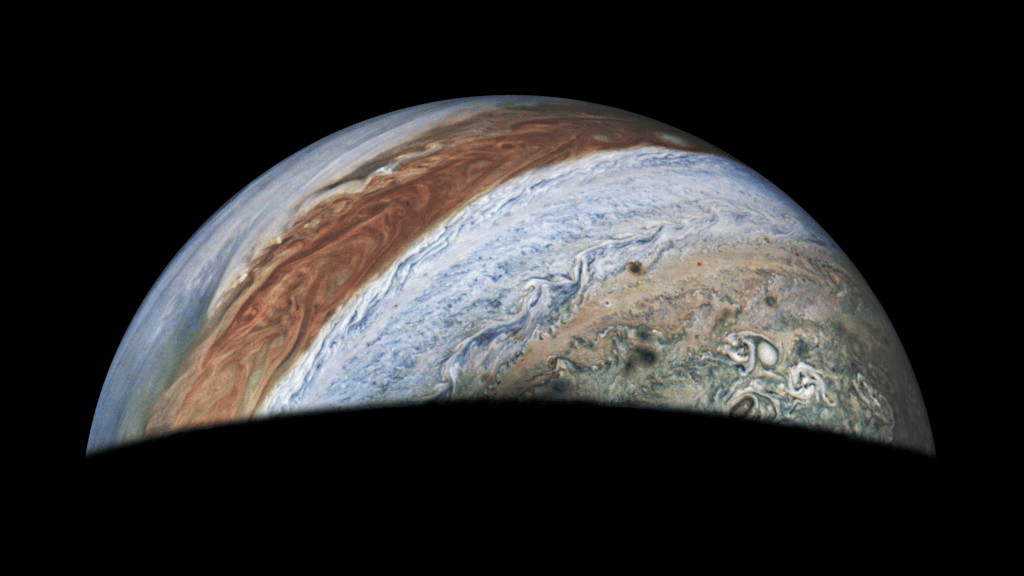
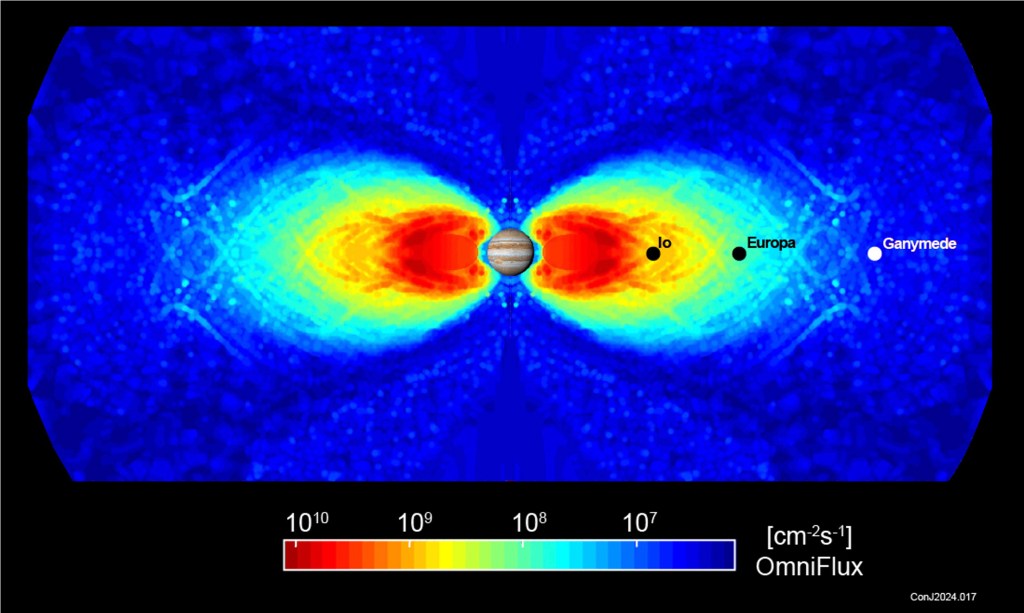
Scientists with NASA’s Juno mission have developed the first complete 3D radiation map of the Jupiter system. Along with characterizing the intensity of the high-energy particles near the orbit of the icy moon Europa, the map shows how the radiation environment is sculpted by the smaller moons orbiting near Jupiter’s rings.

The work relies on data collected by Juno’s Advanced Stellar Compass (ASC), which was designed and built by the Technical University of Denmark, and the spacecraft’s Stellar Reference Unit (SRU), which was built by Leonardo SpA in Florence, Italy. The two datasets complement each other, helping Juno scientists characterize the radiation environment at different energies.

Both the ASC and SRU are low-light cameras designed to assist with deep-space navigation. These types of instruments are on almost all spacecraft. But to get them to operate as radiation detectors, Juno’s science team had to look at the cameras in a whole new light.

“On Juno we try to innovate new ways to use our sensors to learn about nature, and we have used many of our science instruments in ways they were not designed for,” said Scott Bolton, Juno principal investigator from the Southwest Research Institute in San Antonio. “This is the first detailed radiation map of the region at these higher energies, which is a major step in understanding how Jupiter’s radiation environment works. This will help planning observations for the next generation of missions to the Jovian system.”

Counting Fireflies

Consisting of four star cameras on the spacecraft’s magnetometer boom, Juno’s ASC takes images of stars to determine the spacecraft’s orientation in space, which is vital to the success of the mission’s magnetic field experiment. But the instrument has also proved to be a valuable detector of high-energy particle fluxes in Jupiter’s magnetosphere. The cameras record “hard radiation,” or ionizing radiation that impacts a spacecraft with sufficient energy to pass through the ASC’s shielding.

“Every quarter-second, the ASC takes an image of the stars,” said Juno scientist John Leif Jørgensen of the Technical University of Denmark. “Very energetic electrons that penetrate its shielding leave a telltale signature in our images that looks like the trail of a firefly. The instrument is programmed to count the number of these fireflies, giving us an accurate calculation of the amount of radiation.”

Jupiter’s moon Europa was captured by the JunoCam instrument aboard NASA’s Juno spacecraft during the mission’s close flyby on Sept. 29, 2022.
Image data: NASA/JPL-Caltech/SwRI/MSSS. Image processing: Björn Jónsson (CC BY 3.0)

Because of Juno’s ever-changing orbit, the spacecraft has traversed practically all regions of space near Jupiter.

ASC data suggests that there is more very high-energy radiation relative to lower-energy radiation near Europa’s orbit than previously thought. The data also confirms that there are more high-energy electrons on the side of Europa facing its orbital direction of motion than on the moon’s trailing side. This is because most of the electrons in Jupiter’s magnetosphere overtake Europa from behind due to the planet’s rotation, whereas the very high-energy electrons drift backward, almost like fish swimming upstream, and slam into Europa’s front side.

Jovian radiation data is not the ASC’s first scientific contribution to the mission. Even before arriving at Jupiter, ASC data was used to determine a measurement of interstellar dust impacting Juno. The imager also discovered a previously uncharted comet using the same dust-detection technique, distinguishing small bits of the spacecraft ejected by microscopic dust impacting Juno at a high velocity.

Dust Rings

Like Juno’s ASC, the SRU has been used as a radiation detector and a low-light imager. Data from both instruments indicates that, like Europa, the small “shepherd moons” that orbit within or close to the edge of Jupiter’s rings (and help to hold the shape of the rings) also appear to interact with the planet’s radiation environment. When the spacecraft flies on magnetic field lines connected to ring moons or dense dust, the radiation count on both the ASC and SRU drops precipitously. The SRU is also collecting rare low-light images of the rings from Juno’s unique vantage point.

“There is still a lot of mystery about how Jupiter’s rings were formed, and very few images have been collected by prior spacecraft,” said Heidi Becker, lead co-investigator for the SRU and a scientist at NASA’s Jet Propulsion Laboratory in Southern California, which manages the mission. “Sometimes we’re lucky and one of the small shepherd moons can be captured in the shot. These images allow us to learn more precisely where the ring moons are currently located and see the distribution of dust relative to their distance from Jupiter.”

More About the Mission

NASA’s Jet Propulsion Laboratory, a division of Caltech in Pasadena, California, manages the Juno mission for the principal investigator, Scott Bolton, of the Southwest Research Institute in San Antonio. Juno is part of NASA’s New Frontiers Program, which is managed at NASA’s Marshall Space Flight Center in Huntsville, Alabama, for the agency’s Science Mission Directorate in Washington. The Technical University of Denmark designed and built the Advanced Stellar Compass. The Stellar Reference Unit was built by Leonardo SpA in Florence, Italy. Lockheed Martin Space in Denver built and operates the spacecraft.

More information about Juno is available at:

https://www.nasa.gov/juno

News Media Contacts

DC Agle
Jet Propulsion Laboratory, Pasadena, Calif.
818-393-9011
agle@jpl.nasa.gov

Karen Fox / Alana Johnson
NASA Headquarters, Washington
202-385-1600
karen.c.fox@nasa.gov / alana.r.johnson@nasa.gov

Simon Koefoed Toft
Technical University of Denmark, Copenhagen
+45 9137 0088 
sito@dtu.dk

Deb Schmid
Southwest Research Institute, San Antonio
210-522-2254
dschmid@swri.org

2024-111

Share

Details

Last Updated

Aug 20, 2024

Powered by WPeMatico

Get The Details…
Naomi Hartono

FAQ: NASA’s Boeing Crew Flight Test Return Status

FAQ: NASA’s Boeing Crew Flight Test Return Status

7 min read

Preparations for Next Moonwalk Simulations Underway (and Underwater)

Editor’s note: This article was updated Aug. 20, 2024, to reflect the latest information from NASA’s Office of Communications.

NASA astronauts Butch Wilmore and Suni Williams arrived at the orbiting laboratory on June 6 aboard the Boeing Starliner after lifting off on June 5 from Space Launch Complex-41 at Cape Canaveral Space Force Station in Florida.

During Starliner’s flight to the space station, engineers noticed some of the spacecraft’s thrusters did not perform as expected and several leaks in Starliner’s helium system also were observed. Engineering teams at NASA and Boeing have since conducted several thruster tests and in-depth data reviews to better understand the spacecraft. While engineers work to resolve technical issues before Starliner’s return to Earth, the astronaut duo have been working with the Expedition 71 crew, performing scientific research and maintenance activities.

NASA now plans to conduct two reviews – a Program Control Board and an Agency Flight Readiness Review – before deciding how it will safely return Wilmore and Williams from the station. NASA expects to decide on the path forward by the end of August.

Here are some frequently asked questions about their mission.


Boeing's Starliner spacecraft that launched NASA's Crew Flight Test astronauts Butch Wilmore and Suni Williams to the International Space Station is pictured docked to the Harmony module's forward port. This view is from a window on the SpaceX Dragon Endeavour spacecraft docked to the port adjacent to the Starliner.

About the Mission and Delay

What is NASA’s Boeing Crew Flight Test?

NASA’s Boeing Crew Flight Test launched on June 5, and is the first flight of the Starliner spacecraft to the International Space Station with astronauts. The flight test aims to prove the system is ready for rotational missions to the space station. NASA wants two American spacecraft, in addition to the Roscosmos Soyuz spacecraft, capable of carrying astronauts to help ensure a permanent crew aboard the orbiting complex.

What are the goals of the Crew Flight Test?

This flight test aims to demonstrate Starliner’s ability to execute a six-month rotational mission to the space station. The flight test objectives were developed to support NASA’s certification process and gather the performance data needed to evaluate readiness ahead of long-duration flights.

Why is the Crew Flight Test staying longer than planned aboard the space station?

During Starliner’s flight to the space station, some of the spacecraft’s thrusters did not perform as expected and several leaks in Starliner’s helium system were observed. While the initial mission duration was planned for about a week, there is no rush to bring crew home, so NASA and Boeing are taking additional time to learn about the spacecraft. This is a lesson learned from the space shuttle Columbia accident. Our NASA and Boeing teams are poring over data from additional in-space and ground testing and analysis, providing mission managers data to make the best, safest decision on how and when to return crew home.

If there’s an emergency on the space station, how will Butch and Suni get home?

Starliner remains the primary option for Butch and Suni if an emergency occurs and they need to rapidly depart the station. There is no urgent need to bring them home, and NASA is using the extra time to understand the spacecraft’s technical issues before deciding on a return plan.

How long could Butch and Suni stay on the space station if they don’t come home on Starliner?

If NASA decides to return Starliner uncrewed, Butch and Suni would remain aboard station until late-February 2025. NASA would replan the agency’s SpaceX Crew-9 mission by launching only two crew members instead of four in late September. Butch and Suni would then return to Earth after the regularly scheduled Crew-9 increment early next year.

Are Butch and Suni staying in space until 2025?

No decisions have been made. NASA continues to evaluate all options as it learns more about Starliner’s propulsion system. Butch and Suni may return home aboard Starliner, or they could come back as part of the agency’s SpaceX Crew-9 mission early next year.

Can Starliner fly without astronauts?

Yes, Starliner can undock and deorbit autonomously, if NASA decides to return the spacecraft uncrewed.

Could NASA send a SpaceX Dragon to bring Butch and Suni back?

If NASA decides to return them aboard a SpaceX Dragon, NASA will replan its SpaceX Crew-9 mission by launching only two crew members in late September instead of four. Butch and Suni would then return to Earth after the regularly scheduled Crew-9 increment early next year.

Why does NASA need two crew transportation systems?

The main goal of the agency’s Commercial Crew Program is two, unique human spaceflight systems. Should any one system encounter an issue, NASA still has the capability to launch and return crew to ensure safety and a continuous human presence aboard the International Space Station.

NASA's Boeing Crew Flight Test astronauts Suni Williams and Butch Wilmore (at center) pose with Expedition 71 Flight Engineers (far left) Mike Barratt and Tracy C. Dyson (far right), both NASA astronauts, in their spacesuits aboard the International Space Station's Quest airlock.

About the Astronauts

Are Butch and Suni stuck on the space station?

No, Butch and Suni are safe aboard the space station working alongside the Expedition 71 crew. They also have been actively involved in Starliner testing and technical meetings. Butch and Suni could return home aboard Starliner if an emergency arises. The agency also has other return options available, if needed, for both contingency and normal returning planning.

Are Suni and Butch prepared for a longer stay on the station?

Butch and Suni each have previously completed two long-duration stays aboard the station. NASA astronauts embark on missions fully aware of the various scenarios that may become reality. This mission is no different, and they understood the possibilities and unknowns of this test flight, including being aboard station longer than planned.

How long would an extended stay for Butch and Suni compare to other space station mission lengths?

A typical stay aboard the International Space Station is about six months, and NASA astronauts also have remained on the space station for longer duration missions. Previous missions have given NASA volumes of data about long-duration spaceflight and its effects on the human body, which the agency applies to any crew mission.

Do the astronauts have what they need (e.g., food, clothing, oxygen, personal items, etc.)?

Yes. The International Space Station is well-stocked with everything the crew needs, including food, water, clothing, and oxygen. Additionally, NASA and its space station partners frequently launch resupply missions to the orbiting complex carrying additional supplies and cargo.

Recently, a Northrop Grumman Cygnus spacecraft carrying 8,200 pounds of food, fuel, supplies, and science and a Progress resupply spacecraft carrying three tons of cargo arrived at the station. NASA has additional SpaceX resupply missions planned through the end of 2024.

What are they doing aboard the space station?

The crew continues to monitor Starliner’s flight systems and gather performance data for system certification. NASA also is taking advantage of Butch and Suni’s extra time aboard the orbital laboratory, where they have completed various science experiments, maintenance tasks, and assisted with spacewalk preparations. Some of the science they’ve recently completed includes new ways to produce fiber optic cables and growing plants aboard the orbiting complex.

Can they talk to their family and friends?

Butch and Suni enjoy many of the same comforts we have here on Earth. They can email, call, and video conference with their family and friends when they have “free time” aboard the International Space Station.

iss071e217183 (June 25, 2024) -- As the International Space Station orbited 263 miles above Earth, NASA astronaut Butch Wilmore captured this image of Spain and Morocco. The Strait of Gibraltar separates the two countries and connects the Atlantic Ocean to the Mediterranean Sea.

About the Return Plan

What are the other options for bringing Butch and Suni back?

NASA has two unique American space transportation systems capable of carrying crew to and from station. Although no decisions have been made, NASA is considering several options to return Butch and Suni from the space station, including returning aboard Starliner, if cleared, or as part of agency’s SpaceX Crew-9 mission in February 2025.

Is it safer to bring them home aboard a SpaceX Dragon?

Crewed test flights are inherently risky, and although rotation missions may seem routine, they also are not without risk. It is NASA’s job to evaluate that risk and determine whether it is acceptable for crew ahead of each flight.

What other steps is NASA taking to bring them home?

NASA adjusted SpaceX Crew-9 launch and the agency’s SpaceX Crew-8 return, allowing more time to finalize Starliner return plans. NASA also is looking at crew assignments to ensure Butch and Suni can return with Crew-9, if needed.

For NASA’s blog and more information about the mission, visit: https://www.nasa.gov/commercialcrew

Powered by WPeMatico

Get The Details…
Gary Daines

55 Years Ago: Apollo 11 Astronauts End Quarantine, Feted from Coast to Coast

55 Years Ago: Apollo 11 Astronauts End Quarantine, Feted from Coast to Coast

On Aug. 10, 1969, Apollo 11 astronauts Neil A. Armstrong, Michael Collins, and Edwin E. “Buzz” Aldrin completed their 21-day quarantine after returning from the Moon. The historic nature of their mission resulted in a very busy postflight schedule for Armstrong, Collins, and Aldrin, starting with celebrations in New York, Chicago, Los Angeles, and Houston. Scientists continued to examine the lunar samples the Apollo 11 astronauts returned from the Sea of Tranquility. NASA set its sights on additional lunar landing missions, announcing plans for a pinpoint landing by Apollo 12 in November 1969 that also included visiting the robotic Surveyor 3 that landed on the Moon in 1967. The agency announced the crews for the Apollo 13 and 14 missions planned for 1970. Including prime and backup crews, NASA had 18 astronauts training for lunar landing missions. Support astronauts brought that number to 32.

Apollo 11

Following their return from the Moon, Armstrong, Collins, and Aldrin completed their 21-day quarantine in the Lunar Receiving Laboratory (LRL) at the Manned Spacecraft Center (MSC), now NASA’s Johnson Space Center in Houston. During their stay in the LRL, they worked on their pilot reports, conducted postflight debriefs including with the Apollo 12 crew, and Armstrong celebrated his 39th birthday. On the evening of Aug. 10, they left the relative quiet of the LRL for a very hectic next few months. After spending a day reuniting with their families, the three reported back to their offices and held their postflight press conference on Aug. 12. The next day, they flew first to New York for a massive ticker tape parade, then on to Chicago for another big parade, ending the day in Los Angeles with a state dinner hosted by President Richard M. Nixon and attended by most active astronauts, members of Congress, 44 state governors, and 83 foreign ambassadors. They returned to Houston for a welcome home parade on Aug. 16, ending the day with a barbecue party and a tribute to the entire NASA team in the Astrodome, emceed by Frank Sinatra. Meanwhile, on Aug. 14, engineers shipped the Command Module Columbia to its manufacturer, the North American Rockwell plant in Downey, California, for postflight inspections. Scientists in the LRL eagerly continued their examinations of the 48 pounds of lunar material the Apollo 11 astronauts returned from the Sea of Tranquility.
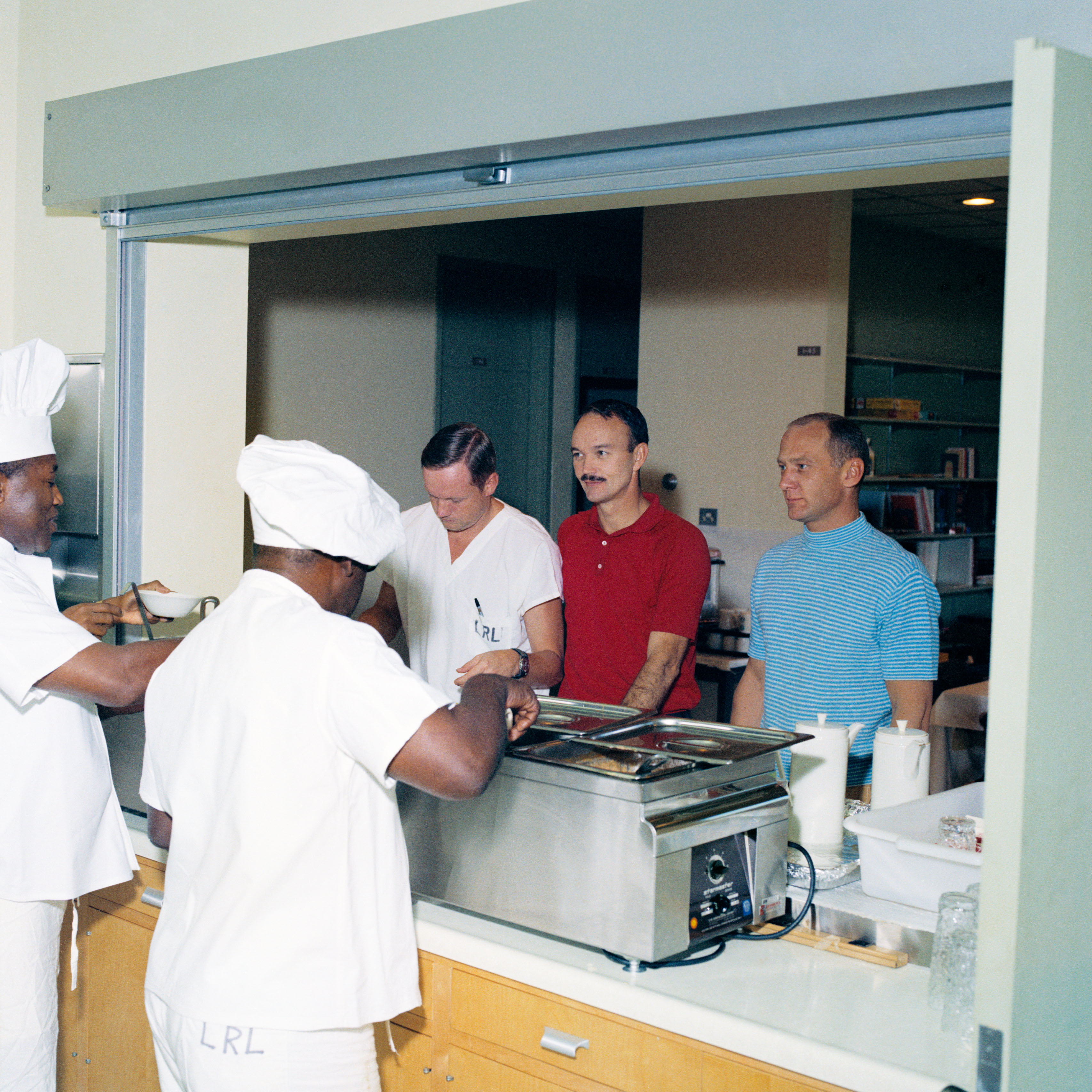
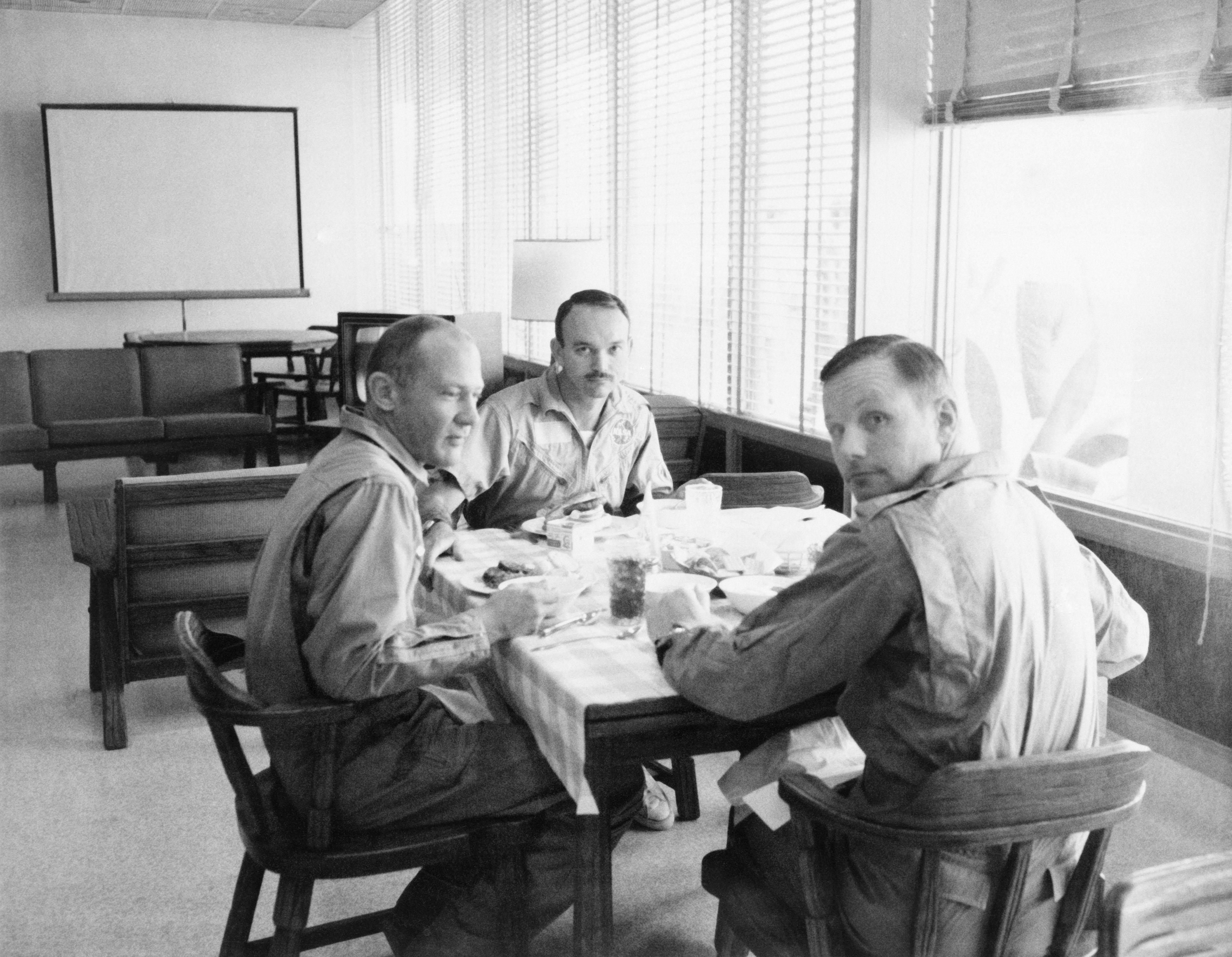
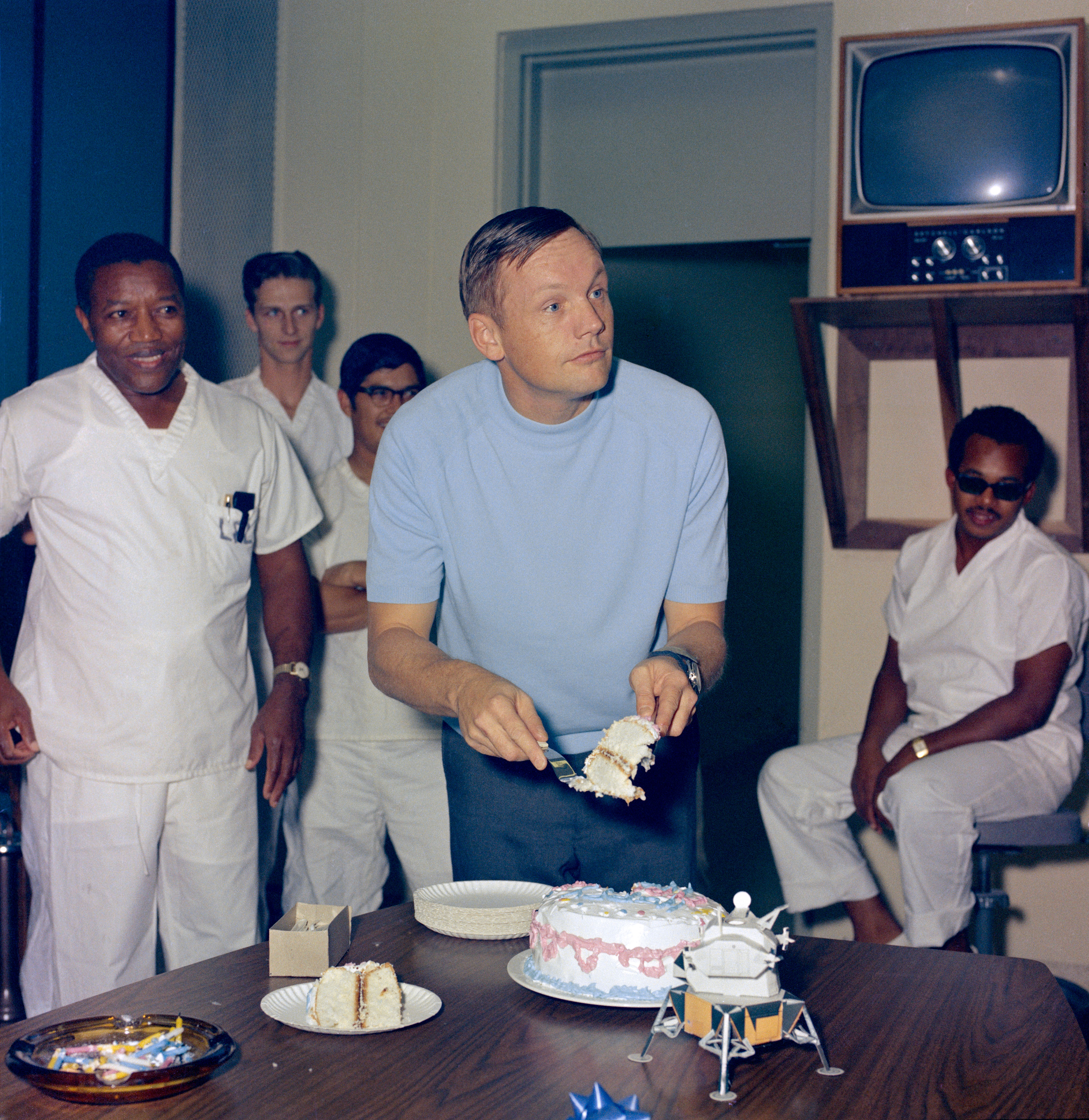
In the Lunar Receiving Laboratory (LRL) at the Manned Spacecraft Center, now NASA’s Johnson Space Center in Houston, Apollo 11 astronauts Neil A. Armstrong, left, Michael Collins, and Edwin E. “Buzz” Aldrin line up for food in the LRL’s dining area Buzz, left, Mike, and Neil enjoy a meal together in the LRL’s dining room Neil celebrates his 39th birthday in the LRL
Left: In the Lunar Receiving Laboratory (LRL) at the Manned Spacecraft Center, now NASA’s Johnson Space Center in Houston, Apollo 11 astronauts Neil A. Armstrong, left, Michael Collins, and Edwin E. “Buzz” Aldrin line up for food in the LRL’s dining area. Middle: Buzz, left, Mike, and Neil enjoy a meal together in the LRL’s dining room. Right: Neil celebrates his 39th birthday in the LRL.

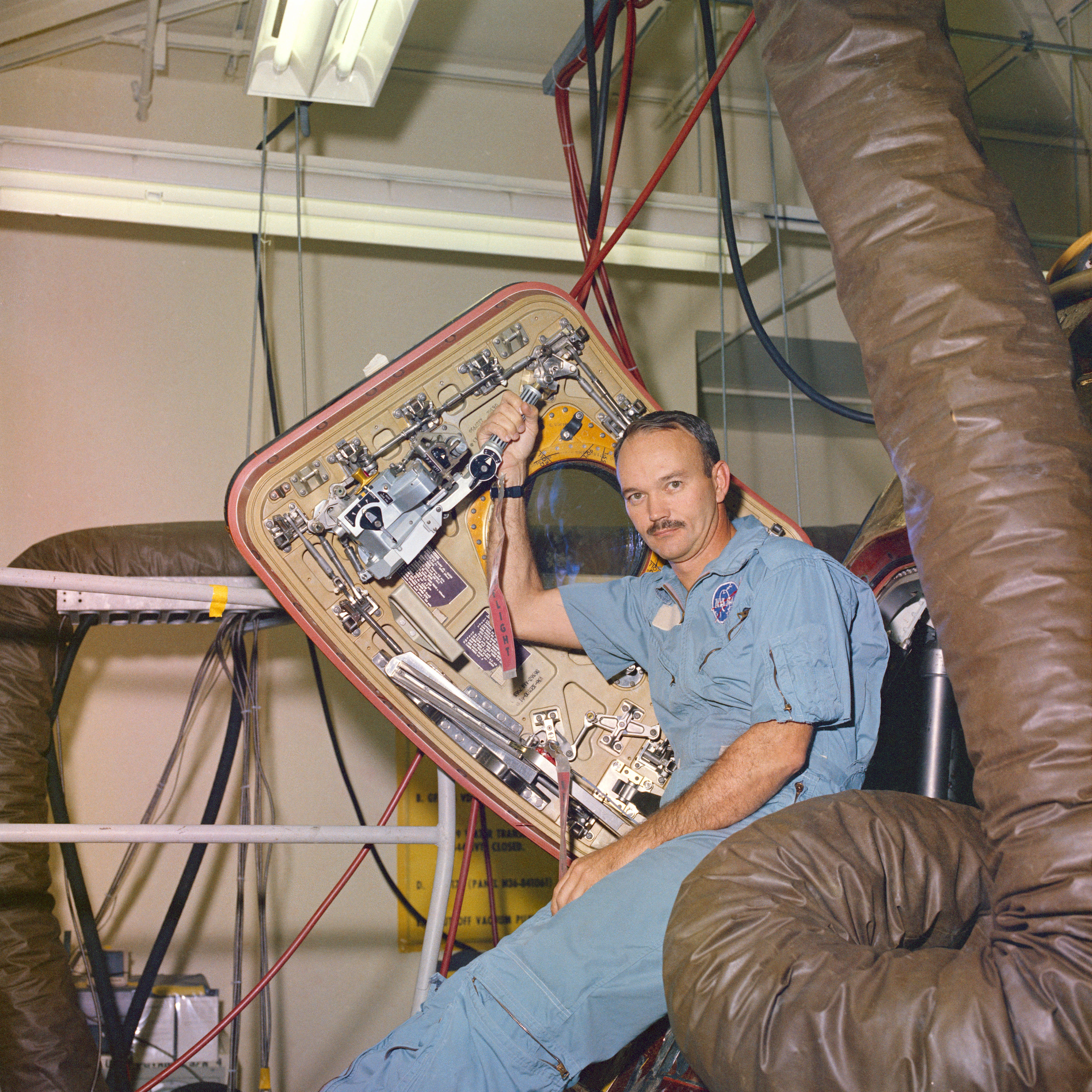
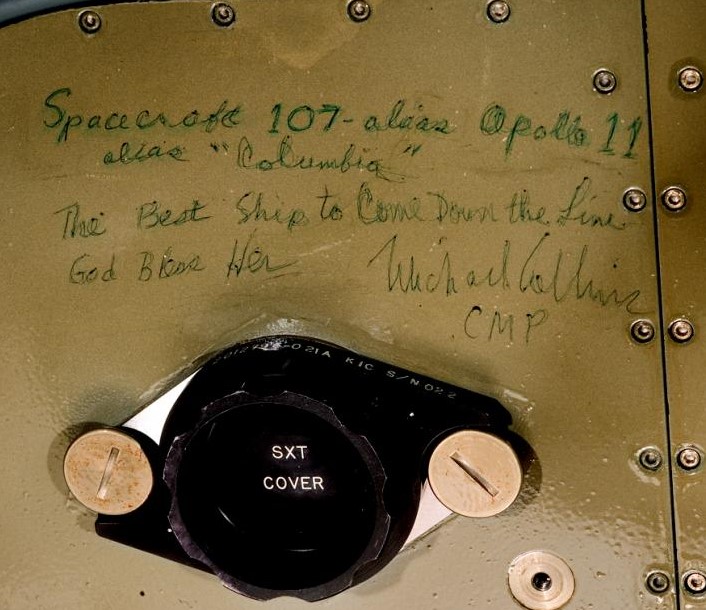
NASA engineer John K. Hirasaki opens the hatch to the Apollo 11 Command Module Columbia for the first time in the Lunar Receiving Laboratory (LRL) at the Manned Spacecraft Center, now NASA’s Johnson Space Center in Houston Mike Collins sits in Columbia’s hatch in the LRL While still aboard the U.S.S. Hornet, Mike wrote this inscription inside Columbia
Left: NASA engineer John K. Hirasaki opens the hatch to the Apollo 11 Command Module Columbia for the first time in the Lunar Receiving Laboratory (LRL) at the Manned Spacecraft Center, now NASA’s Johnson Space Center in Houston. Middle: Mike Collins sits in Columbia’s hatch in the LRL. Right: While still aboard the U.S.S. Hornet, Mike wrote this inscription inside Columbia.

Collins’ inscription inside Columbia, first written while aboard the U.S.S. Hornet, and retraced in the LRL:
Spacecraft 107, alias Apollo 11, alias “Columbia”
The Best Ship to Come Down the Line
God Bless Her.
Michael Collins CMP
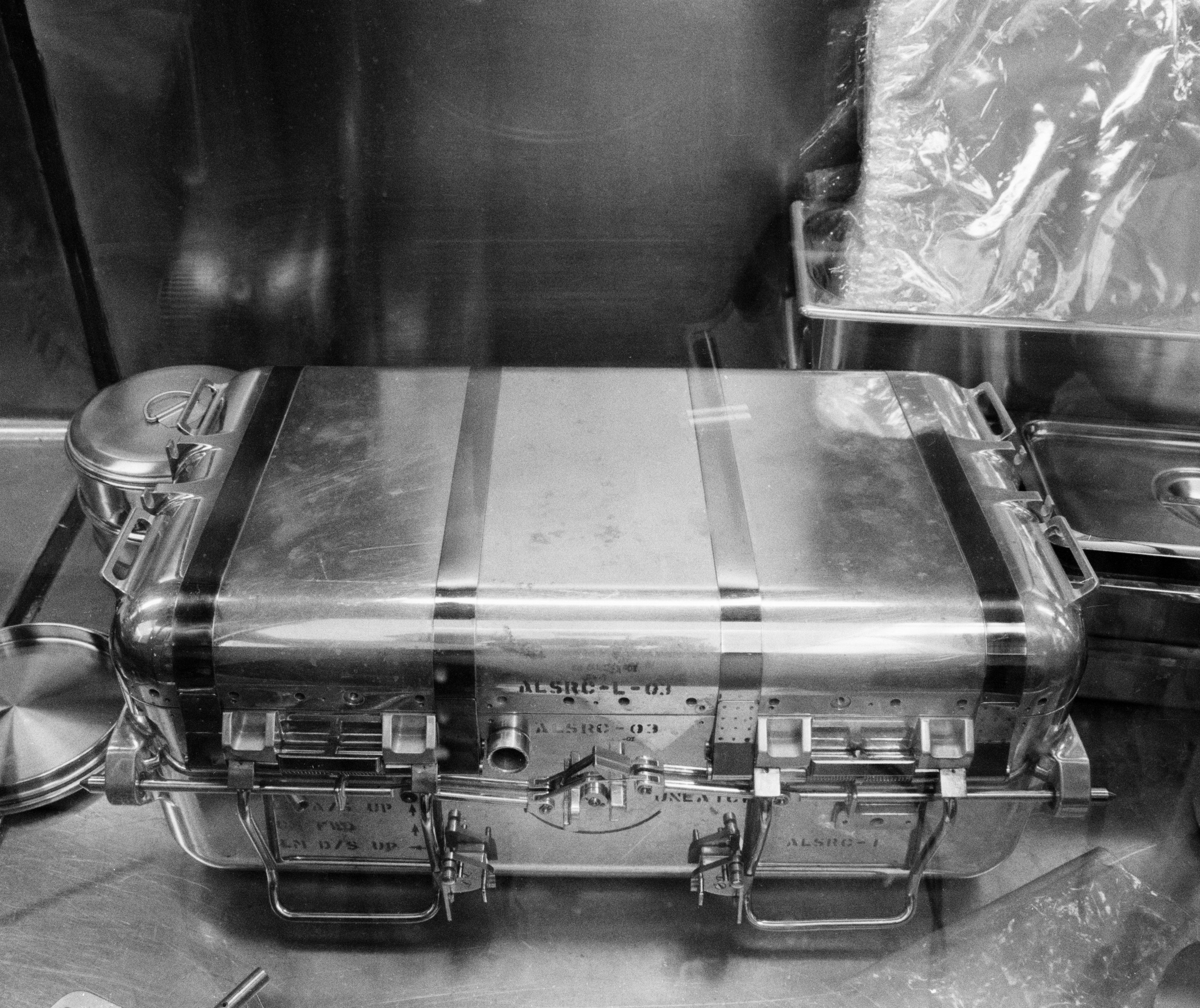
Aug. 5, 1969. In the Lunar Receiving Laboratory, scientists open the second Apollo 11 Lunar Sample Return Container and begin to examine the rock and soil samples Aug. 5, 1969. In the Lunar Receiving Laboratory, scientists open the second Apollo 11 Lunar Sample Return Container and begin to examine the rock and soil samples Aug. 5, 1969. In the Lunar Receiving Laboratory, scientists open the second Apollo 11 Lunar Sample Return Container and begin to examine the rock and soil samples
Aug. 5, 1969. In the Lunar Receiving Laboratory, scientists open the second Apollo 11 Lunar Sample Return Container and begin to examine the rock and soil samples.

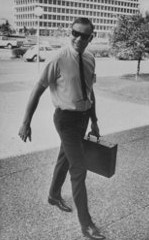
On Aug. 10, 1969, Buzz, left, Mike, and Neil exit the Lunar Receiving Laboratory at the Manned Spacecraft Center (MSC Morning of Aug. 12, Neil reports to work at his office in MSC’s Building 4 Afternoon of Aug. 12, Buzz, left, Neil, and Mike meet the press in MSC’s auditorium
Left: On Aug. 10, 1969, Buzz, left, Mike, and Neil exit the Lunar Receiving Laboratory at the Manned Spacecraft Center (MSC), now NASA’s Johnson Space Center in Houston, ending their 21-day quarantine. Middle: Morning of Aug. 12, Neil reports to work at his office in MSC’s Building 4. Right: Afternoon of Aug. 12, Buzz, left, Neil, and Mike meet the press in MSC’s auditorium.

Armstrong’s comments to open the press conference:

“It was our pleasure to participate in one great adventure. It’s an adventure that took place, not just in the month of July, but rather one that took place in the last decade. We … had the opportunity to share that adventure over its developing and unfolding in the past months and years. It’s our privilege today to share with you some of the details of that final month of July that was certainly the highlight, for the three of us, of that decade.”

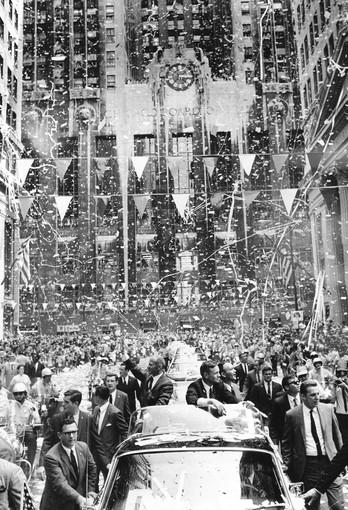
An estimated four million people attend the ticker tape parade in New York City for the Apollo 11 astronauts The ticker tape parade in Chicago drew two million people The Apollo 11 astronauts and their wives at the official state dinner in Los Angeles, hosted by President Richard M. Nixon
Aug. 13, 1969. Left: An estimated four million people attend the ticker tape parade in New York City for the Apollo 11 astronauts. Middle: The ticker tape parade in Chicago drew two million people. Right: The Apollo 11 astronauts and their wives at the official state dinner in Los Angeles, hosted by President Richard M. Nixon.

Aug. 14, 1969. NASA Administrator Thomas O. Paine, left, accompanies Buzz, Mike, and Neil on the plane back to Houston Aug. 16. Ticker tape parade in downtown Houston attended by 250,000 people Aug. 16. Buzz, left, Neil, and Mike with emcee Frank Sinatra during the barbecue party in the Houston Astrodome
Left: Aug. 14, 1969. NASA Administrator Thomas O. Paine, left, accompanies Buzz, Mike, and Neil on the plane back to Houston. Middle: Aug. 16. Ticker tape parade in downtown Houston attended by 250,000 people. Right: Aug. 16. Buzz, left, Neil, and Mike with emcee Frank Sinatra during the barbecue party in the Houston Astrodome.

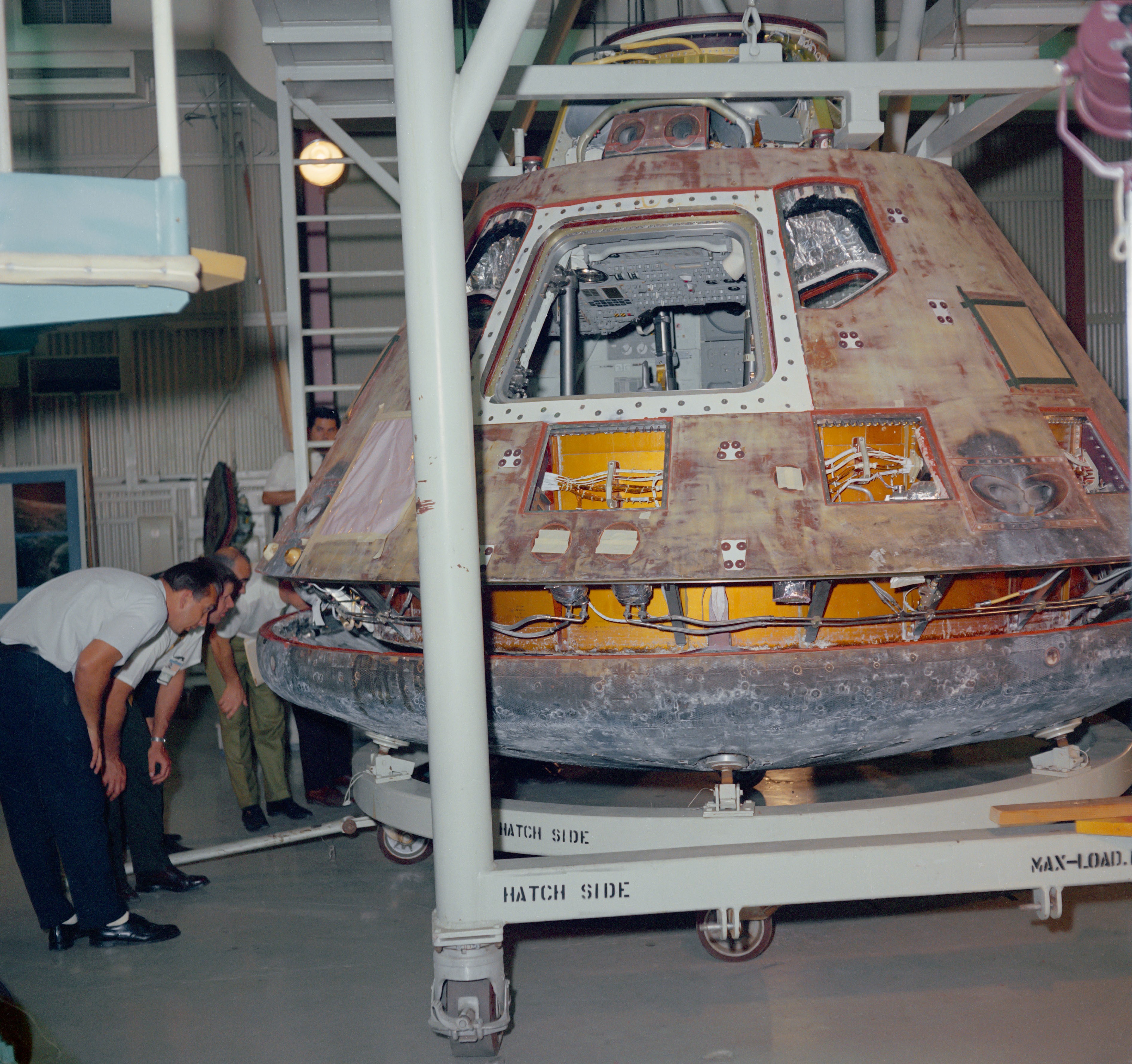
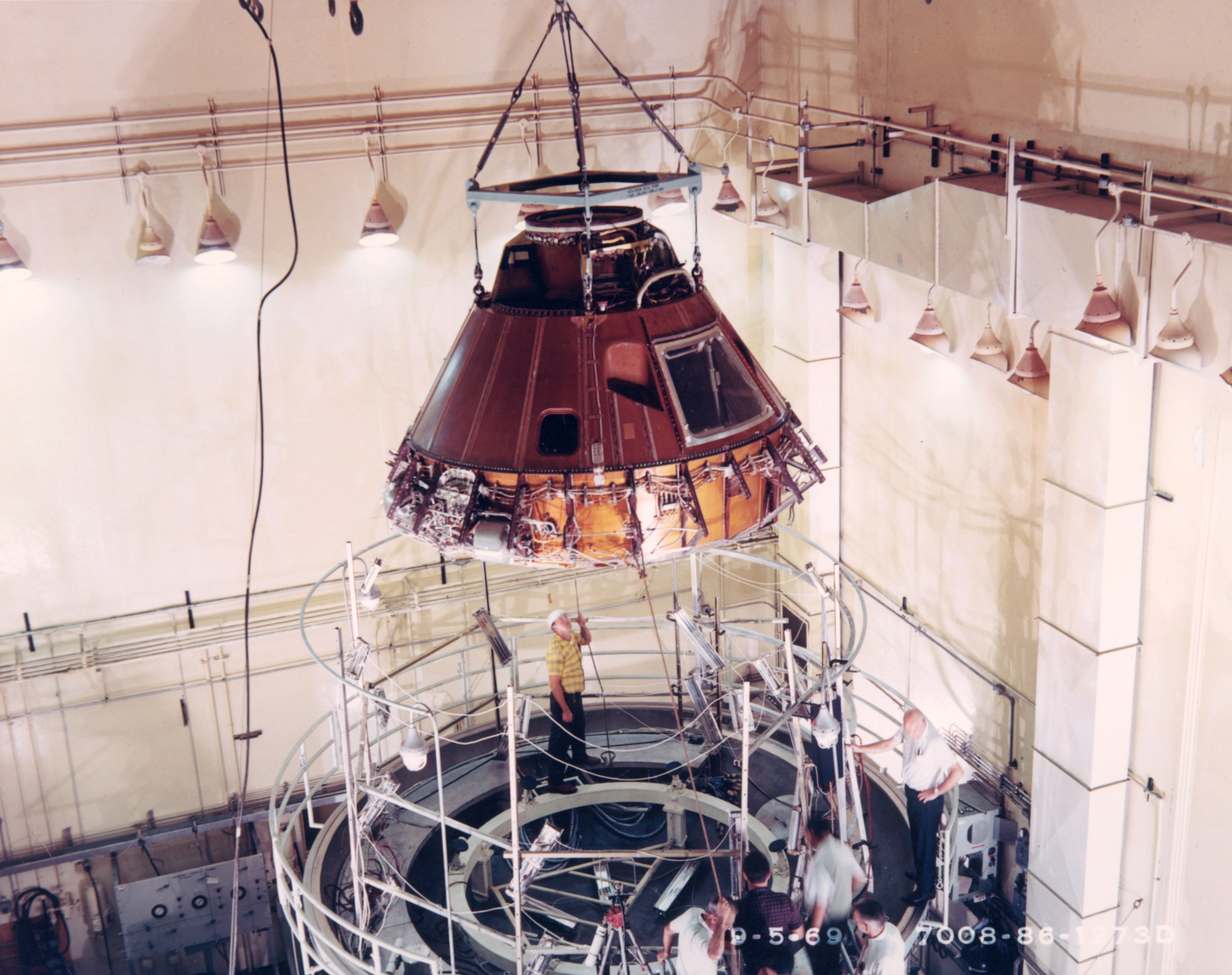
Workers load the Apollo 11 Command Module Columbia into a Super Guppy for transport to the North American Rockwell plant in Downey, California Workers in Downey inspect Columbia on Aug. 19 Workers prepare to place Columbia in a chamber to bakeout any residual moisture to ready it for public display
Left: On Aug. 14, at Houston’s Ellington Air Force Base, workers load the Apollo 11 Command Module Columbia into a Super Guppy for transport to the North American Rockwell plant in Downey, California. Middle: Workers in Downey inspect Columbia on Aug. 19. Right: Workers prepare to place Columbia in a chamber to bakeout any residual moisture to ready it for public display.

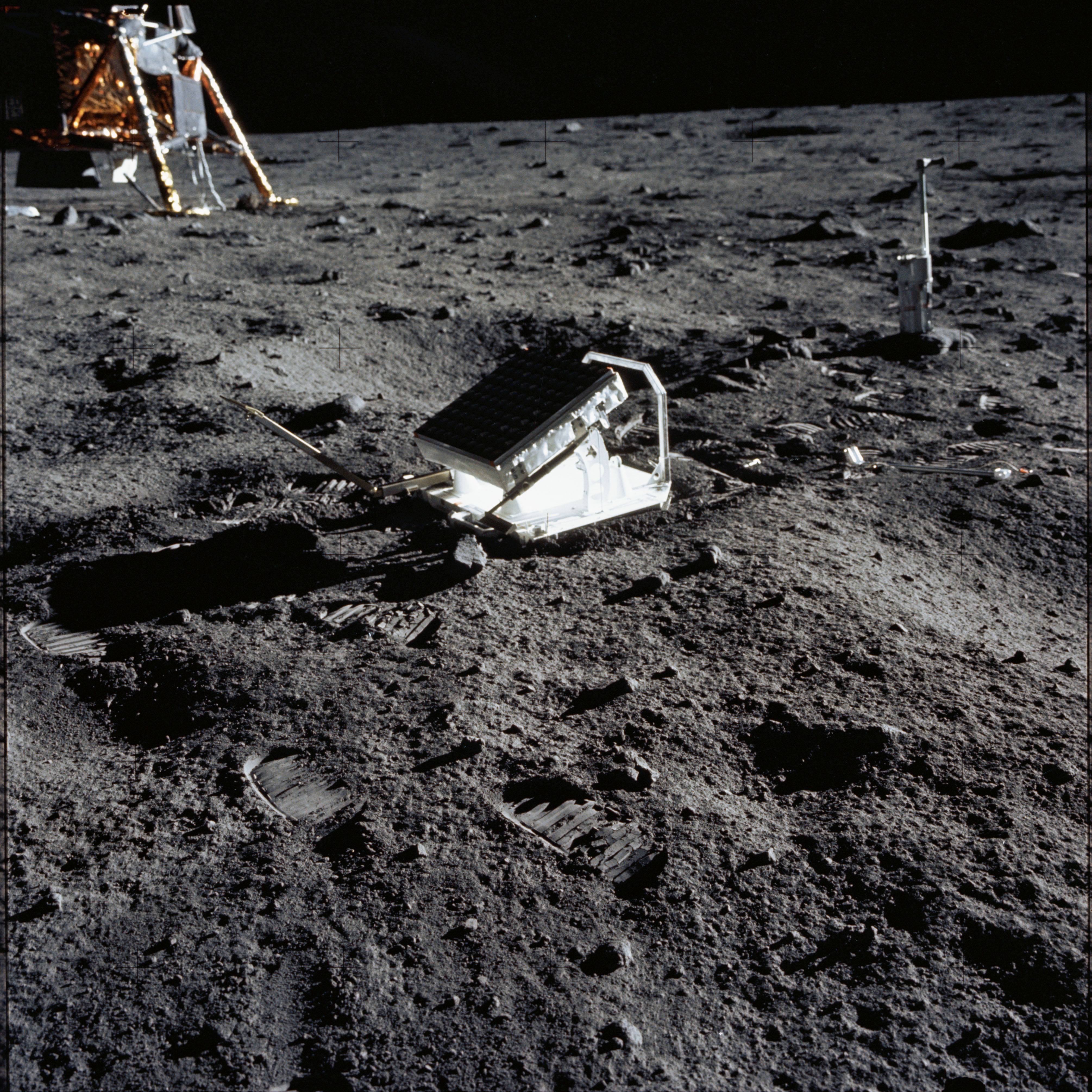
Neil rolled up the Solar Wind Composition experiment at the end of the spacewalk and placed it inside the Apollo Lunar Sample Return Container that arrived in the Lunar Receiving Laboratory on July 26, 1969 Astronomers sent the first successful beam to the Laser Ranging Retroreflector on Aug. 1, 1969, and it remains available for use to this day The Passive Seismic Experiment returned useful data for three weeks but stopped responding to commands on Aug. 24, 1969, most likely due to overheating in the lunar Sun
Apollo 11 science experiments. Left: Neil rolled up the Solar Wind Composition experiment at the end of the spacewalk and placed it inside the Apollo Lunar Sample Return Container that arrived in the Lunar Receiving Laboratory on July 26, 1969. Middle: Astronomers sent the first successful beam to the Laser Ranging Retroreflector on Aug. 1, 1969, and it remains available for use to this day. Right: The Passive Seismic Experiment returned useful data for three weeks but stopped responding to commands on Aug. 24, 1969, most likely due to overheating in the lunar Sun.

Apollo 12

At the time Apollo 11 returned from its historic journey, NASA had plans for nine more Apollo Moon landing missions. On July 29, Apollo Program Director Samuel C. Phillips at NASA Headquarters in Washington, D.C., announced the launch date, Nov. 14, 1969, and the landing site, in the Ocean of Storms, for Apollo 12. The main goals of this second lunar landing included a precision touchdown near the Surveyor 3 spacecraft that landed there in April 1967, and an expanded science program conducted during two spacewalks, including the deployment of the first Apollo Lunar Surface Experiment Package (ALSEP), a suite of science instruments. The Apollo 12 prime crew of Commander Charles “Pete” Conrad, Command Module Pilot (CMP) Richard F. Gordon, and Lunar Module Pilot (LMP) Alan L. Bean and their backups David R. Scott, Alfred M. Worden, and James B. Irwin, began training after their assignment in April. In addition to rehearsing aspects of their flight in mission simulators, they practiced for the descent and precision landing, for the two spacewalks planned during their 31.5-hour lunar surface stay, including visiting and examining Surveyor 3, and for the expanded geology exploration. The latter included a three-day geology field trip to Hawaii with simulated lunar traverses. At NASA’s Jet Propulsion Laboratory in Pasadena, California, the astronauts received a detailed briefing on the Surveyor spacecraft. At NASA’s Kennedy Space Center (KSC) in Florida, workers had already assembled their Saturn V rocket, with rollout to Launch Pad 39A planned for early September. The U.S. Navy chose the U.S.S. Hornet (CVS-12), the carrier that successfully recovered Apollo 11, to reprise its role as prime recovery ship for Apollo 12.

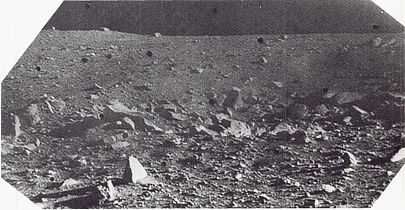
Lunar front side showing the landing sites for Apollo 11 and 12 Surveyor 3 took this panorama of its landing site in April 1967, also the targeted site for Apollo 12
Left: Lunar front side showing the landing sites for Apollo 11 and 12. Right: Surveyor 3 took this panorama of its landing site in April 1967, also the targeted site for Apollo 12.
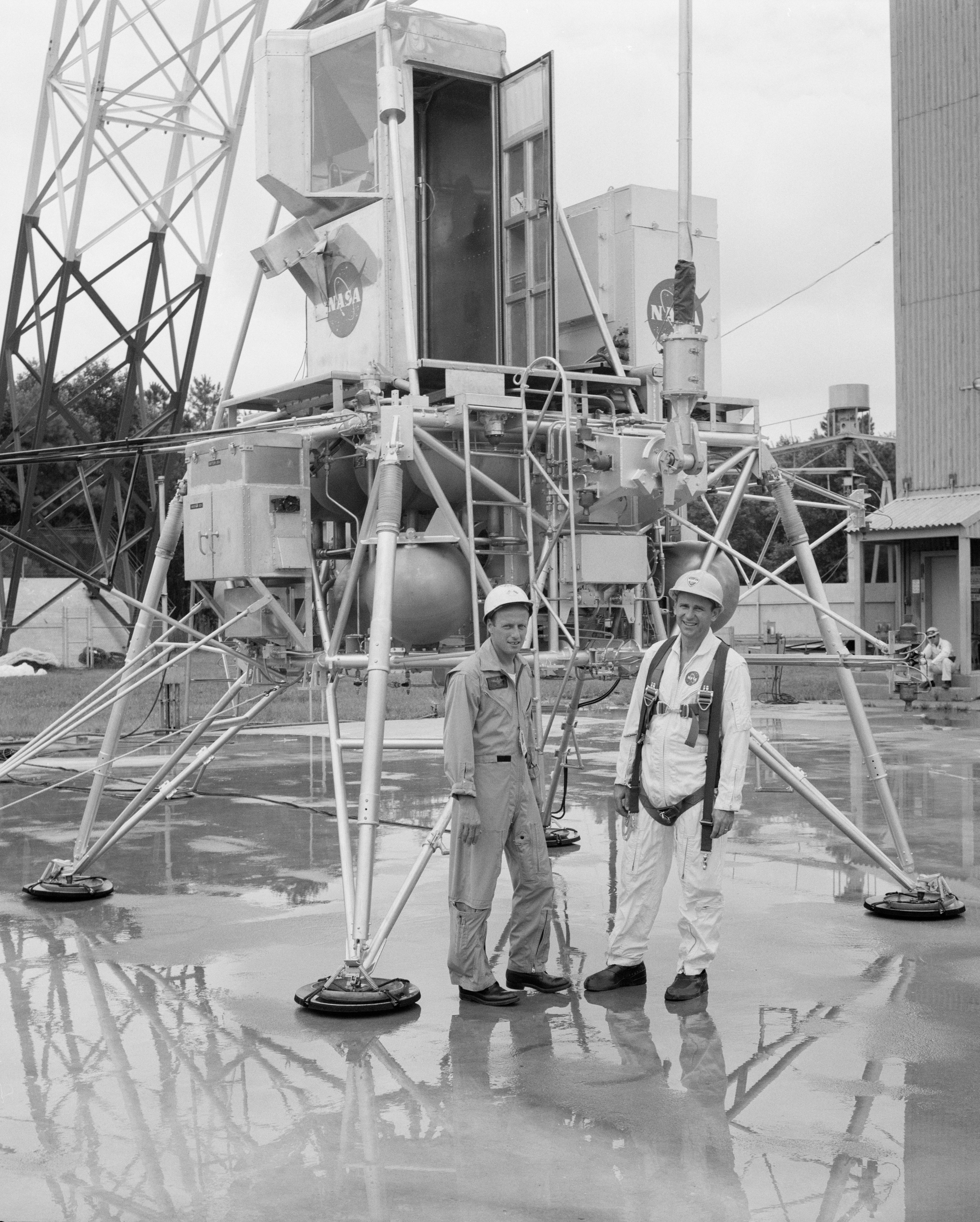
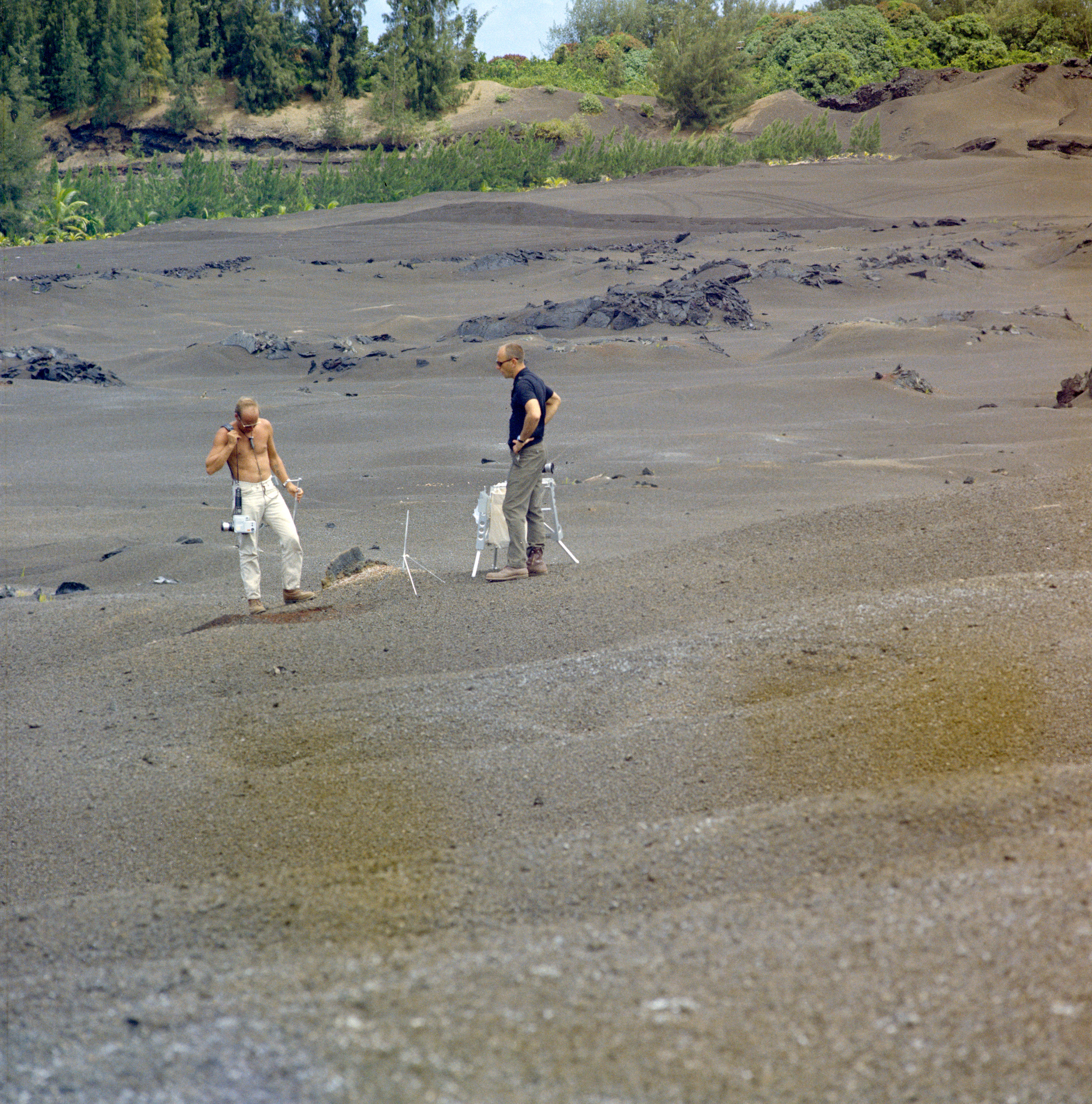
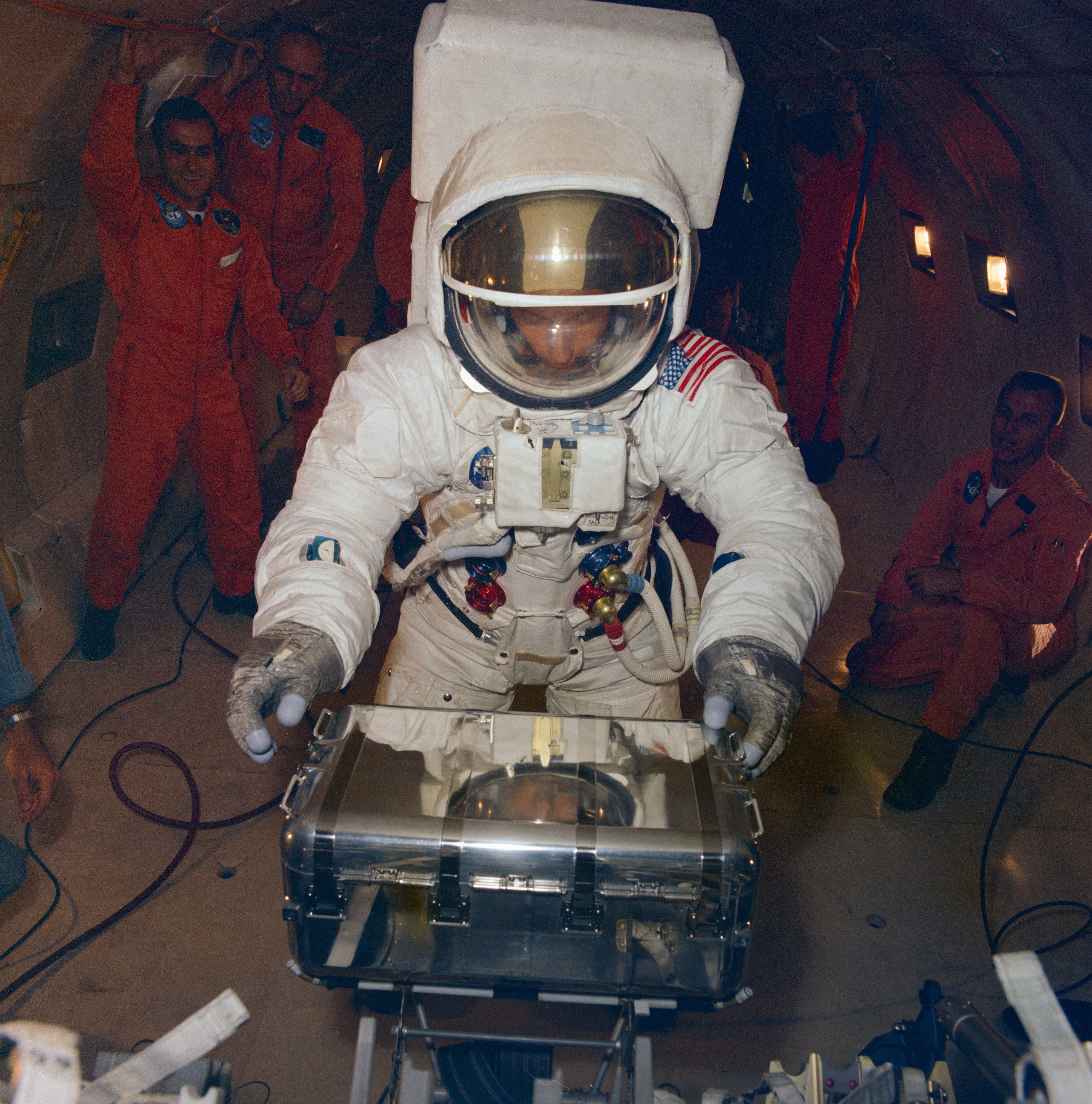
Apollo 12 astronauts Charles “Pete” Conrad, left, and Alan L. Bean at the Lunar Landing Research Facility (LLRF) at NASA’s Langley Research Center in Hampton, Virginia Apollo 12 backup astronaut David R. Scott at the LLRF Conrad, left, and Bean during the Aug. 9-11 geology field trip to Hawaii Conrad practices opening an Apollo Lunar Sample Return Container during simulated one-sixth gravity aboard a KC-135 aircraft
Left: Apollo 12 astronauts Charles “Pete” Conrad, left, and Alan L. Bean at the Lunar Landing Research Facility (LLRF) at NASA’s Langley Research Center in Hampton, Virginia. Middle left: Apollo 12 backup astronaut David R. Scott at the LLRF. Middle right: Conrad, left, and Bean during the Aug. 9-11 geology field trip to Hawaii. Right: Conrad practices opening an Apollo Lunar Sample Return Container during simulated one-sixth gravity aboard a KC-135 aircraft.

Apollo 13 and 14

On Aug. 6, 1969, NASA announced the crews for Apollo 13 and 14, the third and fourth Moon landing missions. At the time of the announcement, Apollo 13 had a planned launch date in March 1970 and a proposed landing site at the Fra Mauro region in the lunar highlands, the first landing site not in the relatively flat lunar maria. Apollo 14 aimed for a July 1970 mission with the Crater Censorinus area in the lunar highlands to the southeast of the Sea of Tranquility as a tentative landing site. Plans for both missions called for two lunar surface excursions totaling about six hours with a lunar stay duration of 35 hours. As on Apollo 12, the crews planned to deploy an ALSEP suite of science instruments, in addition to conducting the geology field work of documenting and collecting rock and soil samples for return to scientists on Earth for analysis. 
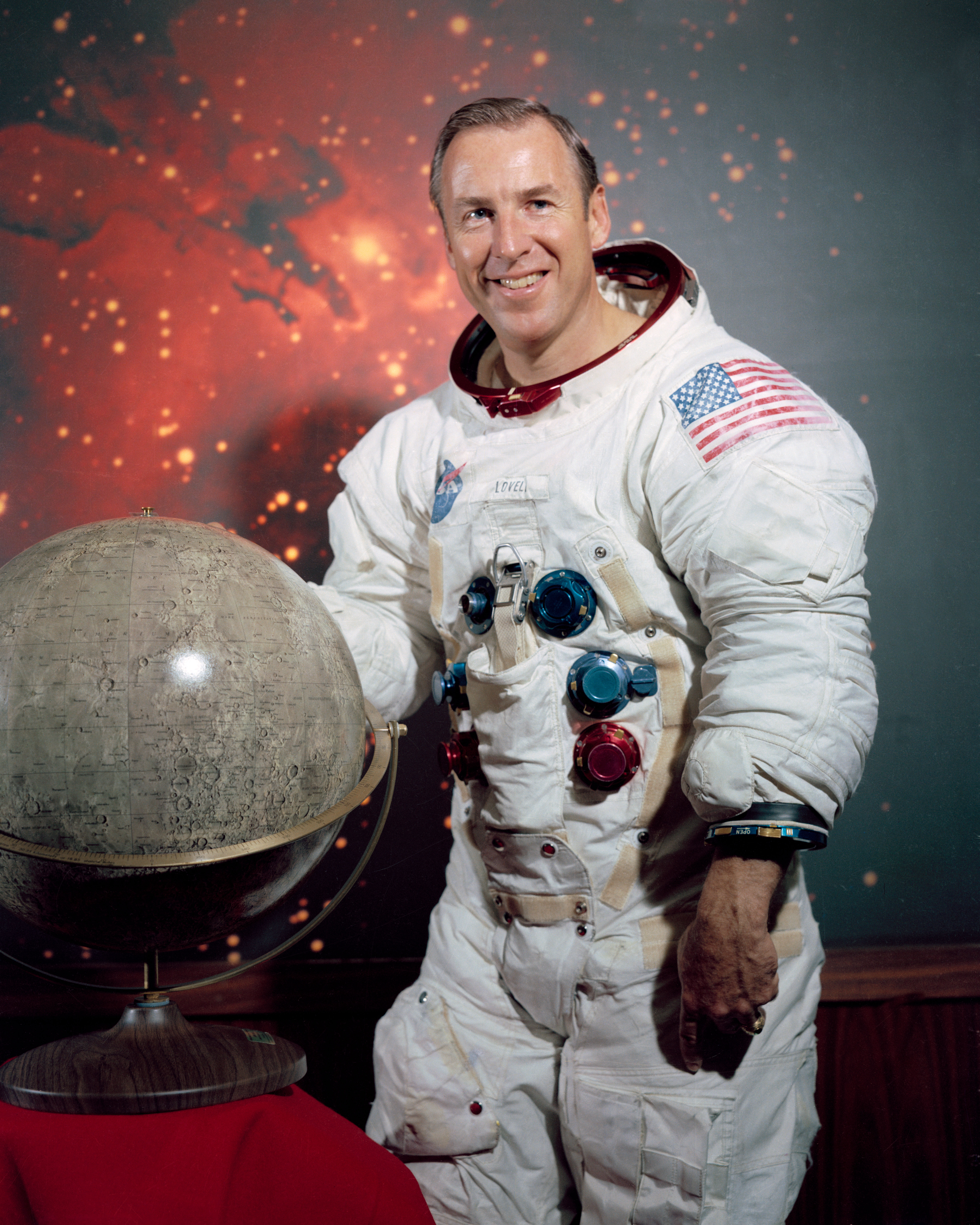
James A. Lovell Thomas K. “Ken” Mattingly Fred W. Haise
The Apollo 13 crew of James A. Lovell, left, Thomas K. “Ken” Mattingly, and Fred W. Haise.

The prime crew for Apollo 13 consisted of Commander James A. Lovell, CMP Thomas K. “Ken” Mattingly, and LMP Fred W. Haise. Lovell would make his fourth space mission aboard Apollo 13, having flown on Gemini VII and XII as well as orbiting the Moon during Apollo 8 – making him the first person to travel to the Moon twice. Neither Mattingly nor Haise had flown in space before, although Haise had served with Lovell on the Apollo 11 backup crew. The Apollo 13 backup crew consisted of John W. Young, John L. Swigert, and Charles M. Duke. Young had flown three previous missions, Gemini 3 and X and more recently aboard Apollo 10, the Moon landing dress rehearsal flight. Swigert and Duke had no spaceflight experience, although Duke served as capsule communicator during Apollo 10 as well as during the Apollo 11 Moon landing.
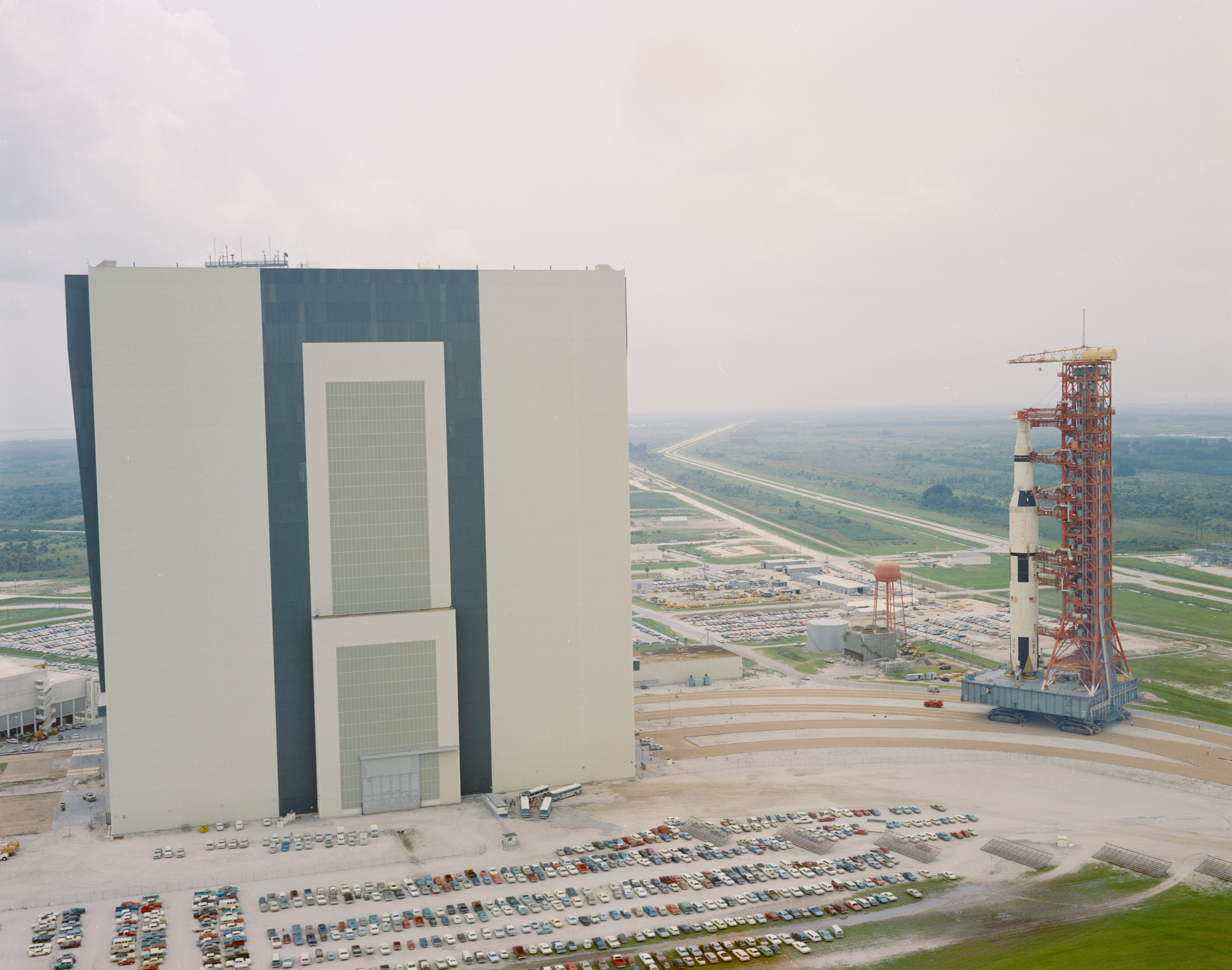
The Saturn V for Apollo 13 rolls out of the Vehicle Assembly Building (VAB) at NASA’s Kennedy Space Center in Florida to relocate it from High Bay 2 to High Bay 1 The Apollo 13 Saturn V rolls back in to High Bay 1 of the VAB
Left: The Saturn V for Apollo 13 rolls out of the Vehicle Assembly Building (VAB) at NASA’s Kennedy Space Center in Florida to relocate it from High Bay 2 to High Bay 1. Right: The Apollo 13 Saturn V rolls back in to High Bay 1 of the VAB.

Flight hardware for Apollo 13 had already arrived at KSC. Workers in the Vehicle Assembly Building (VAB) completed stacking of the three Saturn V rocket stages in High Bay 2 on July 31. They added a boilerplate Apollo spacecraft to the top of the rocket, and in a roll-around maneuver on Aug. 8, the stack left the VAB, crawled to the other side of the building, and rolled back inside to High Bay 1. North American Rockwell delivered the Command and Service Modules to KSC on June 26, where workers in the Manned Spacecraft Operations Building (MSOB) mated the two modules four days later in preparation for preflight testing in altitude chambers. The Lunar Module (LM) ascent and descent stages arrived at KSC on June 27 and 28, respectively, from their manufacturer, the Grumman Aircraft Corporation in Bethpage, New York. Following a docking test between the CM and LM, workers in the MSOB mated the two stages of the LM on July 15.

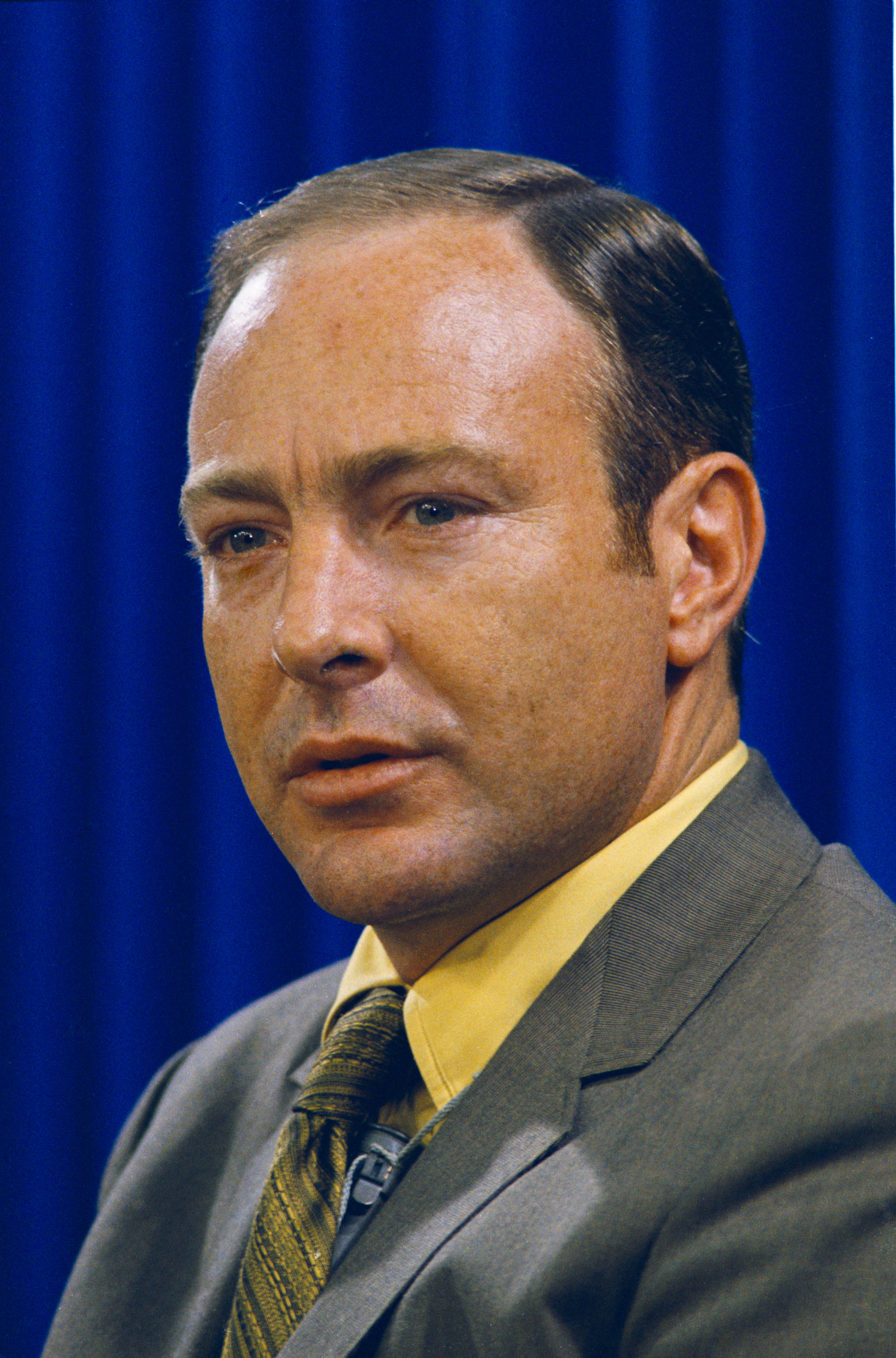
Alan B. Shepard Stuart A. Roosa Edgar D. Mitchell
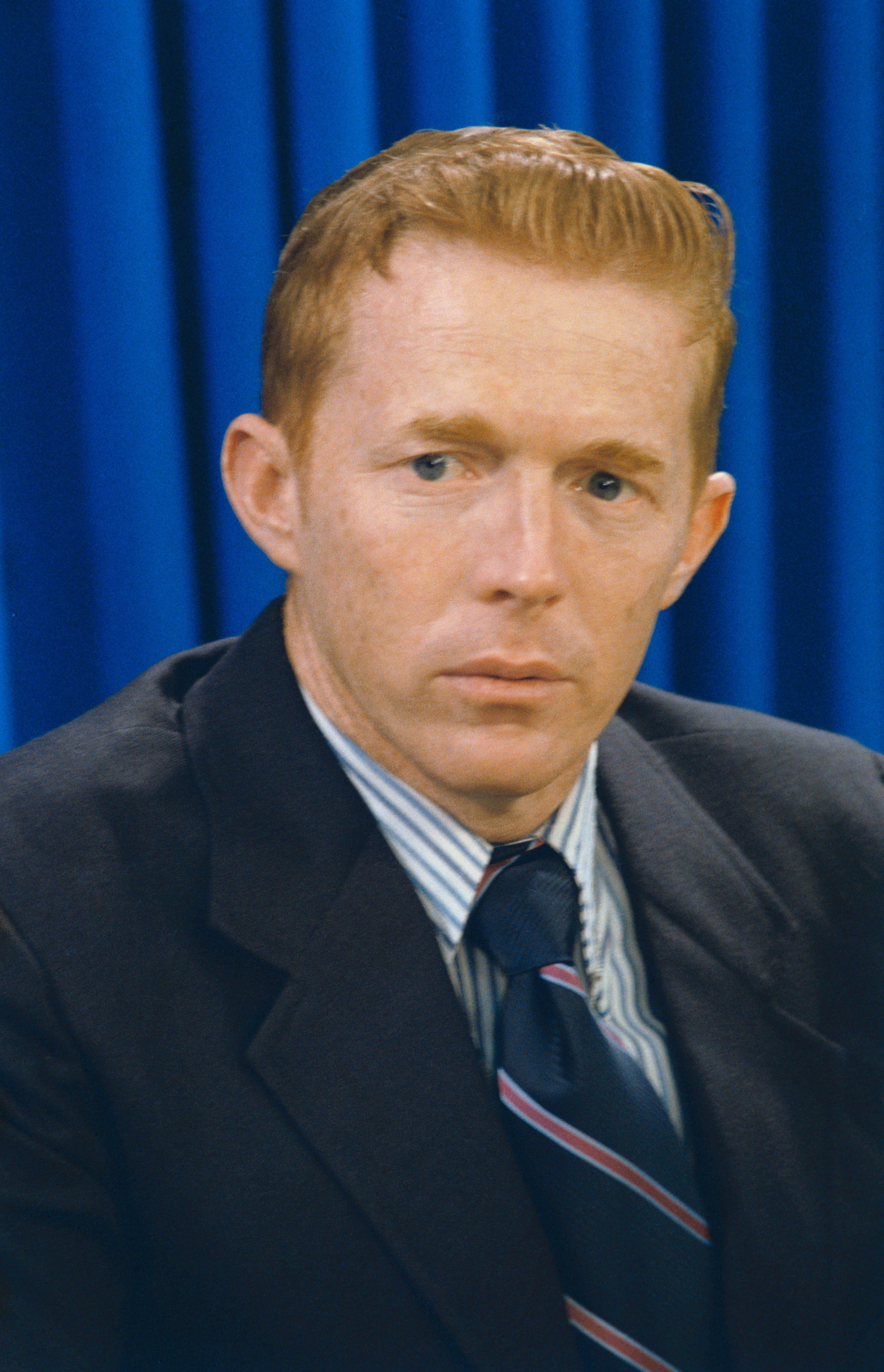
The Apollo 14 crew of Alan B. Shepard, left, Stuart A. Roosa, and Edgar D. Mitchell.

NASA designated Commander Alan B. Shepard, CMP Stuart A. Roosa, and LMP Edgar D. Mitchell as the prime crew for Apollo 14. Shepard, the first American in space when he launched aboard his Freedom 7 spacecraft in May 1961, recently returned to flight status after a surgical intervention cured his Ménière’s disease, an inner ear disorder. Neither Roosa nor Mitchell had spaceflight experience. The backup crew consisted of Eugene A. Cernan, Ronald E. Evans, and Joe H. Engle. Cernan had flown in space twice before, on Gemini IX and more recently on Apollo 10. Evans and Engle had not flown in space before, although Engle earned astronaut wings as a pilot with the U.S. Air Force flying the X-15 rocket plane above the 50-mile altitude required to qualify as an astronaut on three of his 16 flights.
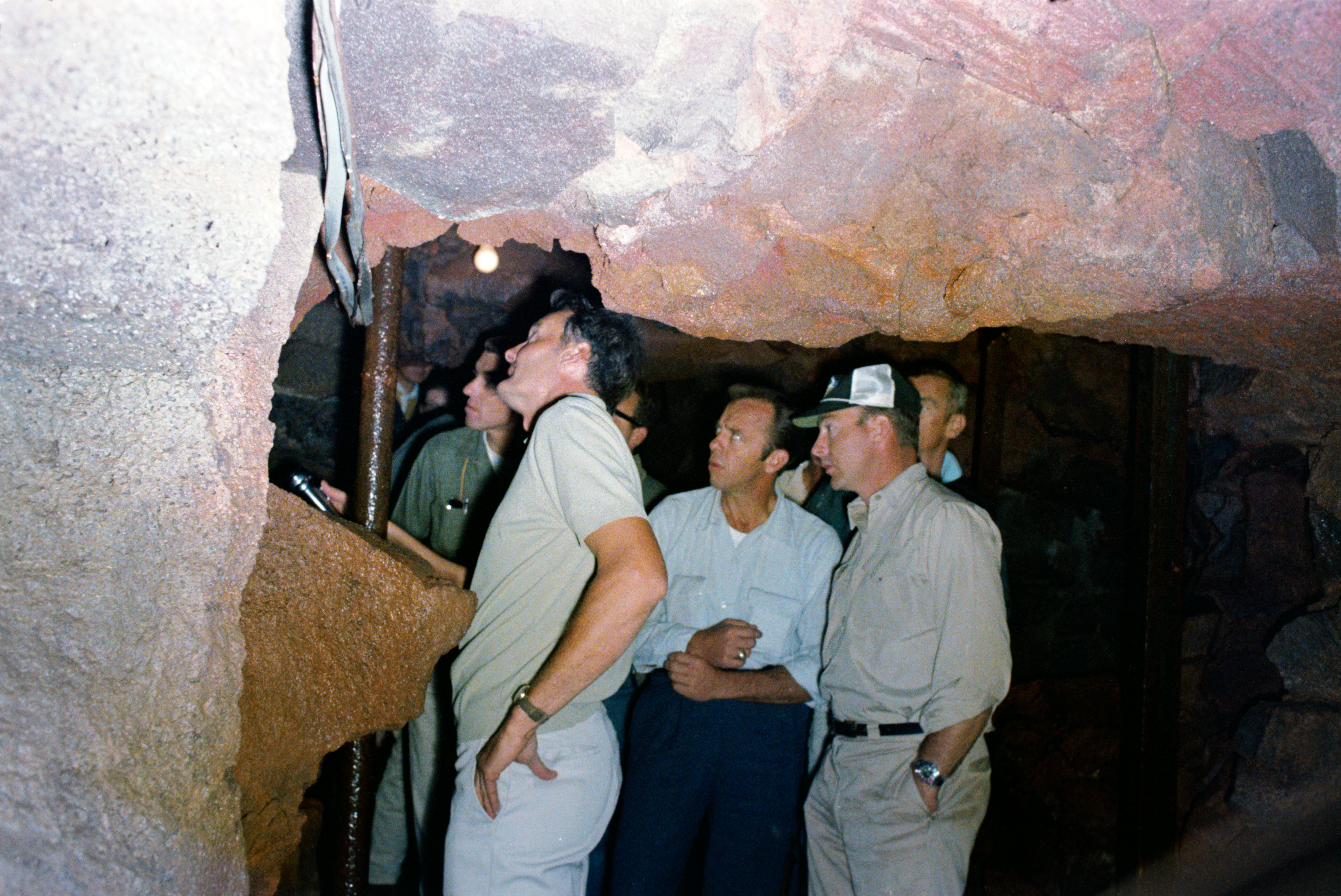
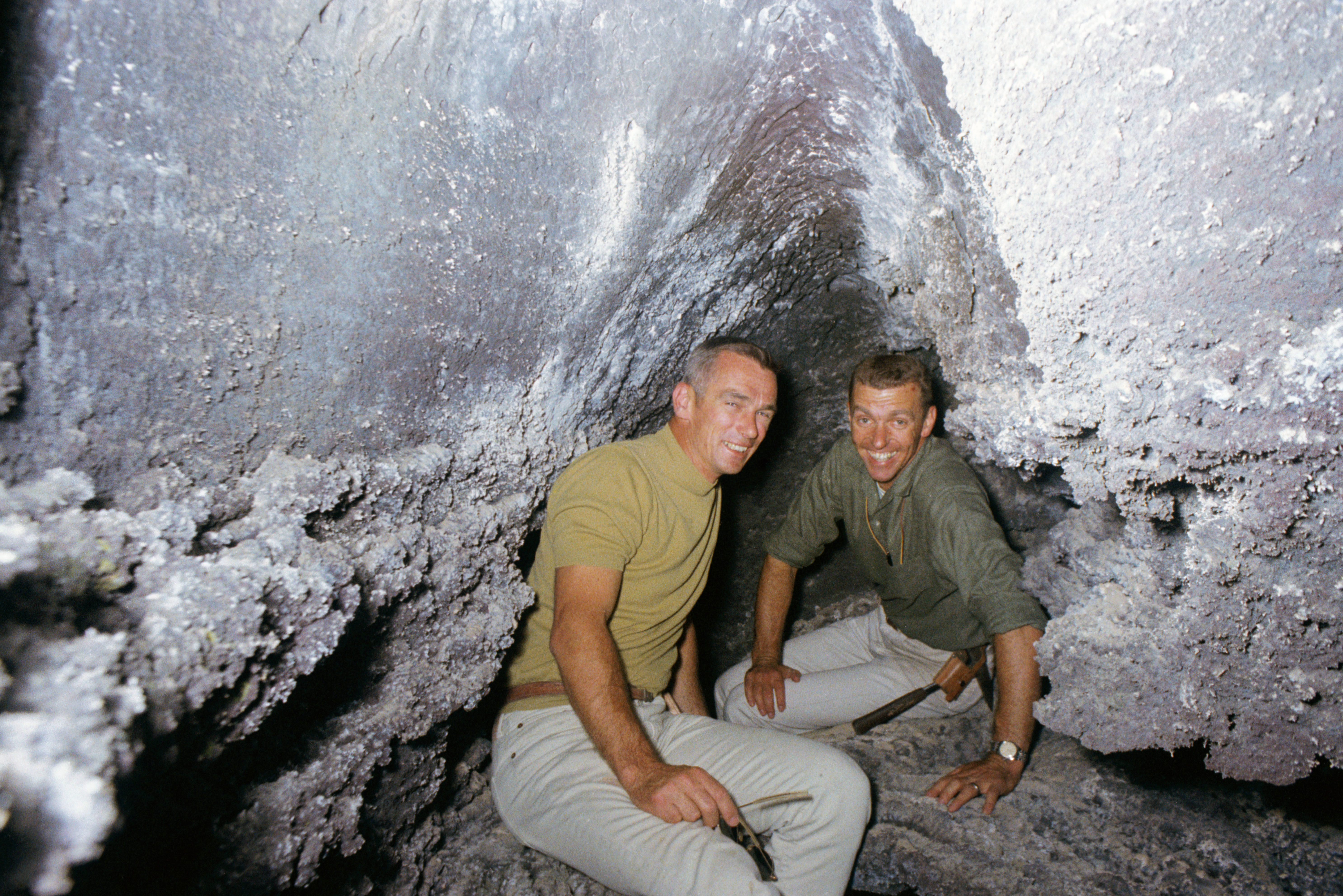
Apollo 14 astronauts Alan B. Shepard, center, and Edgar D. Mitchell, in baseball cap, during the Idaho geology field trip Apollo 14 backup crew members Eugene A. Cernan, left, and Joe H. Engle during the Idaho geology field trip
Left: Apollo 14 astronauts Alan B. Shepard, center, and Edgar D. Mitchell, in baseball cap, during the Idaho geology field trip. Right: Apollo 14 backup crew members Eugene A. Cernan, left, and Joe H. Engle during the Idaho geology field trip.

The Apollo 14 astronauts jumped right into their geology training. On Aug. 14, Shepard, Mitchell, and Engle spent the day at the United States Geological Service’s (USGS) Crater Field near Flagstaff, Arizona, including getting a geologist’s lecture on the mechanisms of crater formation. On Aug. 22 and 23, Cernan joined them on a geology field trip to Idaho, where they visited Craters of the Moon National Monument, Butte Crater lava tubes, Ammon pumice quarries, and the Wapi volcanic fields. Geologists chose these sites for training because at the time Apollo 14 planned to visit a presumed volcanic area on the Moon.

NASA management changes
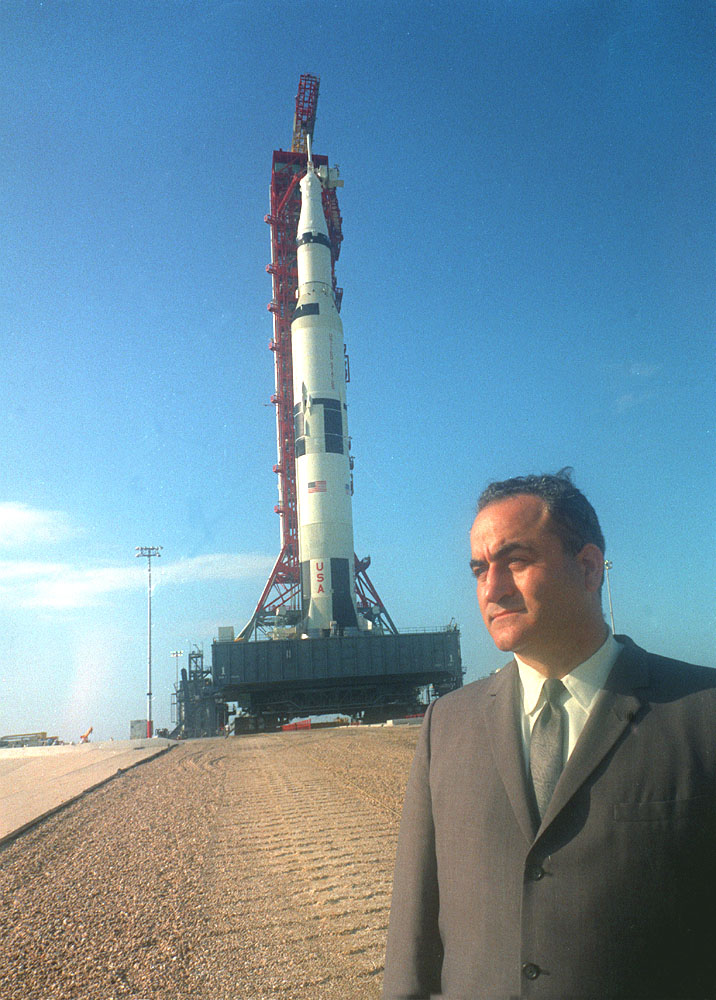
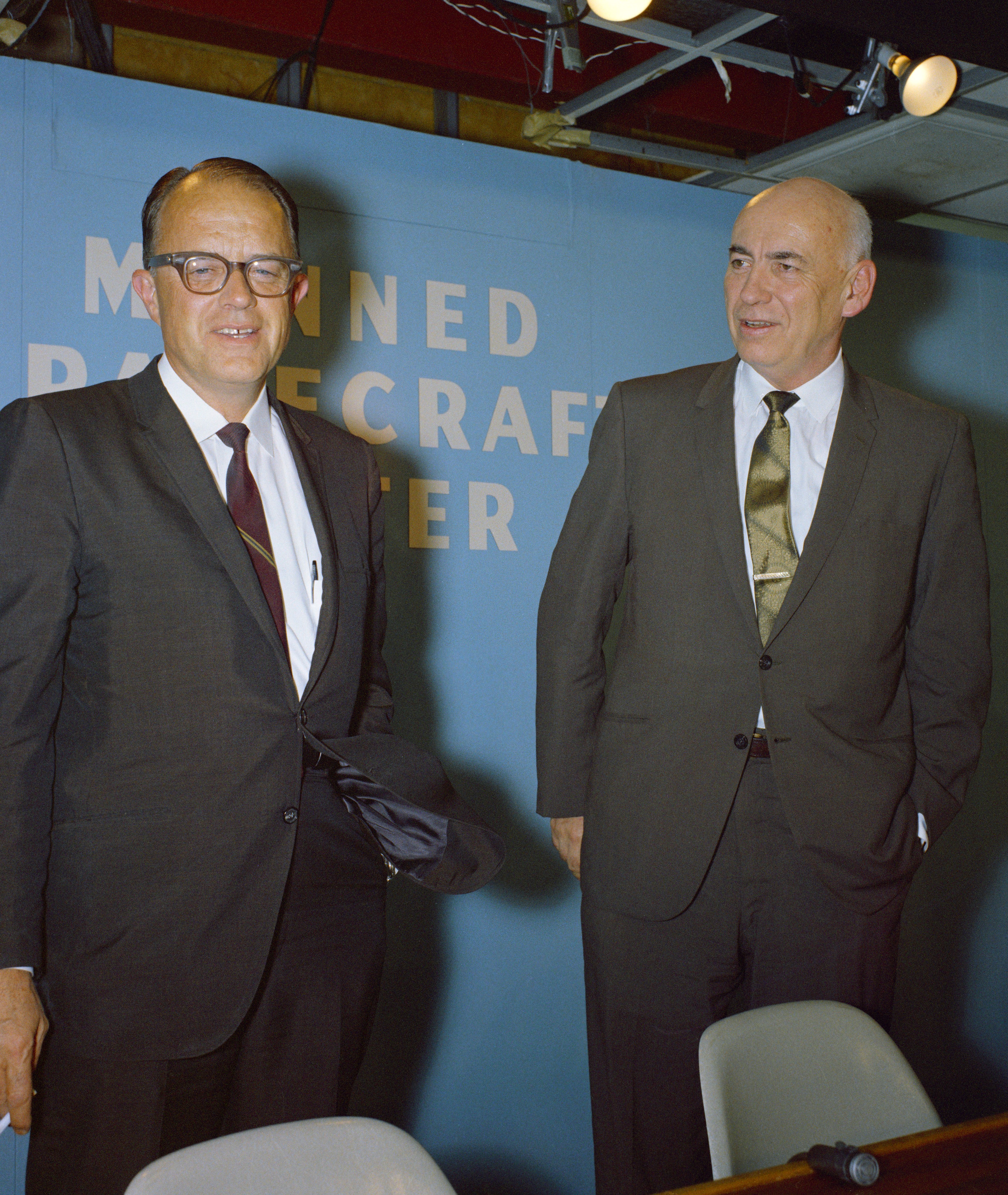
Samuel C. Phillips, Apollo Program Director at NASA Headquarters in Washington, D.C., Rocco A. Petrone, director of launch operations at KSC, seen here at the Apollo 11 rollout, succeeded Phillips George S. Trimble, left, deputy director of the Manned Spacecraft Center (MSC) Christopher C. Kraft, director of flight operations at MSC
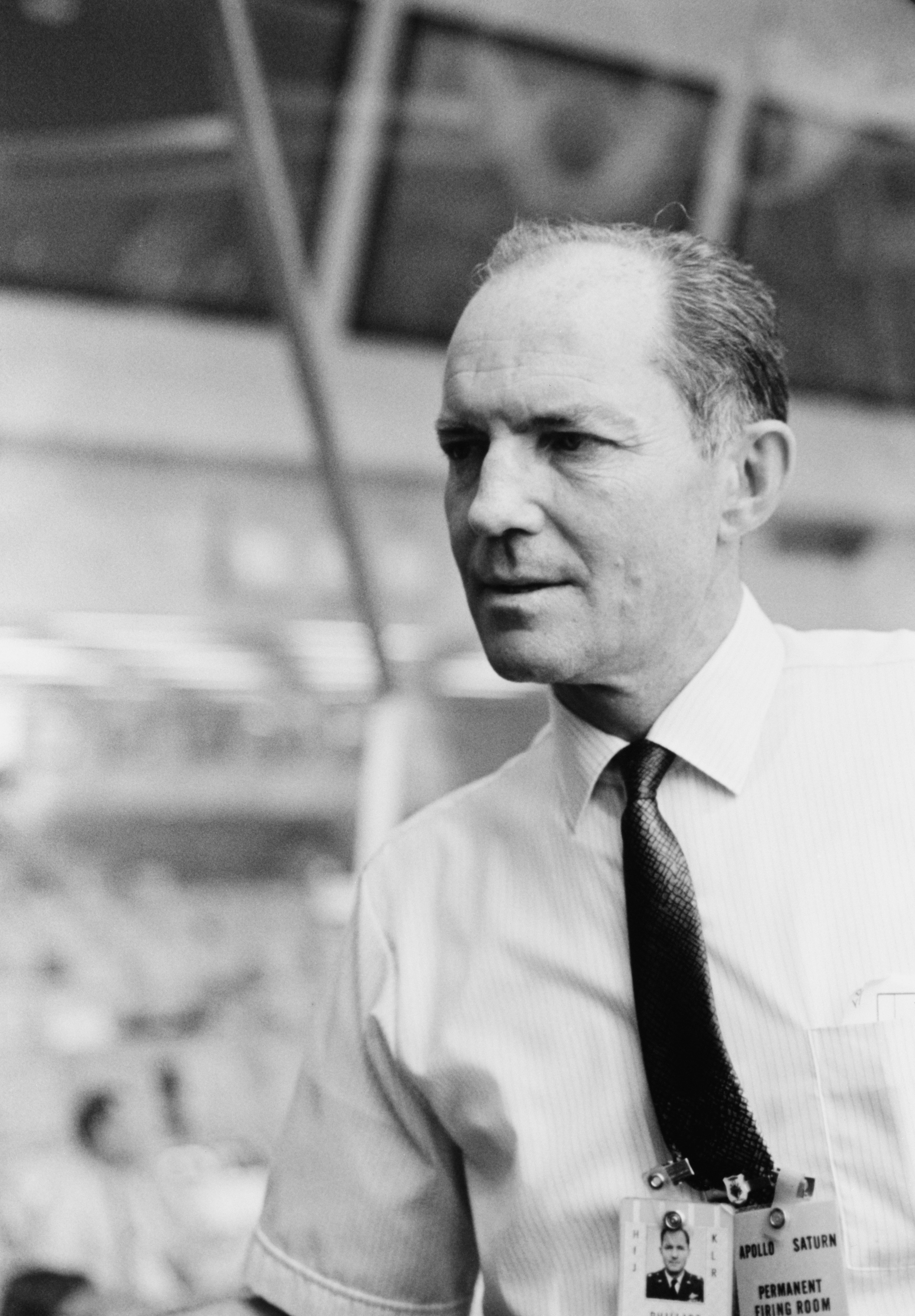
Left: Samuel C. Phillips, Apollo Program Director at NASA Headquarters in Washington, D.C., during the Apollo 11 launch in the Launch Control Center at NASA’s Kennedy Space Center (KSC) in Florida. Middle left: Rocco A. Petrone, director of launch operations at KSC, seen here at the Apollo 11 rollout, succeeded Phillips. Middle right: George S. Trimble, left, deputy director of the Manned Spacecraft Center (MSC), now NASA’s Johnson Space Center in Houston, with MSC Director Robert R. Gilruth in 1967. Right: Christopher C. Kraft, director of flight operations at MSC, seen here in Mission Control following the Apollo 11 splashdown, succeeded Trimble.

Several changes in senior NASA leadership took place following Apollo 11. At NASA Headquarters in Washington, D.C., Phillips retired as Apollo Program Director, having served in that position since 1964, and returned to the U.S. Air Force. Rocco A. Petrone, director of launch operations at KSC since 1966, succeeded him. George S. Trimble announced his retirement as MSC deputy director effective Sept. 30, having served in that role since October 1967. In November 1969, MSC Director Robert R. Gilruth named Christopher C. Kraft to succeed Trimble as his deputy.

To be continued …

News from around the world in August 1969:

August 2 – President Nixon the first sitting U.S. president to visit a communist capital when he meets with Romanian President Nicolai Ceausescu in Bucharest.

August 5 – Mariner 7 returns close-up images during its fly-by of Mars.

August 14 – NASA accepts seven pilots from the U.S. Air Force’s canceled Manned Orbiting Laboratory as its Group 7 astronauts.

August 15-18 – Three-day Woodstock music festival in Bethel, New York, draws nearly half a million attendees.

August 21 – The first GAP store opens in San Francisco.

Powered by WPeMatico

Get The Details…
Kelli Mars

Sols 4280-4281: Last Call at Kings Canyon

Sols 4280-4281: Last Call at Kings Canyon

2 min read

Sols 4280-4281: Last Call at Kings Canyon

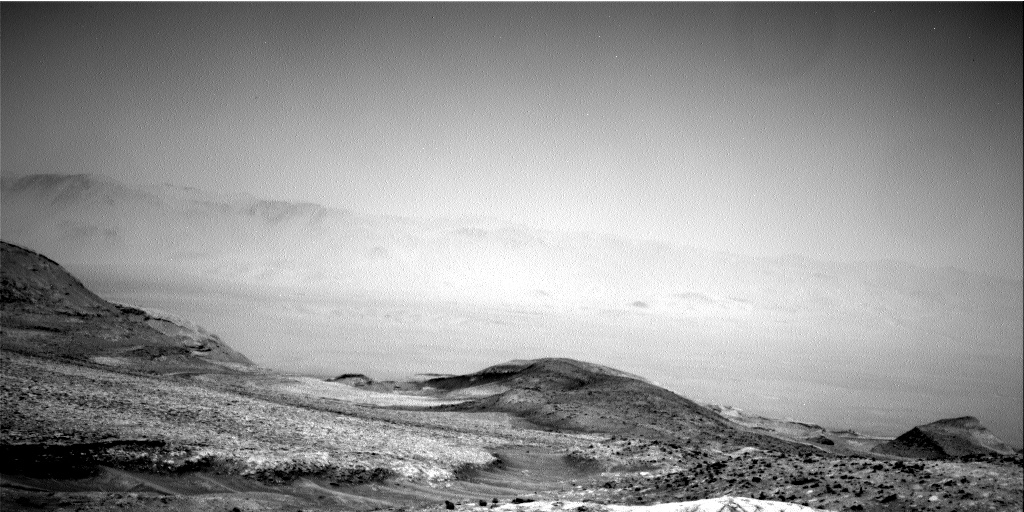
Black and white image of Mars at the Gediz Vallis channel.
This image was taken by Right Navigation Camera onboard NASA’s Mars rover Curiosity on Sol 4278 (2024-08-18 16:30:04 UTC).
NASA/JPL-Caltech

Earth planning date: Monday, Aug. 19, 2024

Curiosity successfully completed the drill sequence at the Kings Canyon site within the Gediz Vallis channel. Today was a smooth planning day as we decided to stay put for sols 4280 and 4281 to obtain APXS data of the drill tailings (the crushed rock removed from the drill hole) before we reposition the rover nearby for our next set of observations. The science team is eagerly plotting the rover’s next move and is looking forward to all the interesting targets along the route ahead! 

ChemCam had a very busy day with multiple activities in the plan. ChemCam LIBS will examine the chemistry of rocks at nearby “Cathedral Lake” and “Royce Lakes” to analyze the fresh surfaces that were recently broken by the weight of the rover driving over them. Mastcam will provide their standard documentation images of these locations after the LIBS instrument zaps each target.  ChemCam planned two long distance RMI images and one passive RMI image to get a closer view of the diversity of rocks at Milestone Peak and the upper channel and the yardang unit – a white, wind-sculped rock that caps the mound in Gale crater. 

In our current workspace, we planned a MAHLI image and will use the dust removal tool (DRT) to characterize the grain size of the light-toned rock near our drill location at “Gabbot Pass.” Mastam has amassed a beautiful collection of mosaics at our current location and therefore included only one small Mastcam mosaic of the nearby Texoli butte that will provide context for a recently acquired ChemCam LD RMI image. The environmental theme group planned surveys to search for dust devils as well as measurements to observe the amount of dust in the atmosphere. 

Looking ahead, we will reposition the rover slightly to access “Fourth Recess Lake” to quantify its chemistry for comparison to past and future observations within the Gediz Vallis channel. And after that, it’s McDonald Pass or bust!

Written by Sharon Wilson Purdy, Planetary Geologist at the Smithsonian National Air and Space Museum

Share

Details

Last Updated
Aug 20, 2024

Related Terms

Powered by WPeMatico

Get The Details…