Ahuachapán and Its Restive Neighbors

Ahuachapán and Its Restive Neighbors

A chain of forested volcanic peaks arc across the image, with an area of dark lava flows in the lower right and the brighter urban area of Ahuachapán in the upper left.
The geologically active area around Ahuachapán, El Salvador, includes an arced line of volcanoes, visible in this image acquired on November 25, 2024, by the OLI (Operational Land Imager) on Landsat 8.
NASA Earth Observatory/Michala Garrison

Volcanic activity takes on many forms in western El Salvador. The land near the city of Ahuachapán is pockmarked with craters and covered with recent lava flows. Meanwhile, a geothermal field feeds geysers, heats mineral pools, and powers a long-operating energy plant. The area is part of a volcanic landscape that stretches more than 1,000 kilometers (600 miles) along the Pacific coast from Guatemala to Panama, composing the Central American Volcanic Arc

On the right side of the image, Santa Ana stands at 2,381 meters (7,812 feet) above sea level as the country’s tallest volcano. Its summit features several crescent-shaped ridges surrounding a hot, acidic crater lake. The volcano remains active, with small to moderate explosive eruptions recorded since the 16th century. Its most recent significant eruption, in 2005, launched a dense gas and ash column high in the air and sent lahars down its slopes.

In 1770, another volcano began forming on Santa Ana’s southern flank. Izalco grew into a steep-sided stratovolcano through frequent eruptions over the next two centuries. Its regular activity—including Strombolian eruptions and lava fountains—earned it the nickname “Lighthouse of the Pacific,” as people at sea were reported to witness its glowing emanations. The “lighthouse” has since powered down, with Izalco’s most recent activity occurring in 1966. 

A line of forested, dimpled stratovolcano peaks arcing across the scene forms the Apaneca Range. There are no recorded eruptions of these volcanoes in the Holocene (the past 11,700 years), but persistent geothermal activity along the range manifests in the form of fumaroles, hot springs, and steam vents. Sudden and deadly steam explosions occasionally occur in the area, including a blast in October 1990 near the range’s Laguna Verde volcano. More recently, a 2025 steam eruption near a popular hot springs facility spurred evacuations and damaged infrastructure.

Though sometimes hazardous, the region’s heat source has also been tapped for geothermal power. The Ahuachapán Geothermal Power Plant has operated since 1975, leveraging groundwater naturally heated to around 250 degrees Celsius (480 degrees Fahrenheit) and local fault systems. By the early 1980s, the plant was producing 40 percent of El Salvador’s electricity. Some scholars note that this high level of production coincided with a period of civil unrest and population growth in the region.

NASA Earth Observatory image by Michala Garrison, using Landsat data from the U.S. Geological Survey. Story by Lindsey Doermann.

References & Resources

You may also be interested in:

Stay up-to-date with the latest content from NASA as we explore the universe and discover more about our home planet.

Lake Coatepeque

3 min read

Set amid El Salvador’s modern, active volcanic landscape, tranquil blue waters fill a caldera formed by ancient eruptions.

Article

Eruption at Mayon

3 min read

Activity at the volcano in the Philippines sent lava and pyroclastic flows down the volcano’s flanks and prompted evacuations in…

Article

A Hot and Fiery Decade for Kīlauea

6 min read

The volcano in Hawaii is one of the most active in the world, and NASA tech makes it easier for…

Article

Powered by WPeMatico

Get The Details…

Crew Works Advanced Radio Frequency, Quantum Physics, and Health Tech

Crew Works Advanced Radio Frequency, Quantum Physics, and Health Tech

NASA astronaut and Expedition 74 flight engineer Jessica Meir configures research gear inside the Destiny laboratory module's Microgravity Science Glovebox aboard the International Space Station. Meir was exploring how weightlessness affects tiny particles floating in a gelatin-like substance, known as a colloidal solid. Results may lead to advanced manufacturing techniques leading to new medicines, better food textures, and improved personal care products on Earth and in space.
NASA astronaut and Expedition 74 flight engineer Jessica Meir configures research gear inside the Destiny laboratory module’s Microgravity Science Glovebox aboard the International Space Station.
NASA/Jessica Meir

The Expedition 74 crew kicked off the week setting up advanced radio frequency technology, configuring quantum physics hardware, and conducting ultrasound vein scans aboard the International Space Station. The crewmates also prepared for the arrival of the next U.S. cargo mission, unpacked the latest Roscosmos resupply ship, and checked out a spacesuit.

NASA engineers are demonstrating a new technology to help astronauts keep track of the wide variety of inventory aboard the orbital outpost. Flight engineers Jack Hathaway of NASA and Sophie Adenot of ESA (European Space Agency) installed antennas that detect tagged items nearby and reader boxes that collect data from the antennas and update the space station’s inventory system. The Hyperdistributed Radio Frequency Identification Antennas demonstrate new technology that autonomously keeps track of the constantly shifting hardware and supplies on the space station. Results may inform advanced logistics systems for future space exploration missions and help astronauts focus on more important duties such as scientific research.

Afterward, Hathaway and Adenot joined each other again and trained for the upcoming SpaceX CRS-34 mission to resupply the Expedition 74 crew. The duo reviewed procedures on a computer for monitoring the automated approach and docking of the SpaceX Dragon spacecraft planned to deliver several tons of new science experiments and lab hardware later this month.

NASA flight engineer Jessica Meir inspected sensitive fiber cables that emit light helping cool, trap, and study atoms with high accuracy inside the Cold Atom Lab (CAL). Next, she carefully reconnected the cables inside the CAL, a quantum research device, that chills atoms to near absolute zero providing insights into atomic wave functions, general relativity, and dark matter.

At the beginning of his shift, NASA flight engineer Chris Williams attached electrodes to his chest then rested as doctors on the ground scanned his veins using the tele-operated Ultrasound Echo device. Next, Williams measured his blood pressure using portable biomedical hardware and arm cuffs. His health data was collected for a pair of cardiovascular studies including CIPHER, a suite of 14 continuous human research investigations, and Vascular Echo both seeking to understand and prevent space-caused heart changes. He wrapped up his shift cleaning fans inside the Tranquility module’s ventilation system.

Roscosmos cosmonauts Sergey Kud-Sverchkov and Andrey Fedyaev, station commander and flight engineer, continued unpacking some of the several tons of food, fuel, and supplies the Progress 95 cargo spacecraft delivered on April 27. The duo also took turns photographing the condition of windows inside the Zvezda, Nauka, and Rassvet modules for analysis on the ground.

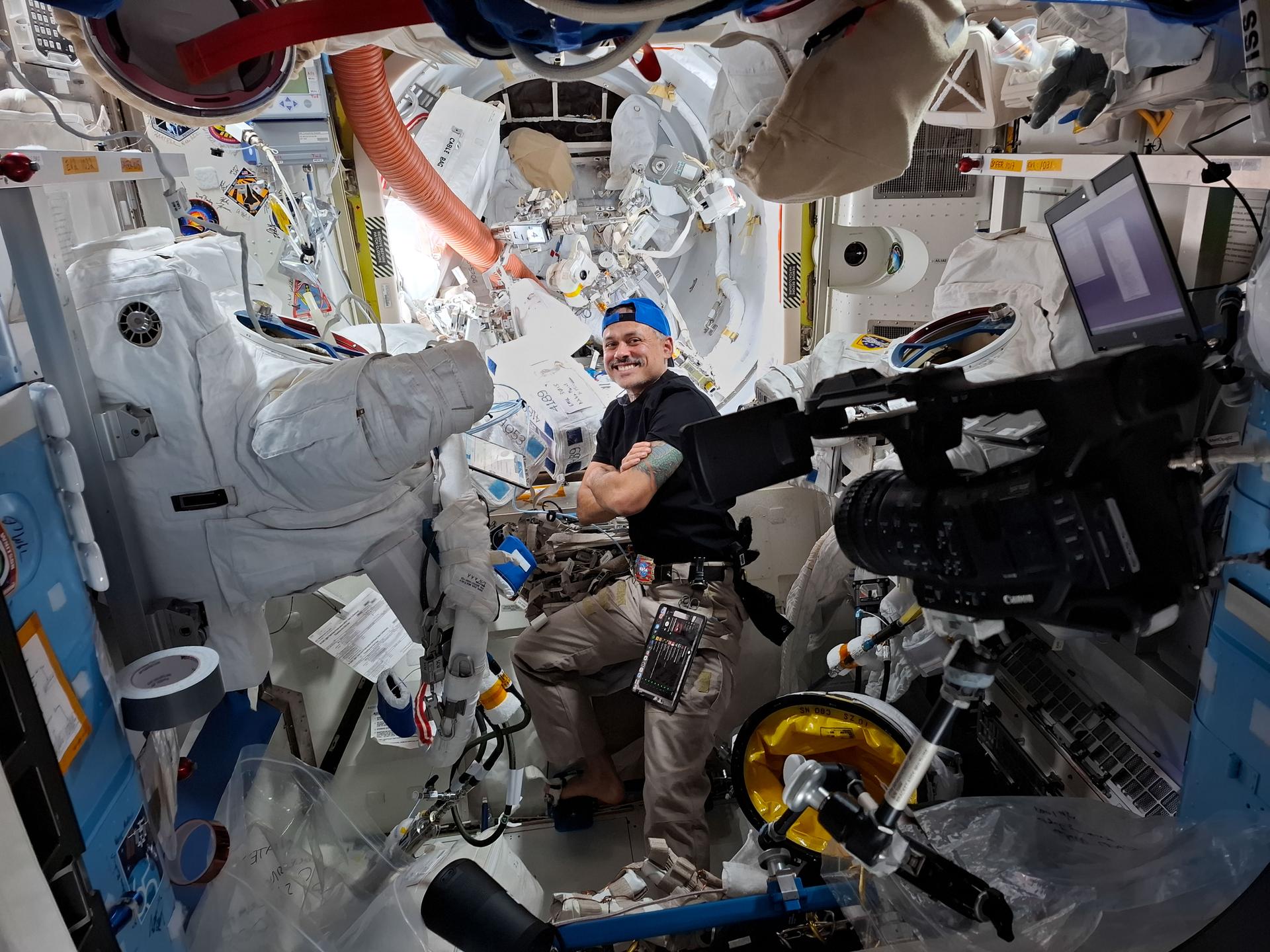
Flight engineer Sergey Mikaev spent his shift checking out an Orlan spacesuit ahead of an upcoming Roscosmos spacewalk. Mikaev activated the spacesuit, checked it for leaks, and installed its support equipment making sure all of its systems functioned properly.

Learn more about station activities by following the space station blog, @space_stationon X, as well as the ISS Facebookand ISS Instagram accounts.

Get the latest from NASA delivered every week. Subscribe here.

Powered by WPeMatico

Get The Details…

Mark A. Garcia

NASA Welcomes Ireland as Newest Artemis Accords Signatory

NASA Welcomes Ireland as Newest Artemis Accords Signatory

Officials from the United States and Ireland look on as Ireland signs the Artemis Accords while sitting at tables. The flags of the Artemis Accords signatories are behind them.
Minister for Enterprise, Tourism and Employment Peter Burke, T.D., 3rd from left, signs the Artemis Accords during a ceremony with Chief of Staff in the Office of the Under Secretary of State for Economic Affairs William Cappelletti, left, NASA Administrator Jared Isaacman, and Ambassador of Ireland to the United States of America Geraldine Byrne Nason, right, Monday, May 4, 2026, at the Mary W. Jackson NASA Headquarters building in Washington.
NASA/Bill Ingalls

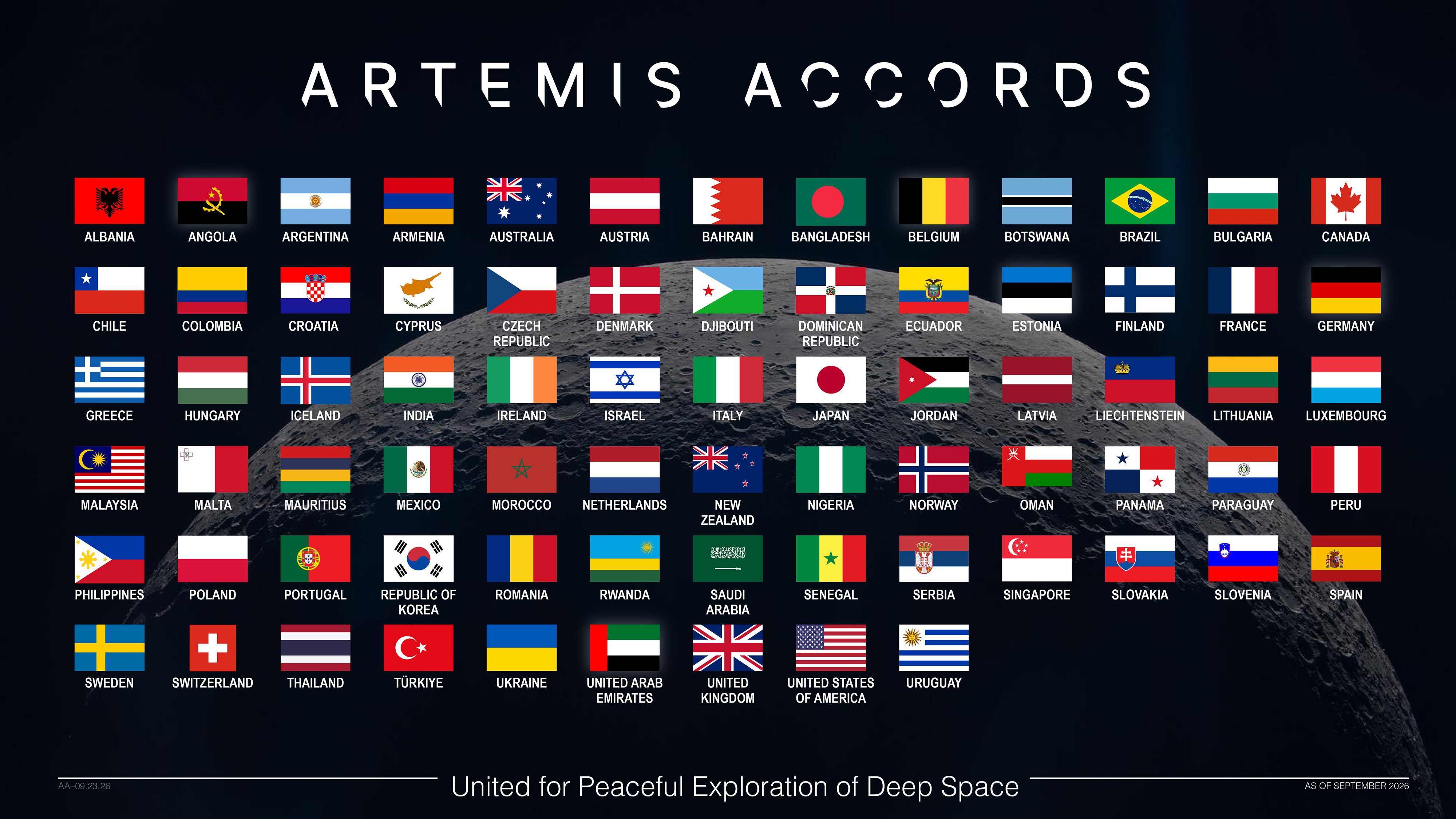
Ireland signed the Artemis Accords Monday during a signing ceremony hosted by NASA, becoming the latest nation to commit to the responsible exploration of space for all humanity.

Ireland, a longstanding member of ESA (European Space Agency) and a valued international partner for NASA, now joins all 23 ESA member states as a signatory of the Artemis Accords.

“It is my privilege to welcome Ireland as the 66th and newest signatory to the Artemis Accords,” said NASA Administrator Jared Isaacman during remarks. “The Emerald Isle is now part of a growing community of like-minded nations committed to the peaceful, transparent, and responsible exploration of space. Ireland joins at a pivotal moment. Artemis II was the opening act in humanity’s return to the Moon. What comes next is a sustained campaign of missions that will take us back to the lunar surface, not just for flags and footprints, but to build a base and stay.”

Underscoring the longstanding cultural ties and shared heritage between the United States and Ireland, the signing was celebrated during a ceremony at NASA Headquarters in Washington attended by U.S. Congressional staffers and interagency representatives.

Ireland’s Minister for Enterprise, Tourism and Employment Peter Burke, T.D., signed on behalf of the country.

“From an island shaped by the sea, whose people have always looked beyond the horizon and journeyed across the world, forging connections far beyond our shores, Ireland is proud to bring that same spirit to a new frontier and to join a global community committed to the peaceful exploration of space,” said Burke.

Ambassador of Ireland to the United States of America Geraldine Byrne Nason and Chief of Staff in the Office of the Under Secretary for Economic Affairs William Cappelletti, U.S. Department of State, participated in the event. U.S. Ambassador to Ireland Edward Walsh also attended.

In 2020, during the first Trump Administration, the United States, led by NASA and the U.S. Department of State, joined with seven other founding nations to establish the Artemis Accords, responding to the growing interest in lunar activities by both governments and private companies.

The Artemis Accords introduced the first set of practical principles aimed at enhancing the safety and coordination between like-minded nations as they explore the Moon, Mars, and beyond.

Signing the Artemis Accords means committing to explore peaceably and transparently, to render aid to those in need, to enable access to scientific data that all of humanity can learn from, to ensure activities do not interfere with those of others, and to preserve historically significant sites and artifacts by developing best practices for space exploration for the benefit of all.

More countries are expected to sign the Artemis Accords in the months and years ahead, as NASA continues its work to establish a safe, peaceful, and prosperous future in space.

Learn more about the Artemis Accords at:

https://www.nasa.gov/artemis-accords

Powered by WPeMatico

Get The Details…
Elizabeth Shaw

NASA Fosters Development of Lunar Resource-Seeking Technologies

NASA Fosters Development of Lunar Resource-Seeking Technologies

4 Min Read

NASA Fosters Development of Lunar Resource-Seeking Technologies

Picture from Artemis II, Earth in the distance behind the moon.

Earth sets at 6:41 p.m. EDT, April 6, 2026, over the Moon’s curved limb in this photo captured by the Artemis II crew during their journey around the far side of the Moon.

Credits:
NASA

To support long-duration missions to the Moon and Mars, NASA and industry are developing technologies that can extract resources such as hydrogen and helium-3 from lunar soil, known as regolith. This capability, known as in-situ resource utilization (ISRU), allows explorers to use what is already available on other planetary bodies, from water ice to minerals. These resources could eventually support propulsion, energy production, life support systems, and other needs for astronauts living and working in deep space.

To advance ISRU technologies, NASA has awarded a firm‑fixed‑price contract of $6.9 million over the next year and a half to Interlune of Seattle, a company focused on developing natural resources beyond Earth.

Funded through a Phase III NASA Small Business Innovation Research (SBIR) award, a contracting mechanism focused on transitioning technology into NASA missions or the private sector, the company will pursue validation of critical resource‑prospecting tools to make future lunar missions more self‑sufficient, reducing the need to transport supplies from Earth.

This effort builds on prior work with NASA’s Flight Opportunities program, in which Interlune built and tested payload prototypes on parabolic flights that replicated lunar gravity.

Under the SBIR Phase III contract, Interlune will design, build, and test engineering development units and flight hardware. The payload is designed to collect lunar regolith samples, sort particles by size, extract solar wind volatile gases, and measure their quantities. The company’s design includes a mass spectrometer inspired by NASA’s Mass Spectrometer Observing Lunar Operations (MSOLO) technology to measure the concentration of gases released from lunar soil.

Developed at NASA’s Kennedy Space Center in Florida, MSOLO is a compact, rugged mass spectrometer designed to analyze gases and the chemical makeup of landing sites on the Moon. The MSOLO technology, developed by NASA’s Game Changing Development program, demonstrated its hardware in lunar conditions during the Intuitive Machines 2 mission to the lunar South Pole in 2025.

“A major goal of NASA is to mature transformative technologies so they can be confidently adopted by industry,” said Michael Johansen, Deputy Program Manager for NASA’s Game Changing Development Program. “The evolution of MSOLO into a robust, flight-ready instrument is a perfect example of that success. We are thrilled to see this proven technology leveraged by an industry effort, marking a significant step forward in commercial resource prospecting.”

NASA’s MSOLO technology is available for commercial use and adaptable for ground tests and variable flight configurations. The instrument’s internal architecture includes a hybrid computer for onboard processing and a calibration gas system that allows the device to check and adjust its readings directly on the lunar surface. This data can benefit both commercial developers and NASA’s Artemis program. Its software has already been adapted to interface with four different CLPS (Commercial Lunar Payload Services) lander designs, reflecting its flexibility and increasing applicability to commercial lunar missions.

Investments by the agency in lunar surface technology from commercial partners represents an important step toward establishing a sustainable presence on the lunar surface. By advancing resource‑prospecting instruments and maturing technologies that enable the use of lunar materials, these efforts will help reduce the cost and complexity of future exploration missions.

NASA’s Small Business Innovation Research (SBIR) and Small Business Technology Transfer (STTR) program is managed by the agency’s Space Technology Mission Directorate. Through this program, entrepreneurs, startups, and small businesses with fewer than 500 employees can receive funding and non-monetary support to build, mature, and commercialize their technologies, advancing NASA missions and helping solve important challenges facing our nation.

This year, NASA’s SBIR/STTR program is adopting a Broad Agency Announcement framework to increase opportunities for small businesses while enhancing agility for the agency. The 2026-2027 BAA appendices, outlining topics and subtopics for desired technology proposals, closes May 21. Interested businesses and institutions are encouraged to visit the information hub for helpful details on applying.

To learn more about working with NASA Technology, visit

https://www.nasa.gov/stmd-solicitations-and-opportunities/

Powered by WPeMatico

Get The Details…
Loura Hall

NASA Welcomes Malta as Newest Artemis Accords Signatory

NASA Welcomes Malta as Newest Artemis Accords Signatory

Credit: NASA

The Republic of Malta became the 65th signatory to the Artemis Accords on Monday during a ceremony in the town of Kalkara with NASA and U.S. Department of State officials present.

“Today, it’s my pleasure to welcome the Republic of Malta to the Artemis Accords community,” NASA Administrator Jared Isaacman said in recorded remarks. “By joining this growing coalition, Malta affirms shared commitments to peaceful, transparent, and responsible space exploration. These commitments safeguard against chaos and confusion, and they chart a responsible path forward for every nation that dares to accomplish the near-impossible in space.”

Malta’s Minister for Education, Youth, Sports, Research and Innovation Clifton Grima signed the Artemis Accords on behalf of the country.

“Malta is taking a deliberate step to position itself within a high-value, innovation-driven global sector,” said Grima. “This initiative strengthens our governance framework, enhances Malta’s international credibility and creates new opportunities to attract investment, build expertise and generate quality employment within the space economy.”

U.S. Ambassador to Malta Somers W. Farkas and NASA Europe Representative Gregory Mann witnessed the signing together with Deputy Prime Minister and Minister for Foreign Affairs and Tourism Ian Borg.

The United States and Malta have a long history of shared values and common interests, dating back to the American Revolution. NASA looks forward to future engagement on the Artemis Accords and recently outlined new opportunities for signatory countries to deepen their participation in NASA’s Artemis program.

In 2020, during the first Trump Administration, the United States, led by NASA and the U.S. Department of State, joined with seven other founding nations to establish the Artemis Accords, responding to the growing interest in lunar activities by both governments and private companies.

The Artemis Accords introduced the first set of practical principles aimed at enhancing the safety and coordination between like-minded nations as they explore the Moon, Mars, and beyond.

Signing the Artemis Accords means committing to explore peaceably and transparently, to render aid to those in need, to enable access to scientific data that all of humanity can learn from, to ensure activities do not interfere with those of others, and to preserve historically significant sites and artifacts by developing best practices for space exploration for the benefit of all.

More countries are expected to sign the Artemis Accords in the months and years ahead, as NASA continues its work to establish a safe, peaceful, and prosperous future in space.

Learn more about the Artemis Accords at:

https://www.nasa.gov/artemis-accords

Powered by WPeMatico

Get The Details…
Elizabeth Shaw