NASA Invites Virtual Guests to SpaceX Crew-11 Mission Launch

NASA Invites Virtual Guests to SpaceX Crew-11 Mission Launch

A SpaceX Falcon 9 rocket carrying the company’s Dragon spacecraft launches NASA’s SpaceX Crew-10 mission to the International Space Station on Friday, March 14, 2025, from NASA’s Kennedy Space Center in Florida.
NASA/Aubrey Gemignani

NASA invites the public to participate as virtual guests in the launch of the agency’s SpaceX Crew-11 mission to the International Space Station.

NASA astronauts Zena Cardman and Mike Fincke, JAXA (Japan Aerospace Exploration Agency) astronaut Kimiya Yui, and Roscosmos cosmonaut Oleg Platonov will launch aboard a SpaceX Dragon spacecraft to the orbiting laboratory. This is the first spaceflight for Cardman and Platonov, the fourth for Fincke, and the second for Yui.

NASA and SpaceX are targeting no earlier than 12:09 p.m. EDT, Thursday, July 31, for launch on the company’s Falcon 9 rocket from Launch Complex 39A at the agency’s Kennedy Space Center in Florida.

Members of the public can register to attend the launch virtually. Virtual guests will receive curated resources, interactive opportunities, mission updates, and a mission-specific collectible stamp for their virtual guest passport after liftoff.

Discover an exciting new way to collect and share passport stamps. Print one for your virtual guest passport and get an extra one, perfect for sharing or digital collecting. Don’t have a passport yet? Print one from the agency’s website and add Crew-11 to your collection.

For more information about the Crew-11 mission, visit:

https://www.nasa.gov/commercialcrew

Powered by WPeMatico

Get The Details…
Amanda S. Vozeh

Hubble Spies Swirling Spiral

Hubble Spies Swirling Spiral

2 min read

Hubble Spies Swirling Spiral

A spiral galaxy with a disk made of several swirling arms. Patchy blue clouds of gas speckle the disk where stars are forming and lighting the gas around them. The core of the galaxy is large and shines brightly gold, while the spiral arms are a paler and faint reddish color. Neighboring galaxies – from small, elongated spots to larger swirling spirals – are visible across the black background.
The NASA/ESA Hubble Space Telescope image features the spiral galaxy NGC 3285B, a member of the Hydra I cluster of galaxies.
ESA/Hubble & NASA, R. J. Foley (UC Santa Cruz)

The swirling spiral galaxy in this NASA/ESA Hubble Space Telescope image is NGC 3285B, which resides 137 million light-years away in the constellation Hydra (the Water Snake). Hydra has the largest area of the 88 constellations that cover the entire sky in a celestial patchwork. It’s also the longest constellation, stretching 100 degrees across the sky. It would take nearly 200 full Moons, placed side by side, to reach from one side of the constellation to the other.

NGC 3285B is a member of the Hydra I cluster, one of the largest galaxy clusters in the nearby universe. Galaxy clusters are collections of hundreds to thousands of galaxies bound to one another by gravity. The Hydra I cluster is anchored by two giant elliptical galaxies at its center. Each of these galaxies is about 150,000 light-years across, making them about 50% larger than our home galaxy, the Milky Way.

NGC 3285B sits on the outskirts of its home cluster, far from the massive galaxies at the center. This galaxy drew Hubble’s attention because it hosted a Type Ia supernova in 2023. Type Ia supernovae happen when a type of condensed stellar core called a white dwarf detonates, igniting a sudden burst of nuclear fusion that briefly shines about 5 billion times brighter than the Sun. The supernova, named SN 2023xqm, is visible here as a blueish dot on the left edge of the galaxy’s disk.

Hubble observed NGC 3285B as part of an observing program that targeted 100 Type Ia supernovae. By viewing each of these supernovae in ultraviolet, optical, and near-infrared light, researchers aim to disentangle the effects of distance and dust, both of which can make a supernova appear redder than it actually is. This program will help refine cosmic distance measurements that rely on observations of Type Ia supernovae.

Text Credit: ESA/Hubble

Media Contact:

Claire Andreoli (claire.andreoli@nasa.gov)
NASA’s Goddard Space Flight CenterGreenbelt, MD

Powered by WPeMatico

Get The Details…

NASA Welcomes Senegal as Newest Artemis Accords Signatory

NASA Welcomes Senegal as Newest Artemis Accords Signatory

From left to right, Ambassador of Senegal to the United States Abdoul Wahab Haidara, Director General of the Senegalese space agency (ASES) Maram Kairé, NASA Chief of Staff Brian Hughes, and Department of State Bureau of African Affairs Senior Bureau Official Jonathan Pratt pose for a photo during an Artemis Accords signing ceremony Thursday, July 24, 2025, at the Mary W. Jackson NASA Headquarters building in Washington. Senegal is the 56th country to sign the Artemis Accords, which establish a practical set of principles to guide space exploration cooperation among nations participating in NASA’s Artemis program.
Credit: NASA/Keegan Barber

Senegal signed the Artemis Accords Thursday during a ceremony hosted by NASA at the agency’s headquarters in Washington, becoming the latest nation to commit to the responsible exploration of space for all humanity.

“Following a meeting between Senegal President Faye and President Trump, today, NASA built upon the strong relations between our two nations as the Senegalese Agency for Space Studies signed the Artemis Accords,” said acting NASA Administrator Sean Duffy. “With Senegal as the 56th signatory, I am proud to further President Trump’s strong legacy of global cooperation in space.”

Director General of the Senegalese space agency (ASES) Maram Kairé signed the Artemis Accords on behalf of Senegal. Jonathan Pratt, senior bureau official for African Affairs at the U.S. Department of State, and Abdoul Wahab Haidara, ambassador of Senegal to the United States, also participated in the event.

“Senegal’s adherence to the Artemis Accords reflects our commitment to a multilateral, responsible, and transparent approach to space,” said Kairé. “This signature marks a meaningful step in our space diplomacy and in our ambition to contribute to the peaceful exploration of outer space.”

The Artemis Accords signing ceremony took place two weeks after President Trump’s meeting in Washington with Senegal’s President Bassirou Diomaye Faye and other countries of Africa focused on U.S.-Africa engagement.

Astronomers from Senegal have supported NASA missions by participating in multiple observations when asteroids or planets pass in front of stars, casting shadows on Earth. In 2021, NASA also collaborated with Kairé and a group of astronomers for a ground observation campaign in Senegal. As the asteroid Orus passed in front of a star, they positioned telescopes along the path of the asteroid’s shadow to estimate its shape and size. NASA’s Lucy spacecraft will approach Orus in 2028, as part of its mission to explore Jupiter’s Trojan asteroids.

In 2020, during the first Trump Administration, the United States, led by NASA and the U.S. Department of State, joined with seven other founding nations to establish the Artemis Accords, responding to the growing interest in lunar activities by both governments and private companies.

The accords introduced the first set of practical principles aimed at enhancing the safety, transparency, and coordination of civil space exploration on the Moon, Mars, and beyond.

Signing the Artemis Accords means to explore peaceably and transparently, to render aid to those in need, to ensure unrestricted access to scientific data that all of humanity can learn from, to ensure activities do not interfere with those of others, to preserve historically significant sites and artifacts, and to develop best practices for how to conduct space exploration activities for the benefit of all.

More countries are expected to sign the Artemis Accords in the months and years ahead, as NASA continues its work to establish a safe, peaceful, and prosperous future in space.

Learn more about the Artemis Accords at:

https://www.nasa.gov/artemis-accords

-end-

Bethany Stevens / Elizabeth Shaw
Headquarters, Washington
202-358-1600
bethany.c.stevens@nasa.gov / elizabeth.a.shaw@nasa.gov

Powered by WPeMatico

Get The Details…
Lauren E. Low

NASA Sets Coverage for Agency’s SpaceX Crew-11 Launch, Docking

NASA Sets Coverage for Agency’s SpaceX Crew-11 Launch, Docking

The crew of NASA’s SpaceX Crew-11 mission to the International Space Station pictured during a training session at SpaceX facilities in Florida.
Credit: SpaceX

NASA will provide coverage of the upcoming prelaunch and launch activities for the agency’s SpaceX Crew-11 mission to the International Space Station.

Liftoff is targeted for 12:09 p.m. EDT, Thursday, July 31, from Launch Complex 39A at NASA’s Kennedy Space Center in Florida. The targeted docking time is approximately 3 a.m., Saturday, Aug. 2.

Watch agency launch coverage on NASA+, Netflix, Amazon Prime and more. Learn how to watch NASA content through a variety of platforms, including social media.

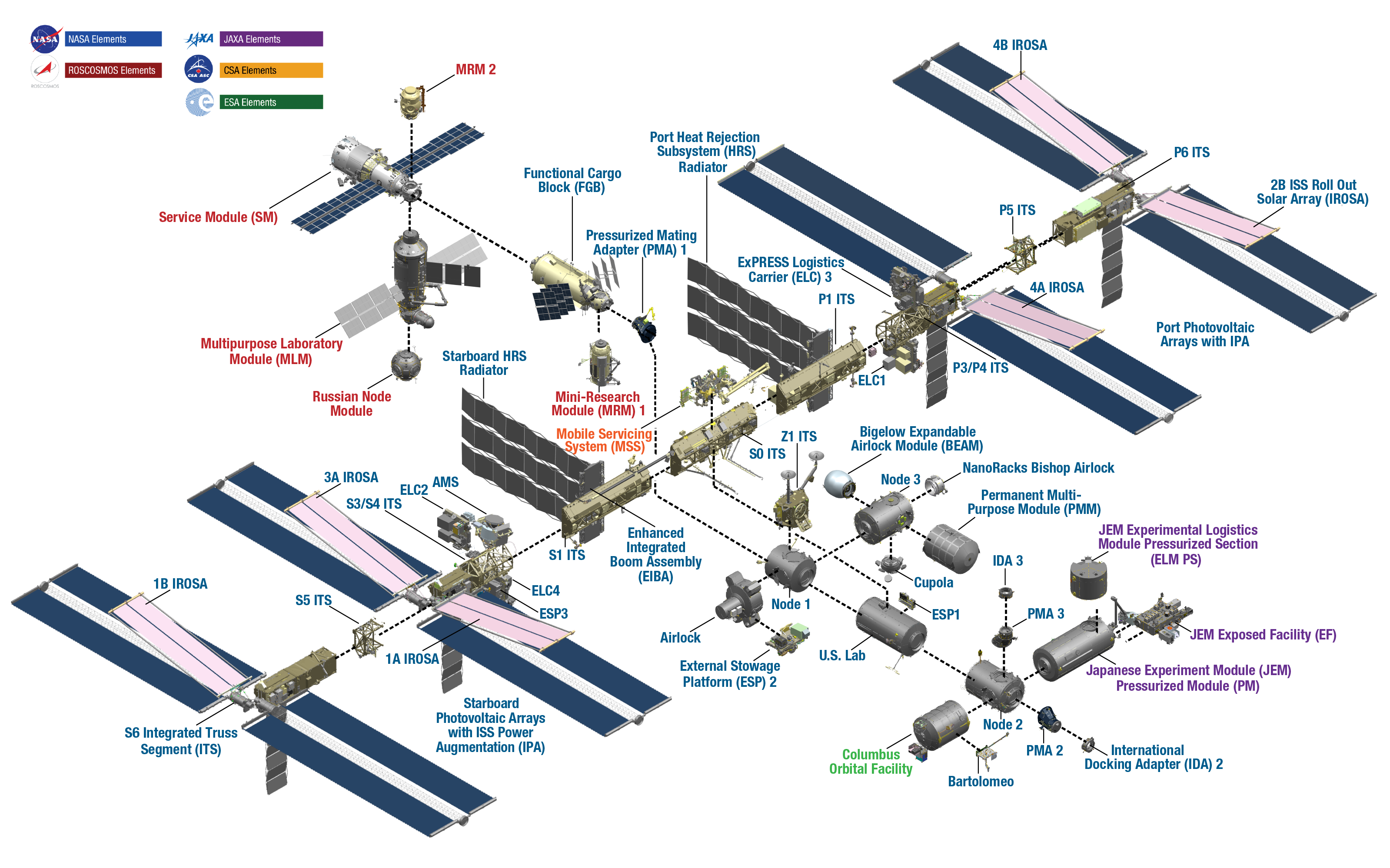
The SpaceX Dragon spacecraft will carry NASA astronauts Zena Cardman and Mike Fincke, JAXA (Japan Aerospace Exploration Agency) astronaut Kimiya Yui, and Roscosmos cosmonaut Oleg Platonov to the orbiting laboratory for a science mission. This is the 11th crew rotation mission and the 12th human spaceflight mission for NASA to the space station supported by the Dragon spacecraft since 2020 as part of the agency’s Commercial Crew Program.

The deadline for media accreditation for in person coverage of this launch has passed. The agency’s media credentialing policy is available online. For questions about media accreditation, please email: ksc-media-accreditat@mail.nasa.gov.

Media who need access to NASA live video feeds may subscribe to the agency’s media resources distribution list to receive daily updates and links.

NASA’s mission coverage is as follows (all times Eastern and subject to change based on real-time operations):

Saturday, July 26

1 p.m. – Crew-11 arrival media event at NASA Kennedy with the following participants:

  • Zena Cardman, spacecraft commander, NASA
  • Mike Fincke, pilot, NASA
  • Kimiya Yui, mission specialist, JAXA
  • Oleg Platonov, mission specialist, Roscosmos

Watch live coverage of the crew arrival media event on the NASA Kennedy’s social media accounts.

This event is open to in person media only previously credentialed for this event. Follow @NASAKennedy on X for the latest arrival updates.

Wednesday, July 30

5:30 p.m. – Prelaunch news conference with the following participants:

  • Ken Bowersox, associate administrator, NASA’s Space Operations Mission Directorate
  • Steve Stich, manager, NASA’s Commercial Crew Program
  • Dana Weigel, manager, NASA’s International Space Station Program
  • William Gerstenmaier, vice president, Build and Flight Reliability, SpaceX
  • Sergei Krikalev, deputy director general, Manned and Automated Complexes, Roscosmos
  • Naoki Nagai, program manager, International Space Station, Human Spaceflight Technology Directorate, JAXA

NASA will provide live coverage of the news conference on the agency’s YouTube channel.

Media may ask questions in person and via phone. For the dial-in number and passcode, media should contact the Kennedy newsroom no later than one hour prior to the beginning of the news conference at: ksc-newsroom@mail.nasa.gov.

Thursday, July 31

8 a.m. – Launch coverage begins on NASA+, Netflix, and Amazon Prime.

12:09 p.m. – Launch

Following the conclusion of launch coverage, NASA will distribute audio-only discussions between Crew-11, the space station, and flight controllers during Dragon’s transit to the orbital complex. NASA+ coverage resumes at the start of rendezvous and docking and continues through hatch opening and the welcoming remarks. 

1:30 p.m. – Postlaunch news conference with the following participants:

  • Ken Bowersox, associate administrator, NASA’s Space Operations Mission Directorate
  • Steve Stich, manager, NASA’s Commercial Crew Program
  • Dana Weigel, manager, NASA’s International Space Station Program
  • Sergei Krikalev, deputy director general, Manned and Automated Complexes, Roscosmos
  • Kazuyoshi Kawasaki, associate director general, Space Exploration Center/Space Exploration Innovation Hub Center, JAXA
  • Sarah Walker, director, Dragon Mission Management, SpaceX

NASA will provide live coverage of the postlaunch news conference on the agency’s YouTube channel.

Media may ask questions in person and via phone. Limited auditorium space will be available for in person participation. For the dial-in number and passcode, please contact the Kennedy newsroom no later than one hour prior to the beginning of the news conference at ksc-newsroom@mail.nasa.gov.

Saturday, Aug. 2

1 a.m. – Arrival coverage begins on NASA+.

3 a.m. – Targeted docking to the space-facing port of the station’s Harmony module.

4:45 a.m. – Hatch opening

5:30 a.m. – Welcome ceremony

All times are estimates and could be adjusted based on real-time operations after launch. Follow the space station blog for the most up-to-date operations information.

Live Video Coverage Prior to Launch

NASA will provide a live video feed of Launch Complex 39A approximately six hours prior to the planned liftoff of the Crew-11 mission. Pending unlikely technical issues, the feed will be uninterrupted until the prelaunch broadcast begins on NASA+, approximately four hours prior to launch. Once the feed is live, find it online at: http://youtube.com/kscnewsroom.

NASA Website Launch Coverage

Launch day coverage of the mission will be available on the NASA website. Coverage will include livestreaming and blog updates beginning no earlier than 8 a.m., July 31, as the countdown milestones occur. On-demand streaming video on NASA+ and photos of the launch will be available shortly after liftoff. For questions about countdown coverage, contact the NASA Kennedy newsroom at 321-867-2468. Follow countdown coverage on the commercial crew or Crew-11 blog.

Attend Launch Virtually

Members of the public may register to attend this launch virtually. NASA’s virtual guest program for this mission also includes curated launch resources, notifications about related opportunities or changes, and a stamp for the NASA virtual guest passport following launch.

Audio Only Coverage

Launch audio also will be available on Launch Information Service and Amateur Television System’s VHF radio frequency 146.940 MHz and KSC Amateur Radio Club’s UHF radio frequency 444.925 MHz, FM mode, heard within Brevard County on the Space Coast.

Watch, Engage on Social Media

Let people know you’re following the mission on X, Facebook, and Instagram by using the hashtags #Crew11 and #NASASocial. You may also stay connected by following and tagging these accounts:

X: @NASA, @NASAKennedy, @Space_Station, @ISS National Lab, @SpaceX

Facebook: NASA, NASAKennedy, ISS, ISS National Lab

Instagram: @NASA, @NASAKennedy, @ISS, @ISSNationalLab, @SpaceX

Coverage en Espanol

Did you know NASA has a Spanish section called NASA en Espanol? Check out NASA en Espanol on X, Instagram, Facebook, and YouTube for additional mission coverage.

Para obtener información sobre cobertura en español en el Centro Espacial Kennedy o si desea solicitar entrevistas en español, comuníquese con Antonia Jaramillo: 321-501-8425; antonia.jaramillobotero@nasa.gov; o Messod Bendayan: 256-930-1371; messod.c.bendayan@nasa.gov.

NASA’s Commercial Crew Program has delivered on its goal of safe, reliable, and cost-effective transportation to and from the International Space Station from the United States through a partnership with American private industry. This partnership is opening access to low Earth orbit and the International Space Station to more people, more science, and more commercial opportunities. For almost 25 years, humans have continuously lived and worked aboard the International Space Station, advancing scientific knowledge and demonstrating new technologies that enable us to prepare for human exploration of the Moon as we prepare for Mars.

For more information about the mission, visit:

https://www.nasa.gov/commercialcrew

-end-

Joshua Finch / Claire O’Shea
Headquarters, Washington
202-358-1100
joshua.a.finch@nasa.gov / claire.a.o’shea@nasa.gov

Steven Siceloff / Stephanie Plucinsky
Kennedy Space Center, Florida
321-867-2468
steven.p.siceloff@nasa.gov / stephanie.n.plucinsky@nasa.gov

Joseph Zakrzewski
Johnson Space Center, Houston
281-483-5111
joseph.a.zakrzewski@nasa.gov

Powered by WPeMatico

Get The Details…
Tiernan P. Doyle

First Rocket Launch from Cape Canaveral

First Rocket Launch from Cape Canaveral

In the foreground, four people stand outside near equipment as a white rocket launches in front of them. White vapor clouds cover the ground and much of the scaffolding at the launch site. The photo is black and white.
NASA

The Bumper V-2 launches from Cape Canaveral in this July 24, 1950, photo. In the 75 years since this milestone, this facility has seen thousands of rockets take to the skies, destined for Earth orbit, the Moon, planets, and even beyond. From Cape Canaveral and from NASA’s Kennedy Space Center in Florida nearby, astronauts launched on the first pioneering crewed missions, headed for Moon landings, and helped to build the International Space Station.

NASA Kennedy, a premier multi-user spaceport with about 100 private-sector partners and nearly 250 partnership agreements, is still the agency’s main launch site. NASA’s SpaceX Crew-11 mission, part of the agency’s Commercial Crew Program, will launch from NASA Kennedy no earlier than 12:09 p.m. EDT, Thursday, July 31. The Crew-11 mission members – NASA astronauts Zena Cardman and Mike Fincke, JAXA (Japan Aerospace Exploration Agency) astronaut Kimiya Yui, and Roscosmos cosmonaut Oleg Platonov – are in crew quarantine before their voyage to the orbital laboratory.

Image credit: NASA

Powered by WPeMatico

Get The Details…
Monika Luabeya