NASA Hosts Unveiling of Plans for New Silicon Valley Innovation Hub

NASA Hosts Unveiling of Plans for New Silicon Valley Innovation Hub

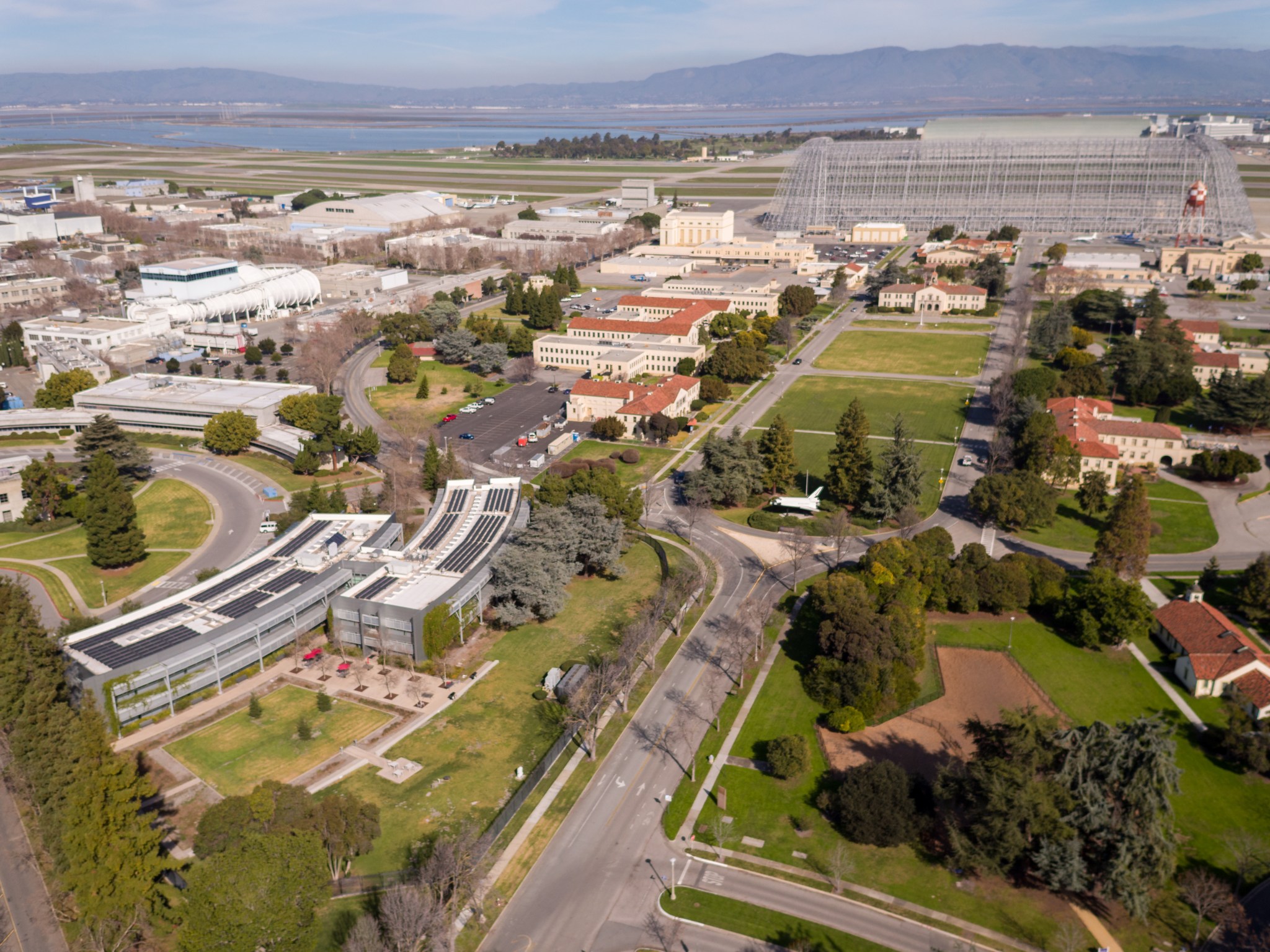
Aerial view of NASA’s Ames Research Center, NASA Research Park, and Moffett Field in California’s Silicon Valley.
NASA

A new campus, called Berkeley Space Center, aims to offer lab, office, and educational spaces along with student and faculty housing, a conference center, and retail space on 36 acres within the NASA Research Park at the agency’s Ames Research Center in Silicon Valley.

The University of California Berkeley and San Francisco-based developer SKS Partners proposed the new campus and innovation hub for research and advancements in astronautics, aeronautics, quantum computing, climate studies, social sciences, and more during an event Monday at NASA Ames.

Berkeley Space Center follows on a NASA-UC Berkeley partnership created to explore potential mutually beneficial learning opportunities, including accelerating local and national capabilities for transporting cargo and passengers using emerging automation and electric propulsion technologies; examining how biomanufacturing can enable deep space exploration; and leveraging NASA’s high-performance computing assets. The new campus aims to bring together researchers from the private sector, academia, and the government to tackle the complex scientific, technological, and societal issues facing our world.

“The diverse portfolios of NASA Ames and Berkeley open potential future collaborations in a variety of areas including interplanetary exploration, air transportation capabilities, the search for life beyond our planet, and environmental studies for the benefit of all,” said Eugene Tu, Ames center director.

NASA Research Park is a world-class research and development hub for government, academia, non-profits, and industry, located at Ames in Moffett Field, California. Ames has a long history of partnering with diverse entities – from space technology start-ups to the Federal Aviation Administration – to combine strengths to tackle great challenges. Through the Berkeley Space Center, UC Berkeley joins Carnegie Mellon as the second major university to choose NASA Research Park for a new campus.

“The Berkeley Space Center will bring together leading experts in academia, government, and industry to enable new collaboration in aerospace, bioengineering, advanced air mobility, and other areas of research,” said U.S. Rep. Anna G. Eshoo. “Bravo to NASA Ames and UC Berkeley on this watershed moment in the transformation of Moffett Field into an innovation hub and a model for bringing together the brightest minds in academia and government.”

The United States Geological Survey serves as another model partnership at Ames, with development of a new campus collocating at NASA Research Park to support joint research in lunar prospecting, earthquake simulations, ecology, remote sensing work, and more.

“As an advocate for advancing the science and technology ecosystem of the Bay Area, I’m very proud to see this collaboration happening here in Silicon Valley,” said U.S. Rep. Zoe Lofgren. “This is a perfect example of the importance of NASA’s enhanced use leasing (EUL) authority, which allows us to take full advantage of NASA’s unique infrastructure and capabilities. Everybody benefits when we put smart policies to use, like EUL. The product of this partnership could create jobs, build a collaborative atmosphere, and help train the next generation of STEM leaders. I look forward to following along the progress of the Center’s construction and, one day, touring the Berkeley Space Center.”

Learn more about Ames’ world-class research and development in aeronautics, science, and exploration technology at: https://www.nasa.gov/ames


For news media: 

Members of the news media interested in covering this topic should reach out to the Ames newsroom

Powered by WPeMatico

Get The Details…
Rachel Hoover

Launching to a Metal-Rich Asteroid

Launching to a Metal-Rich Asteroid

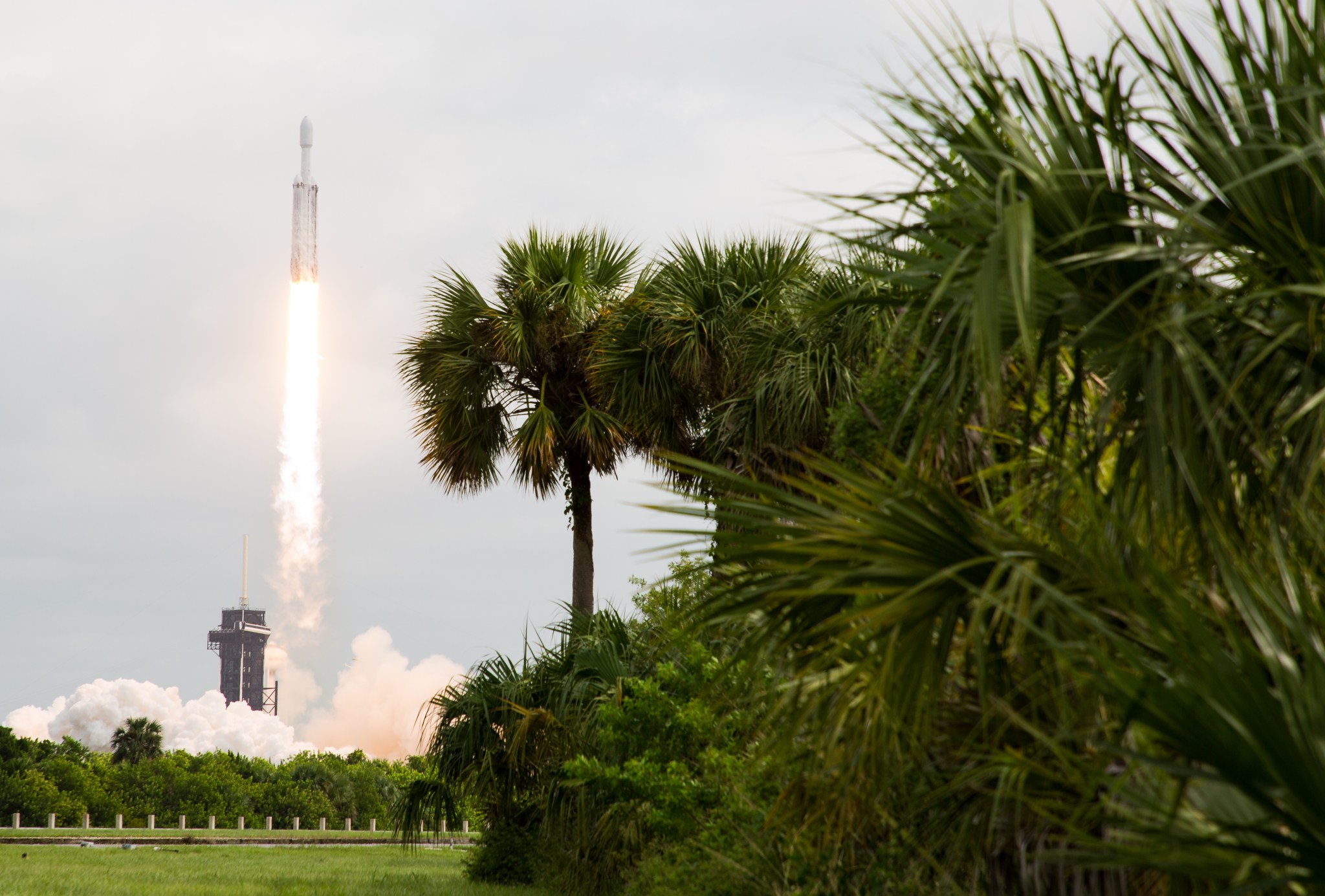
In the distance, a SpaceX Falcon Heavy rocket launches with the Psyche spacecraft onboard. They are gray and almost blend in with the sky. A bright blaze extends from the bottom of the rocket and clouds of smoke roll just above the trees. Palm trees on the right take up the majority of the foreground.
NASA / Aubrey Gemignani

NASA’s Psyche spacecraft launched aboard a SpaceX Falcon Heavy rocket on Friday, Oct. 13, 2023, from NASA’s Kennedy Space Center in Florida. This image captures the beginning of the spacecraft’s journey to a metal-rich asteroid of the same name.

The body of the Psyche spacecraft is about the size of a small van, and it’s powered by solar electric propulsion. It has a magnetometer, a gamma-ray and neutron spectrometer, and a multispectral imager to study asteroid Psyche’s composition. The spacecraft will start sending images to Earth as soon as it spots the asteroid.

See more photos from the launch.

Image Credit: NASA/Aubrey Gemignani

Powered by WPeMatico

Get The Details…
Monika Luabeya

NASA Seeks Development of Universal Payload Interface

NASA Seeks Development of Universal Payload Interface

4 min read

NASA Seeks Development of Universal Payload Interface

Researcher works on technology in box with top removed, revealing wires and other components.
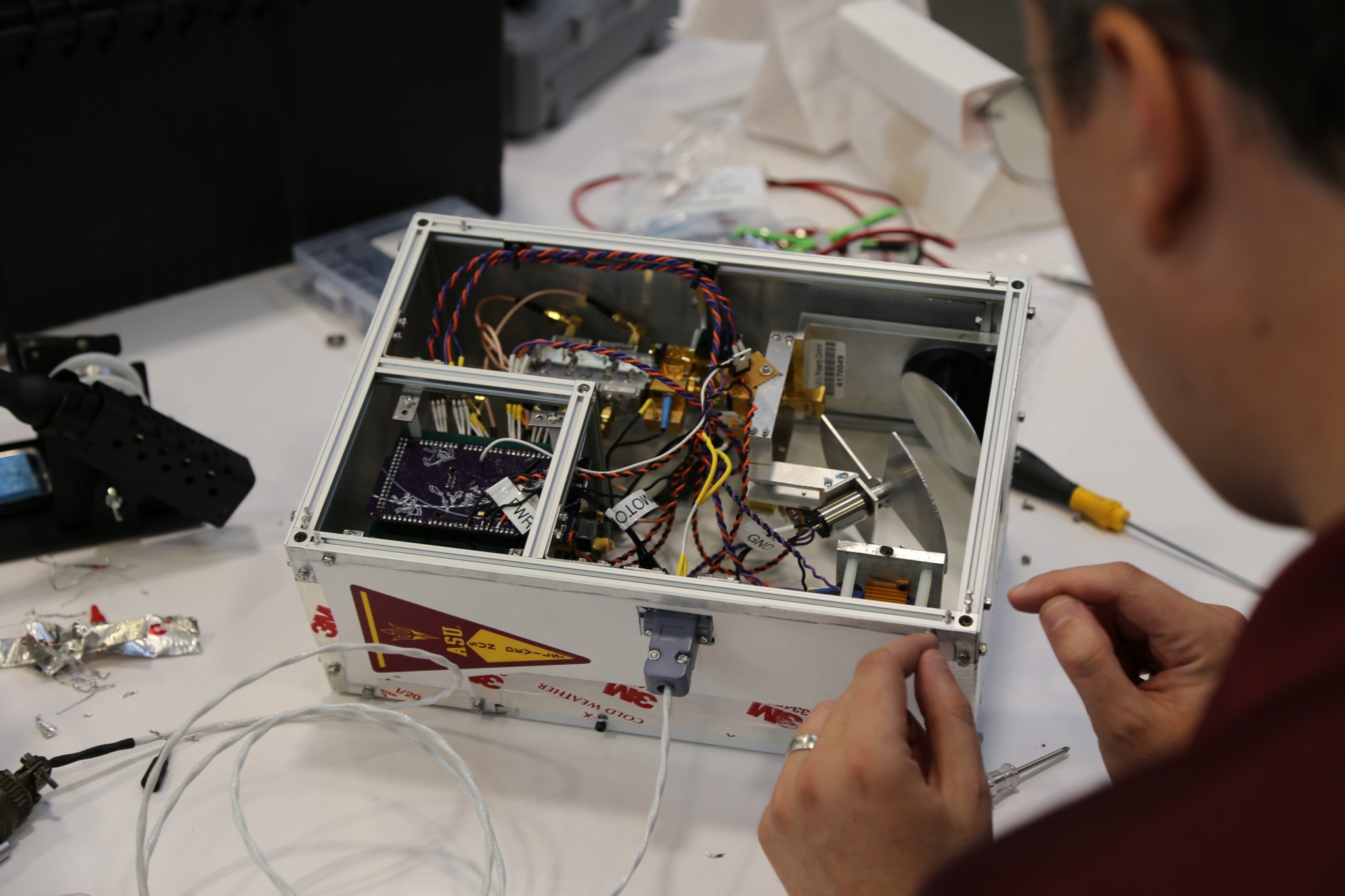
The third TechLeap Prize challenges applicants to make it easier to integrate diverse technology payloads onto various commercial suborbital vehicles, orbital flight platforms, and planetary landers. Pictured here is Arizona State University’s CubeSounder payload integration at the World View facility for an October 2021 high-altitude balloon flight supported by NASA’s Flight Opportunities program.
Arizona State University

NASA is calling on innovators to help solve some of the challenges in rapidly testing technology payloads across a wide range of commercial flight vehicles and test environments. As NASA explores the unknown in air and space, the agency is making increased use of commercial suborbital vehicles, spacecraft, and lunar landers to help advance new capabilities. However, the process to ensure payloads can properly interface with a host vehicle is currently complex, time-consuming, and can vary greatly from vehicle to vehicle, as well as between suborbital flights, orbital flights, and beyond.

To change the pace of space by moving technologies into flight testing and between different flight environments as quickly as possible, NASA’s Flight Opportunities program is asking businesses, academic institutions, entrepreneurs, and other innovators to develop a flight-ready universal payload interface for its third NASA TechLeap Prize. 

The NASA TechLeap Prize’s Universal Payload Interface Challenge  invites applicants to propose an optimized “system of systems” to enable easy integration of diverse technology payloads onto various commercial suborbital vehicles, orbital platforms, and planetary landers. The proposed universal payload interfaces should seamlessly adapt a wide range of small space payloads – be they technologies, laboratory instruments, or scientific experiments – for flight testing.

Researcher with hair net, mask, gloves, and lab coat works on box-like mechanical structure on a table.
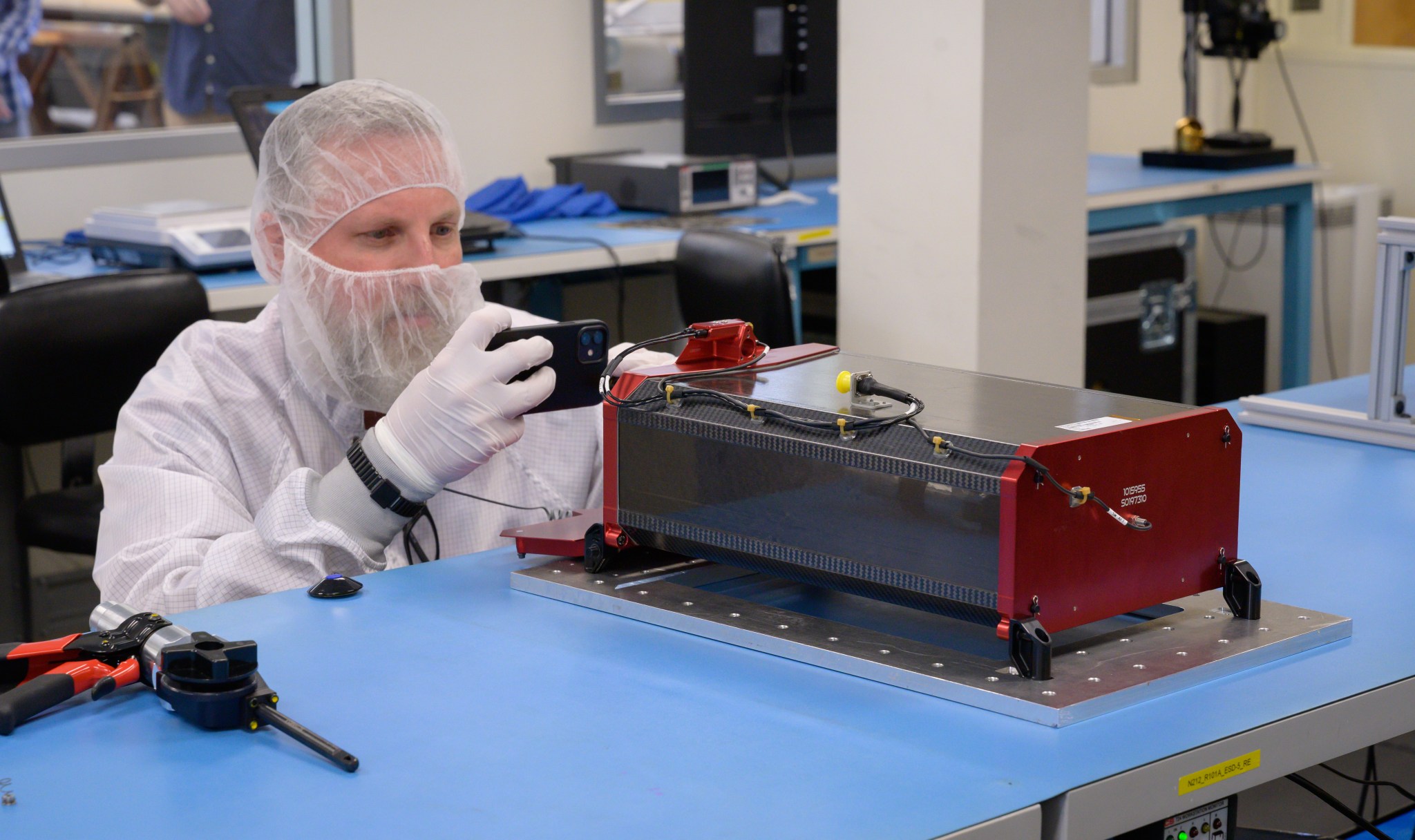
The third TechLeap Prize challenges applicants to make it easier to integrate diverse technology payloads onto various commercial suborbital vehicles, orbital flight platforms, and planetary landers. Pictured here is a Starling CubeSat.
NASA/Dominic Hart

A maximum of three winners will receive up to $650,000 each to build their system plus the opportunity to flight test it at no cost. The focus is on achieving a simplified and streamlined payload integration process that has the potential to accelerate future flight-testing timelines.

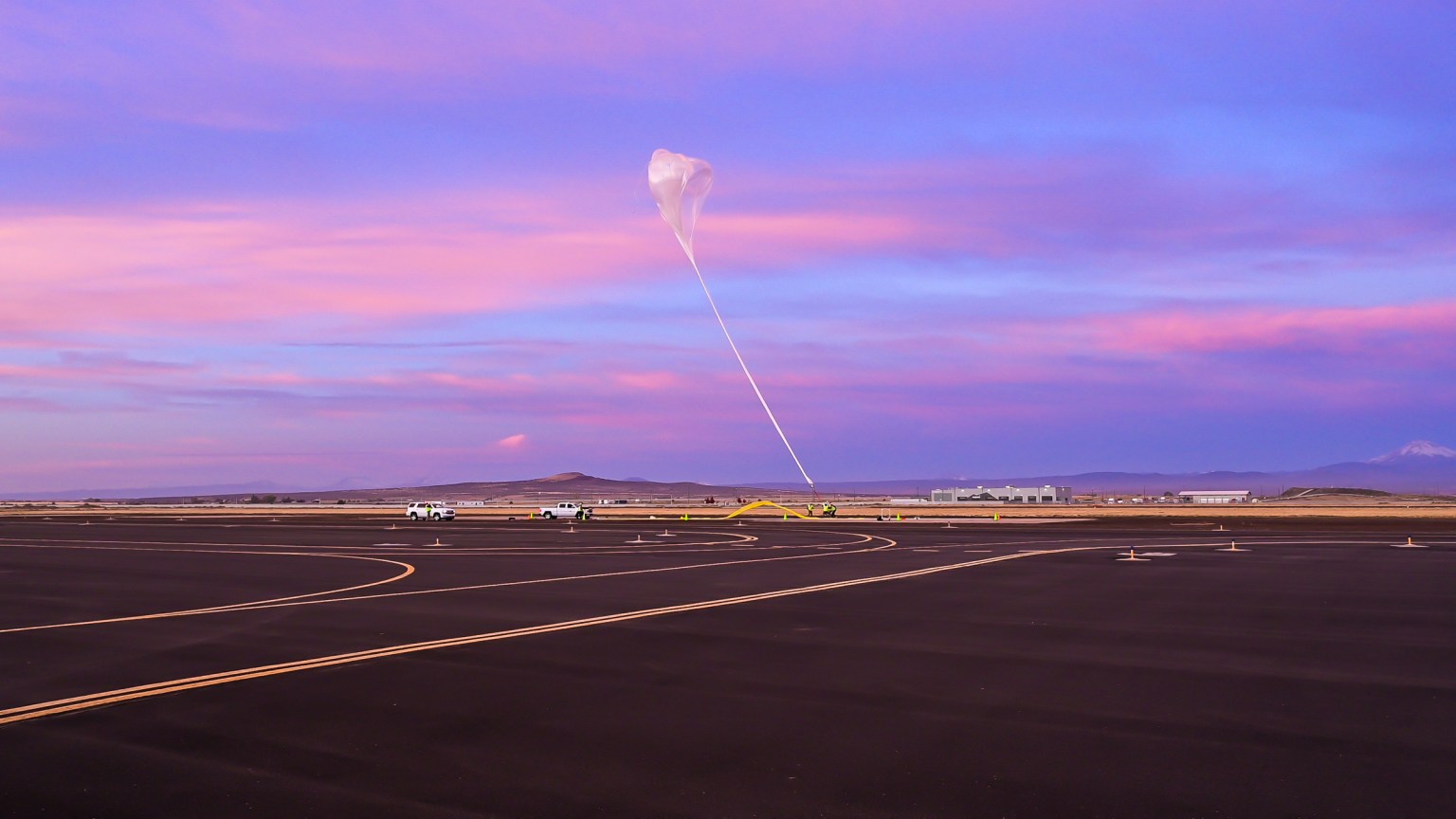
The challenge with payload integration is the variety of vehicles used for flight testing, such as the commercial suborbital rocket-powered vehicles and landers, high-altitude balloons, and aircraft flying parabolic profiles that Flight Opportunities uses. The program also works in close cooperation with the Small Spacecraft Technology programto offer access to platforms hosting payloads in orbit.

“The TechLeap Prize is a great way to engage the greater community to find a solution for payload integration that will reduce the time to flight test and ultimately accelerate the development of technologies that are critical for addressing key gaps for NASA and the nation,” said Danielle McCulloch, program manager for NASA’s Flight Opportunities program, which is managed at Armstrong Flight Research Center in Edwards, California. “This has the potential to be a huge step forward for advancing space exploration and expanding the space economy.”

Reducing the cost and complexity of payload integration will support future missions. Facilitating the operations and safety of disparately designed and developed payloads and ensuring that they function across a variety of vehicles is critical.

Through this challenge, NASA aims to find affordable and easy-to-use solutions that enable the rapid transition of payloads from the bench to integration for testing on a wide range of commercial flight vehicles.

Apply to the Universal Payload Interface Challenge

Registration deadline: February 1, 2024, at 5pm ET

Application deadline: February 22, 2024, at 5pm ET

To register, apply, review the technical details, and read the rules, visit the TechLeap Prize website.

Two people reach into frame-like structure that contains box-like mechanical equipment; one person in background watches integration.
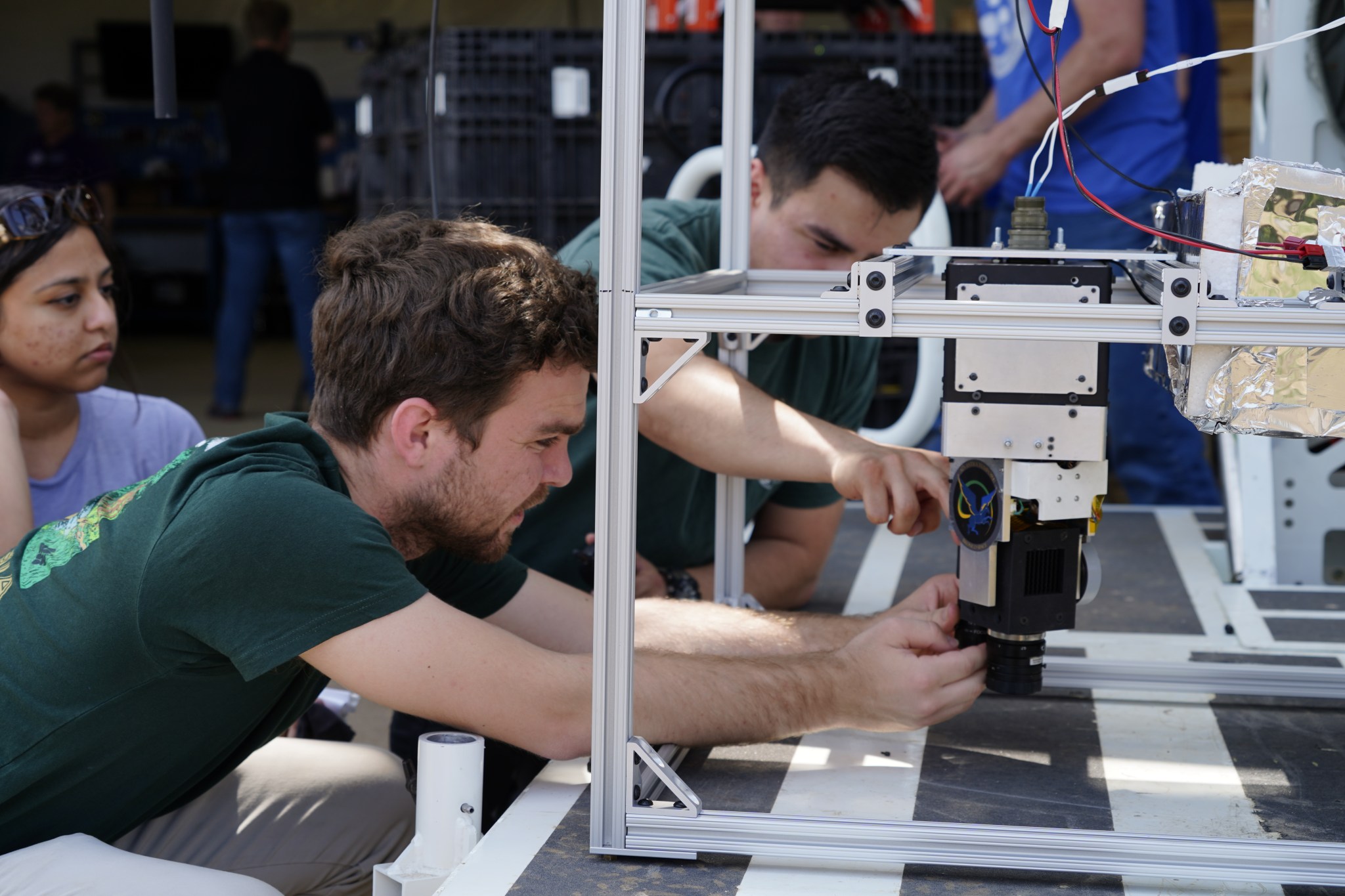
The third TechLeap Prize challenges applicants to make it easier to integrate diverse technology payloads onto various commercial suborbital vehicles, orbital flight platforms, and planetary landers. Pictured here is a Cal Poly Pomona team integrating their technology onto a high-altitude balloon in May 2023 for a flight test supported by NASA’s Flight Opportunities program.
Aerostar

About the NASA TechLeap Prize

The NASA TechLeap Prize, funded by NASA’s Flight Opportunities program, was initiated to rapidly identify and develop technologies of significant interest to the agency through a series of challenges. This is the third challenge conducted as part of the NASA TechLeap Prize. Past challenges include Autonomous Observation Challenge No. 1 and Nighttime Precision Landing Challenge No. 1.

Flight Opportunities, part of NASA’s Space Technology Mission Directorate (STMD) helps space technologies reach maturity more quickly by testing them on suborbital flights as well as on hosted orbital platforms, which are available in cooperation with STMD’s Small Spacecraft Technology program. These flight tests can provide critical data and insight into how a technology is expected to perform in its intended space environment, as well as help reduce risk prior to much more costly missions. The NASA Tournament Lab, part of the Prizes, Challenges, and Crowdsourcing program within STMD, manages the TechLeap Prize, which is administered by Carrot.

Powered by WPeMatico

Get The Details…
Ryan M. Henderson

40 Years Ago: Space Shuttle Discovery Makes its Public Debut

40 Years Ago: Space Shuttle Discovery Makes its Public Debut

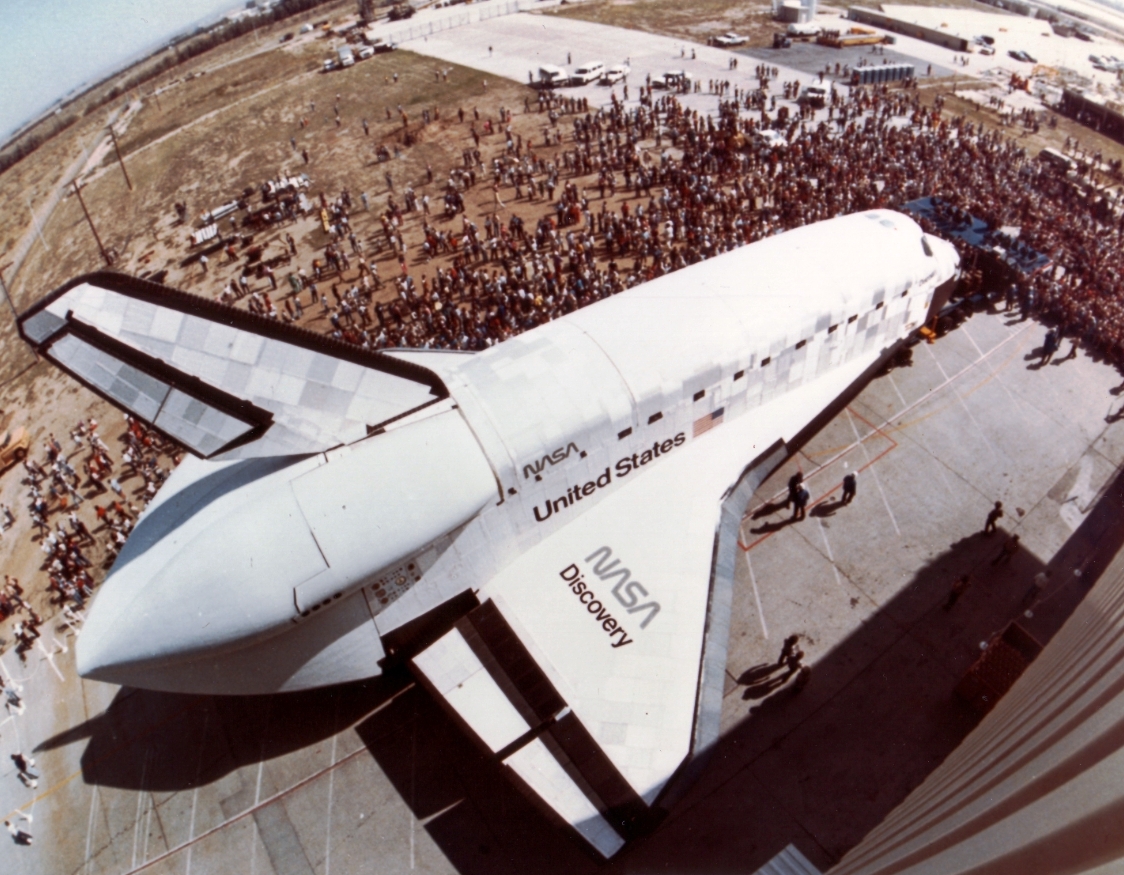
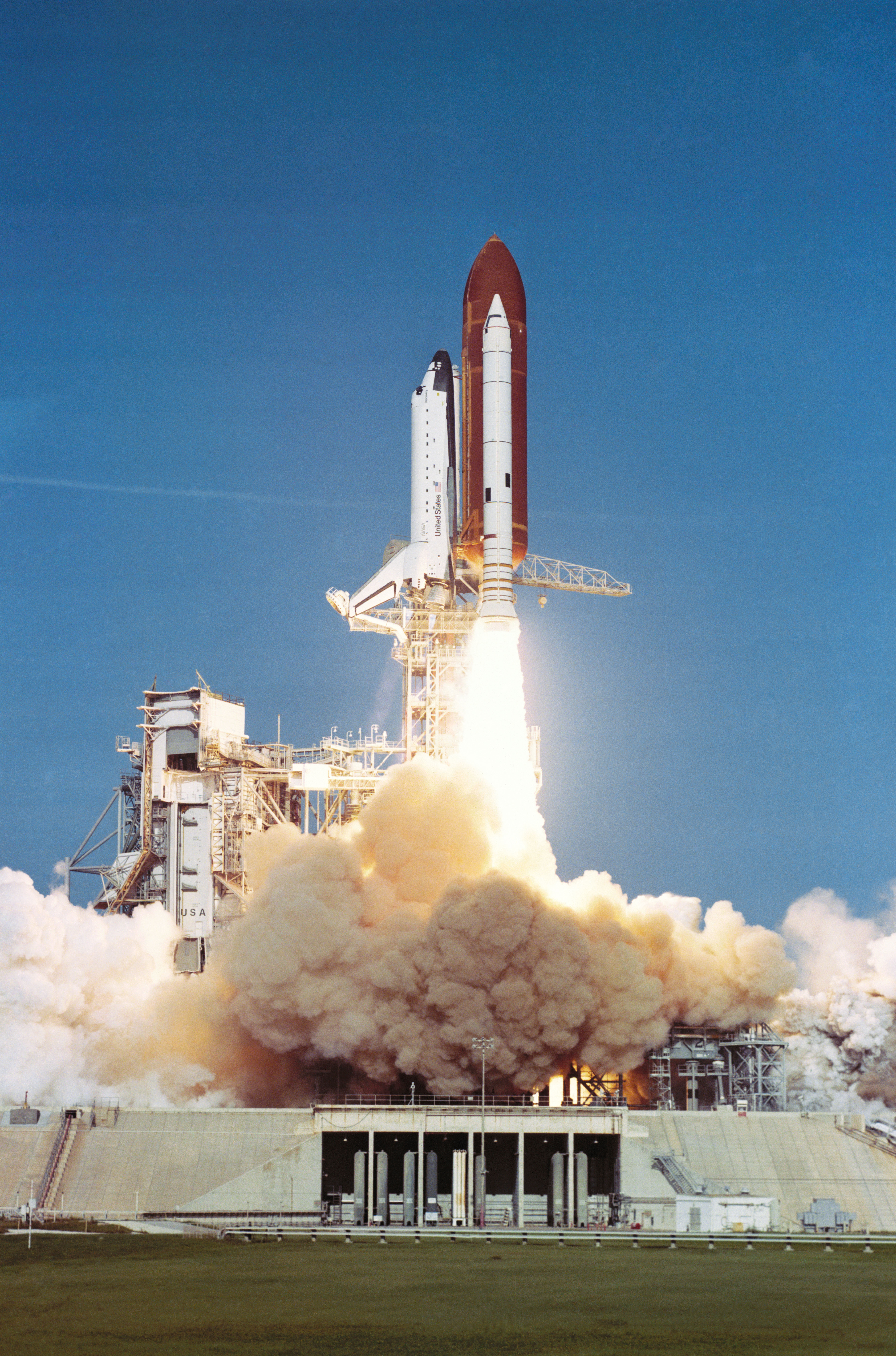
On Oct. 16, 1983, NASA’s newest space shuttle, Discovery, made its public debut during a rollout ceremony at its manufacturing plant in Palmdale, California. Under construction for three years, Discovery joined NASA’s other two space-worthy orbiters, Columbia and Challenger, and atmospheric test vehicle Enterprise. The rollout ceremony, attended by NASA and other officials, also featured the astronauts assigned to Discovery’s first mission, STS-41D, then planned for launch in June 1984. By the time NASA retired Discovery in 2011, it had flown 39 missions, more than any other orbiter, in a career spanning 26 years and flying every type of mission envisioned for the space shuttle. The Smithsonian Institution’s National Air and Space Museum has Discovery on display at its Stephen F. Udvar-Hazy Center in Chantilly, Virginia.
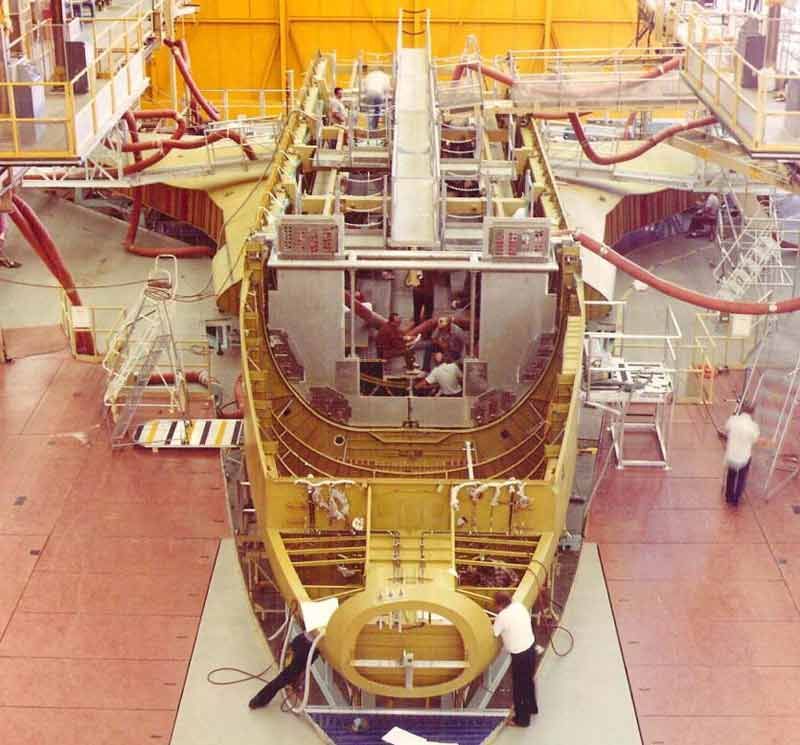
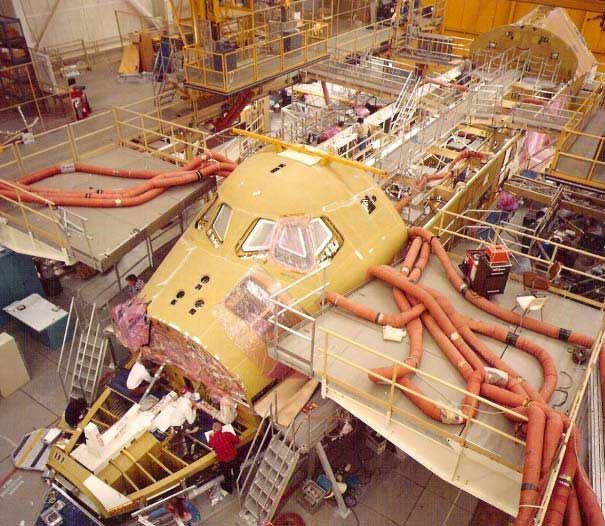
Space shuttle Discovery under construction at Rockwell International’s Palmdale, California, plant in  August 1982 Space shuttle Discovery under construction at Rockwell International’s Palmdale, California, plant in September 1982 Space shuttle Discovery under construction at Rockwell International’s Palmdale, California, plant in April 1983.
Space shuttle Discovery under construction at Rockwell International’s Palmdale, California, plant in  August 1982, left, September 1982, and April 1983.

On Jan. 25, 1979, NASA announced the names of the first four space-worthy orbiters – Columbia, Challenger, Discovery, and Atlantis. Like the other vehicles, NASA named Discovery after historical vessels of exploration – Captain James Cook’s HMS Discovery used during his third and final voyage (1776-1779) and Henry Hudson’s Discovery used during his 1610-1611 search for the Northwest Passage. On Jan. 29, NASA signed the contract with Rockwell International of Downey, California, to build and deliver Discovery. Construction began in June 1980 and finished in February 1983. The newest orbiter included several upgrades from the two earlier vehicles, and through more extensive use of blankets instead of tiles in the thermal protection system, weighed 6,870 pounds less than Columbia. After completion of systems testing, workers prepared Discovery for its first public appearance.

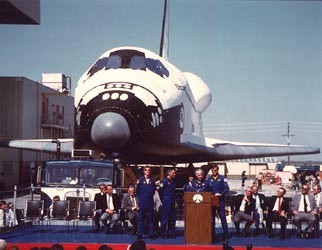
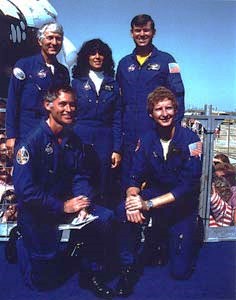
: Overhead view of space shuttle Discovery during the rollout ceremony at Rockwell International’s Palmdale, California, plant The astronauts assigned to Discovery’s first mission, STS-41D, speak to the assembled crowd Five of the six STS-41D crew members, Richard M. “Mike” Mullane, kneeling left, Steven A. Hawley, Henry W. “Hank” Hartsfield, standing left, Judith A. Resnik, and Michael L. Coats, pose with Discovery as a backdrop
Left: Overhead view of space shuttle Discovery during the rollout ceremony at Rockwell International’s Palmdale, California, plant. Middle: The astronauts assigned to Discovery’s first mission, STS-41D, speak to the assembled crowd. Right: Five of the six STS-41D crew members, Richard M. “Mike” Mullane, kneeling left, Steven A. Hawley, Henry W. “Hank” Hartsfield, standing left, Judith A. Resnik, and Michael L. Coats, pose with Discovery as a backdrop.

The rollout ceremony for Discovery took place on Oct. 16, 1983, at Rockwell International’s Palmdale facility, attended by hundreds of employees and visitors. In addition to NASA and other dignitaries, five of the six the astronauts assigned to Discovery’s first mission also participated, thanking the assembled employees for their hard work in building their spacecraft. They included STS-41D Commander Henry W. “Hank” Hartsfield, Pilot Michael L. Coats, and Mission Specialists Richard M. “Mike” Mullane, Steven A. Hawley, and Judith A. Resnik. Payload Specialist Charles D. Walker could not attend.

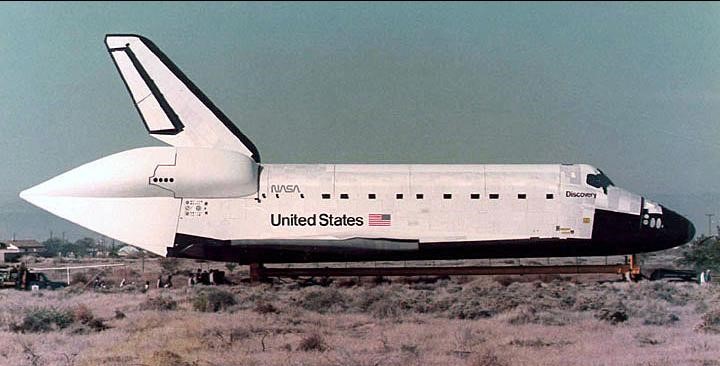
Workers tow Discovery the 36 miles from Palmdale to NASA’s Dryden, now Armstrong, Flight Research Center at Edwards Air Force Base in California’s Mojave Desert.

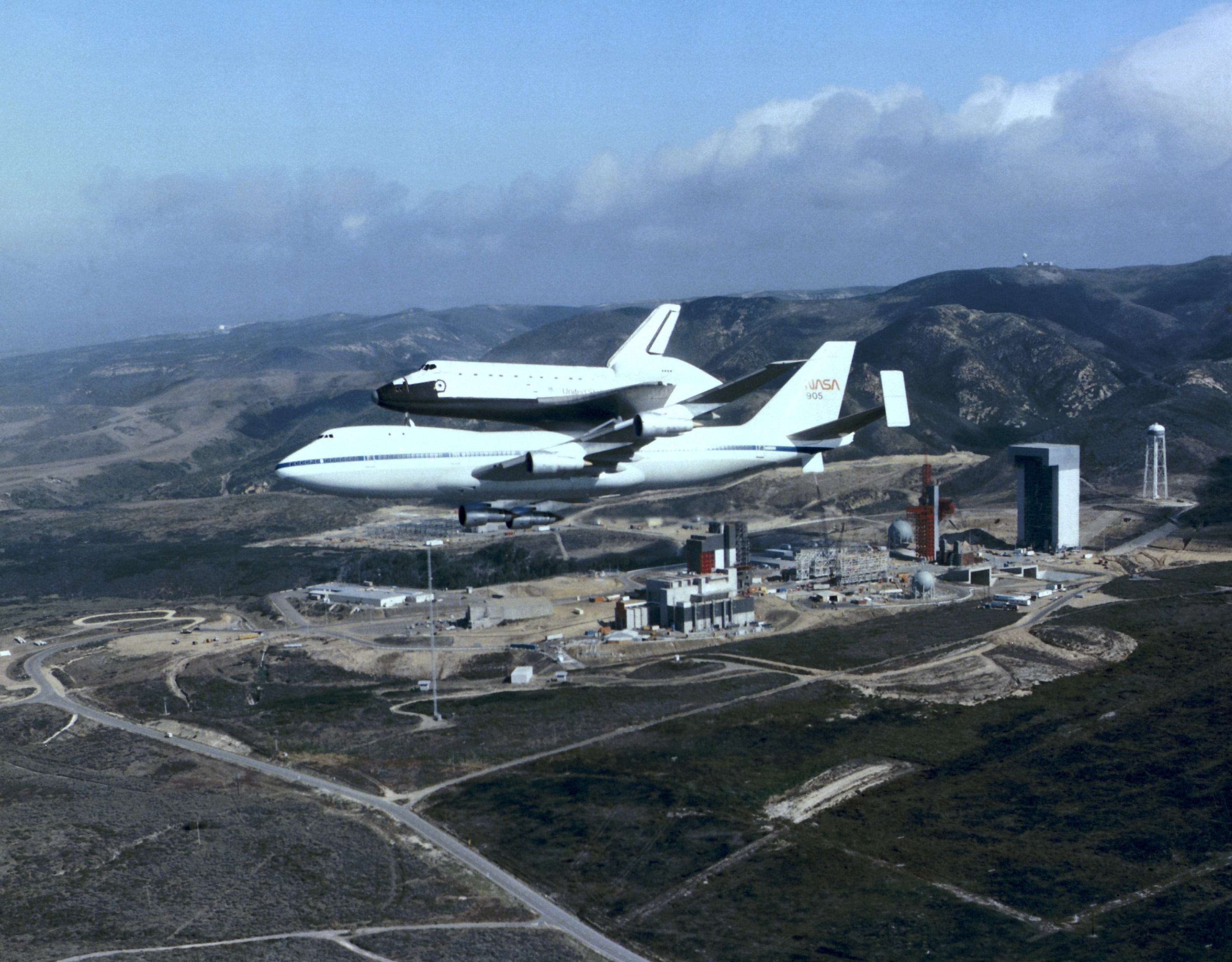
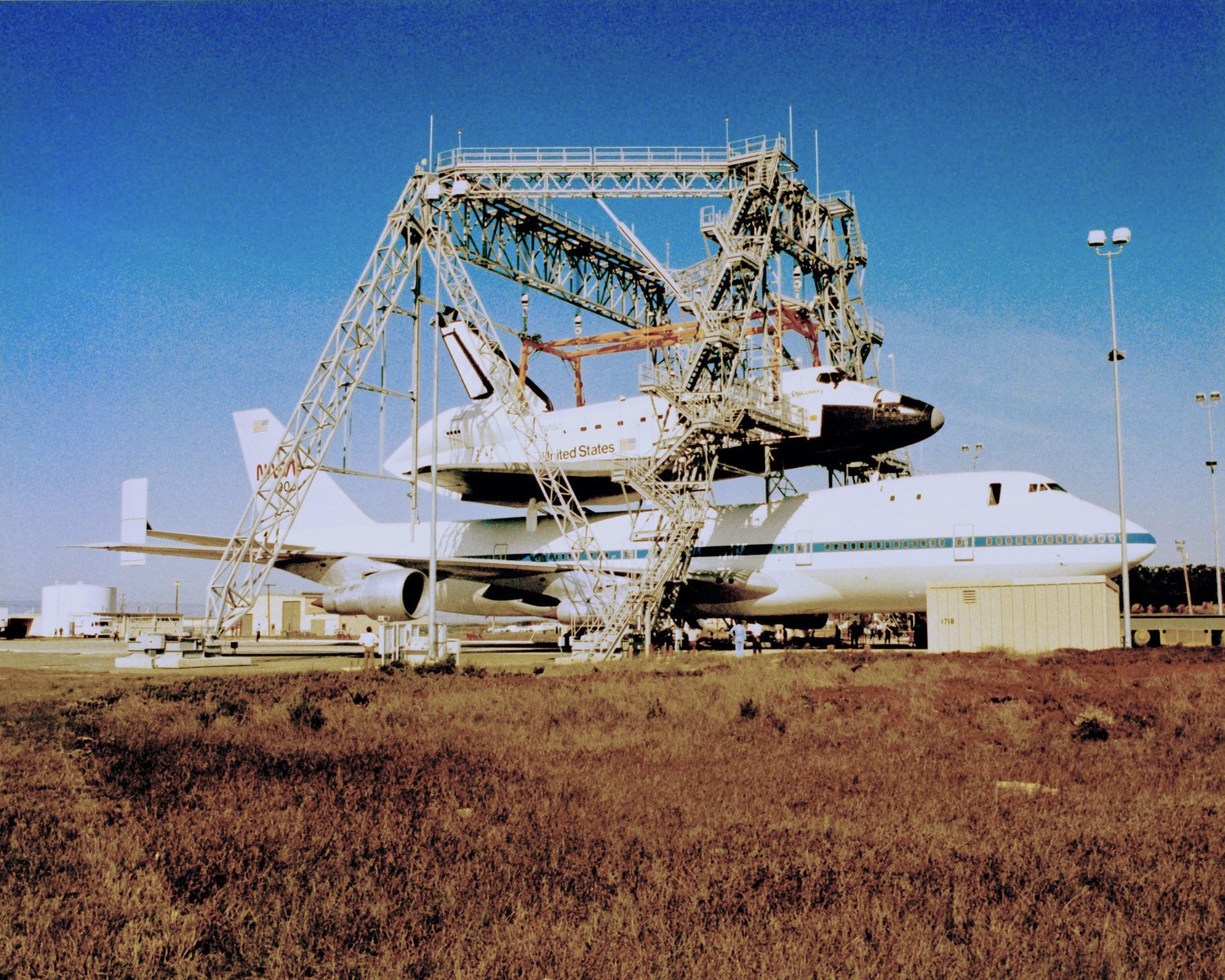
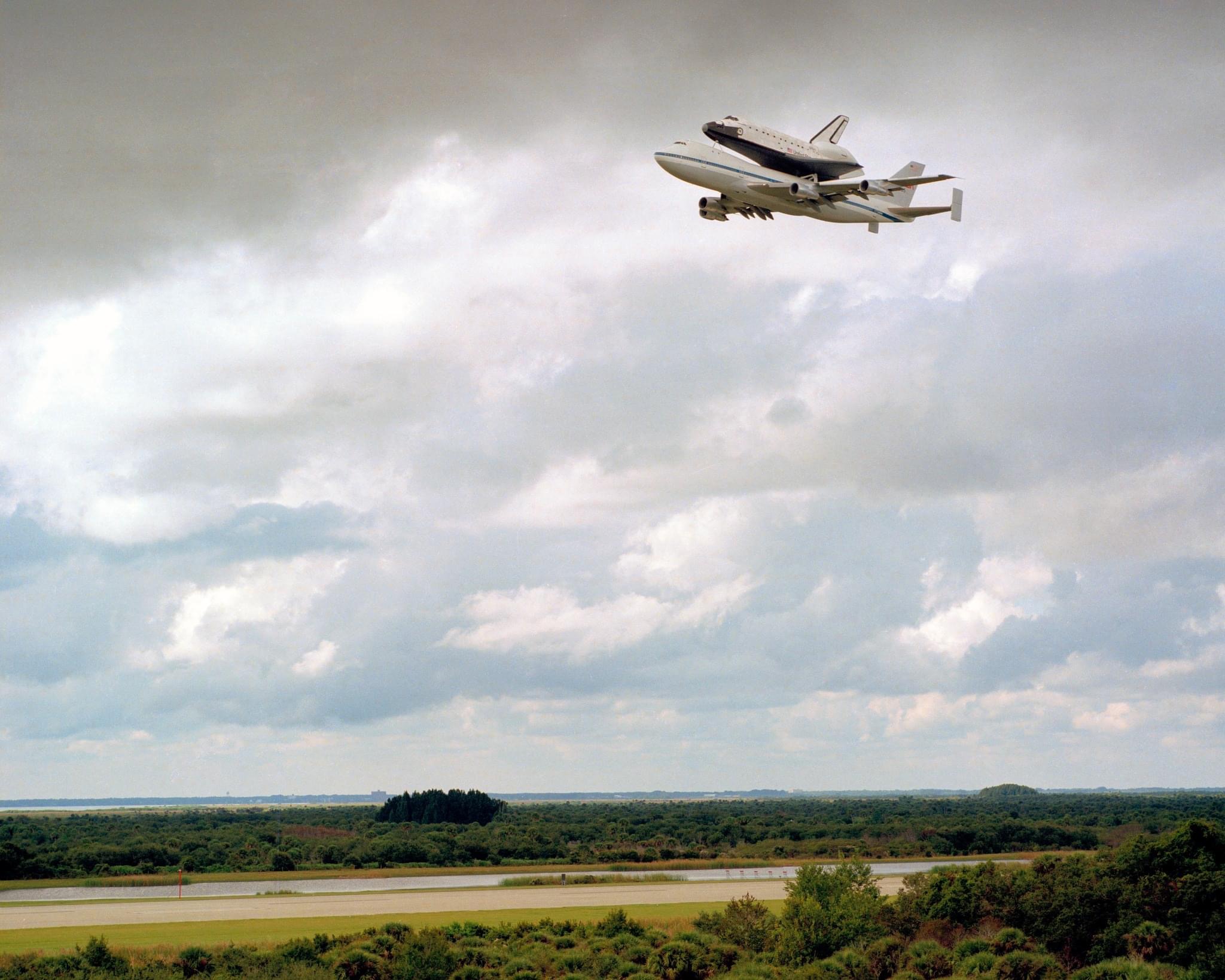
Space shuttle Discovery atop its Shuttle Carrier Aircraft (SCA) flies over Vandenberg Air Force Base Workers at Vandenberg use Discovery and its SCA to test the Orbiter Lifting Fixture Discovery atop the SCA arrives at NASA’s Kennedy Space Center in Florida
Left: Space shuttle Discovery atop its Shuttle Carrier Aircraft (SCA) flies over Vandenberg Air Force Base. Middle: Workers at Vandenberg use Discovery and its SCA to test the Orbiter Lifting Fixture. Right: Discovery atop the SCA arrives at NASA’s Kennedy Space Center in Florida.

Following the ceremony, workers trucked Discovery 36 miles overland to NASA’s Dryden, now Armstrong, Flight Research Center at Edwards Air Force Base (AFB) in California’s Mojave Desert, the trip taking about 10 hours. In the Mate-Demate Device (MMD), workers placed Discovery atop the Shuttle Carrier Aircraft (SCA), a modified Boeing 747, to begin the ferry flight. The first leg of the journey started on Nov. 6 with a stop at Vandenberg AFB on the California coast, where workers used Discovery and the SCA to test the Orbiter Lifting Fixture, a scaled down version of the MDD planned for use exclusively at Vandenberg. At the time, NASA and the Department of Defense planned to fly space shuttles, with Discovery as the designated orbiter, from Vandenberg’s Space Launch Complex-6 on military polar orbital missions, beginning with STS-62A in 1986. The agencies mothballed those plans following the Challenger accident. From Vandenberg, on Nov. 8 the SCA carried Discovery to Carswell AFB near Ft. Worth for an overnight refueling stop, before continuing to NASA’s Kennedy Space Center in Florida on Nov. 9. The following day, workers towed Discovery to the Orbiter Processing Facility (OPF) for initial receiving inspections. After a move to the nearby Vehicle Assembly Building (VAB) on Dec. 9 for temporary storage, workers returned Discovery to the OPF on Jan. 10, 1984, to begin processing it for its first flight.

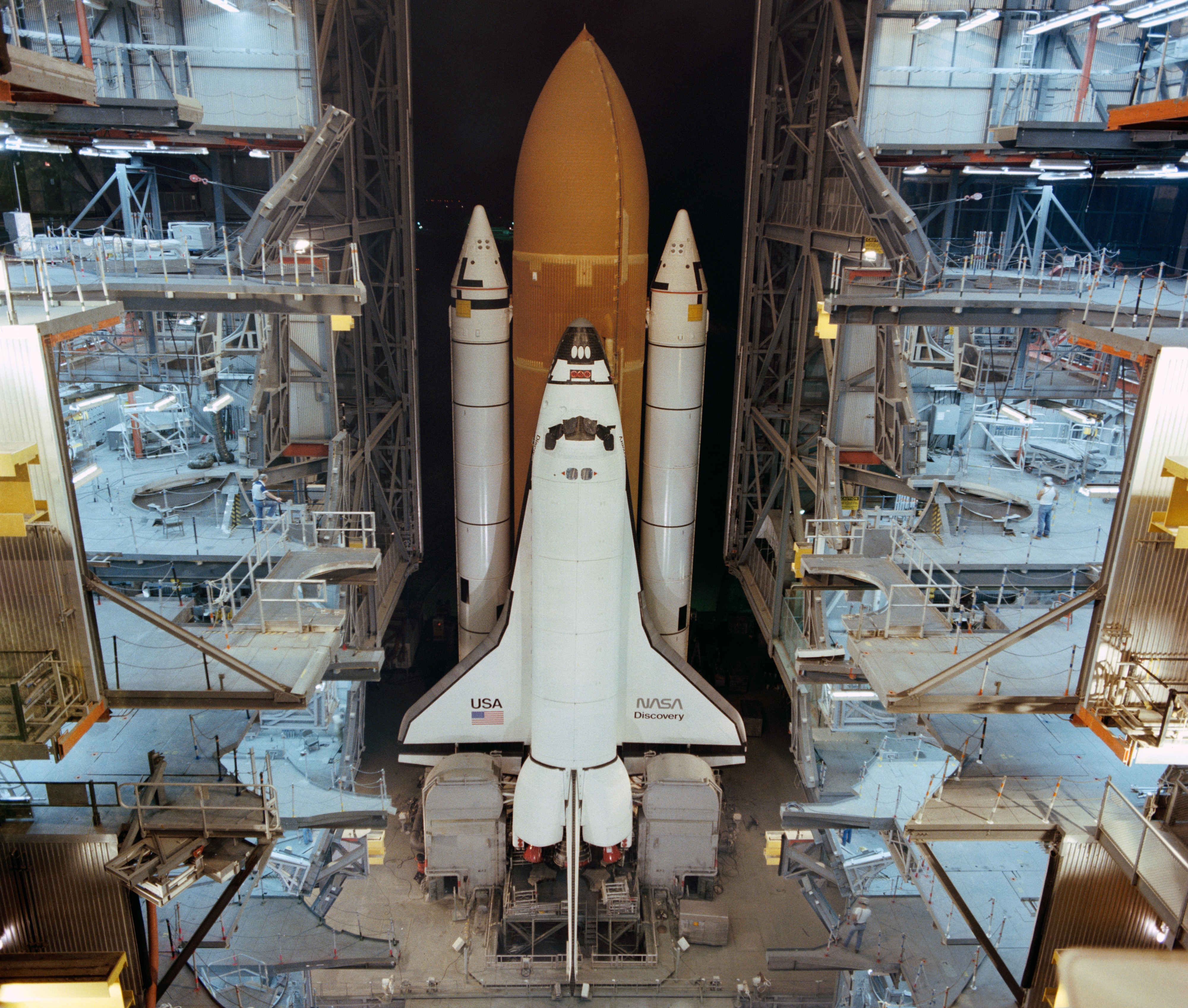
In the Vehicle Assembly Building (VAB) at NASA’s Kennedy Space Center in Florida workers prepare to lift Discovery for mating with its External Tank and twin Solid Rocket Boosters The completed stack is ready for its rollout to Launch Pad 39A Space shuttle Discovery begins its rollout from the VAB to Launch Pad 39A.
Left: In the Vehicle Assembly Building (VAB) at NASA’s Kennedy Space Center in Florida workers prepare to lift Discovery for mating with its External Tank and twin Solid Rocket Boosters. Middle: The completed stack is ready for its rollout to Launch Pad 39A. Right: Space shuttle Discovery begins its rollout from the VAB to Launch Pad 39A.

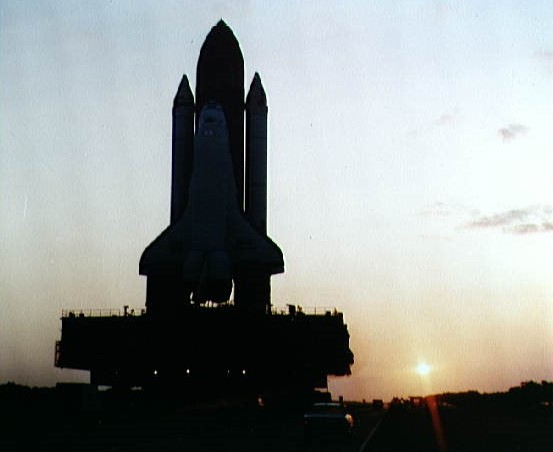
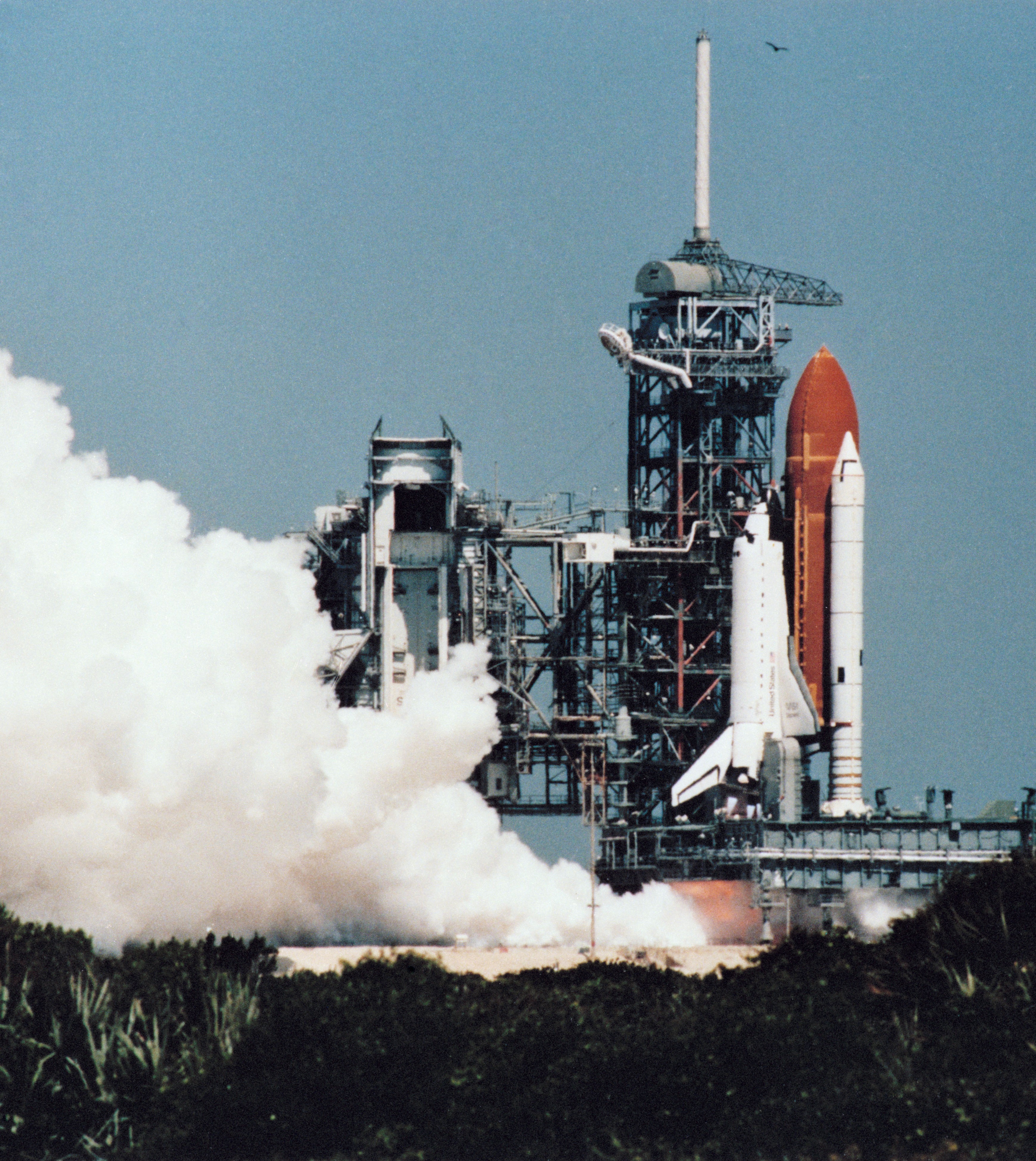
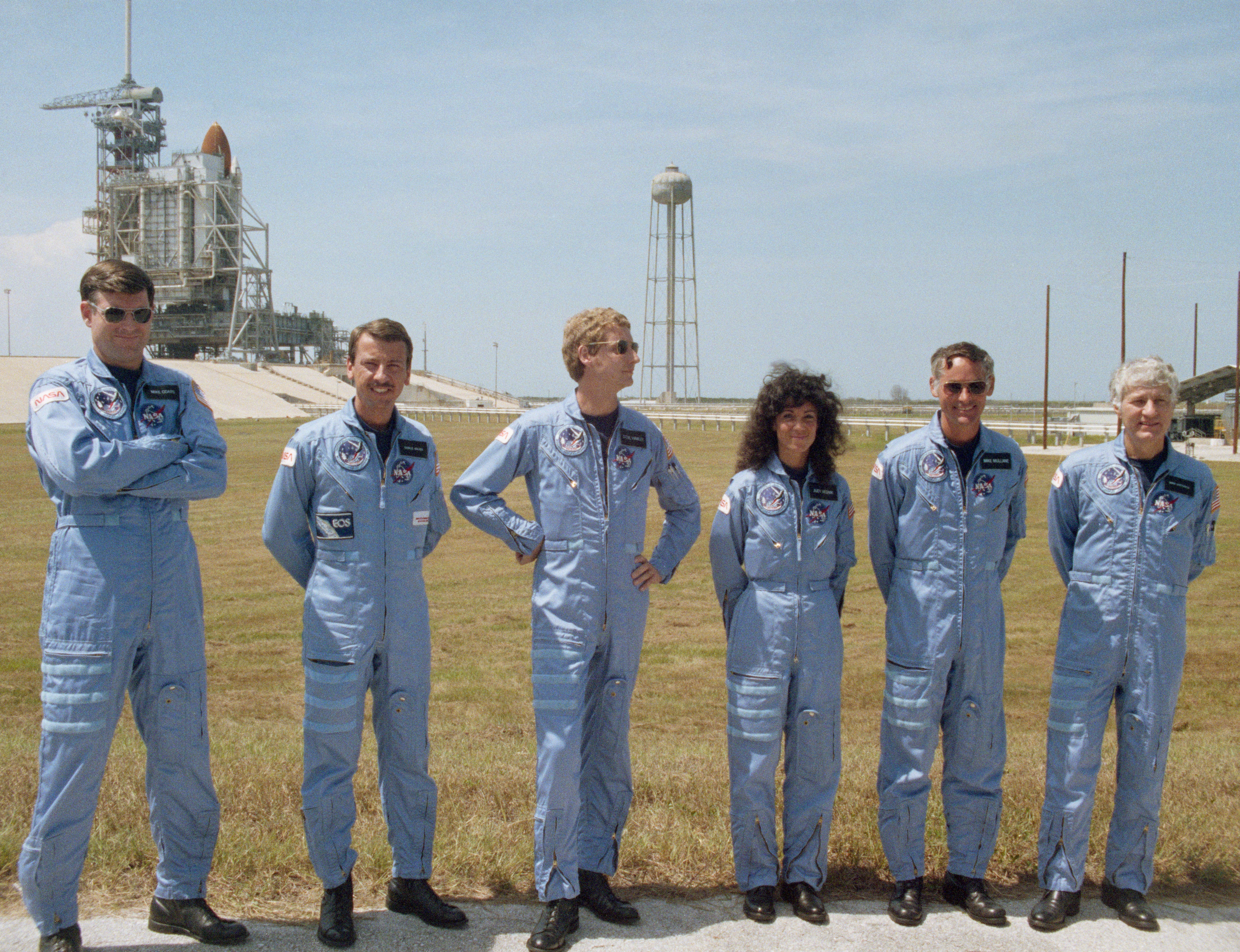
The Flight Readiness Firing of Discovery’s three main engines. With Discovery as a back drop, STS-41D astronauts Michael L. Coats, left, Charles D. Walker, Steven A. Hawley, Judith A. Resnik, Richard M. “Mike” Mullane, and Henry W. “Hank” Hartsfield pose for photographers following the countdown demonstration test The launch abort Discovery finally takes to the skies
Left: The Flight Readiness Firing of Discovery’s three main engines. Middle left: With Discovery as a back drop, STS-41D astronauts Michael L. Coats, left, Charles D. Walker, Steven A. Hawley, Judith A. Resnik, Richard M. “Mike” Mullane, and Henry W. “Hank” Hartsfield pose for photographers following the countdown demonstration test. Middle right: The launch abort. Right: Discovery finally takes to the skies!

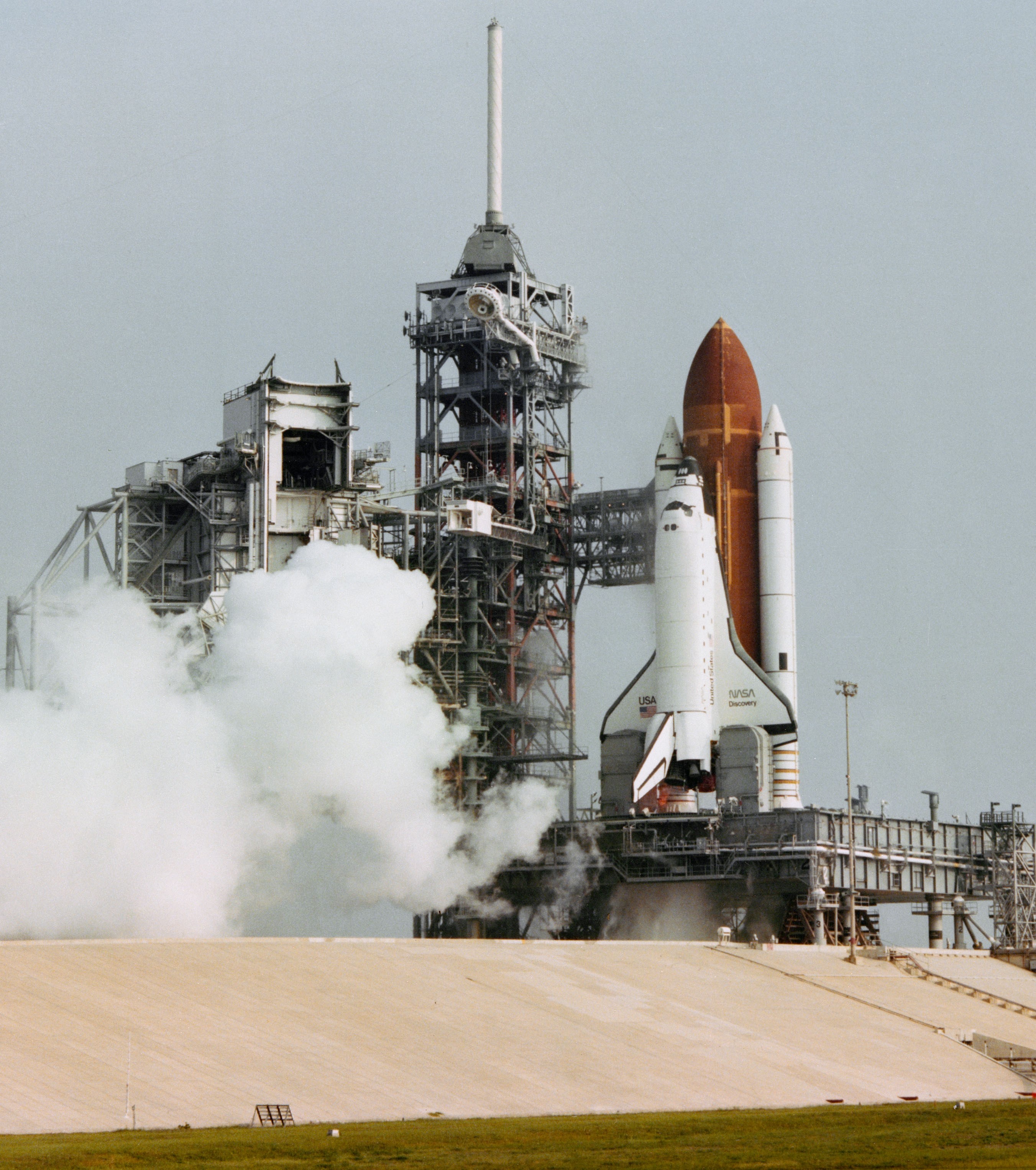
Four months later, on May 12, workers towed Discovery from the OPF to the VAB and mated it to an External Tank and twin Solid Rocket Boosters. The entire stack rolled out to Launch Pad 39A on May 19 in preparation for the planned June 25 launch of the STS-41D mission. As with any new orbiter, on June 2 NASA conducted a 20-second Flight Readiness Firing of Discovery’s three main engines. On June 14, the six-person crew participated in a countdown demonstration test. They boarded Discovery on June 25 for a launch attempt that aborted at the T minus nine-minute mark due to a failure of Discovery’s back-up General Purpose Computer. Technicians replaced the failed unit with one from Challenger for another launch attempt the next day. This time Discovery’s onboard computer aborted the launch four seconds before liftoff but after two of the three main engines had already ignited, resulting in some anxious moments in the crew compartment. To ease the tension, Hawley is reported to have said something along the lines of, “Gee, I thought we’d be a little higher when the engines shut off.” To make matters worse, a hydrogen fire at the base of the launch pad activated the fire suppression system, forcing the crew to evacuate the spacecraft under a deluge of water. The problem with the center engine required a replacement that engineers completed at the pad between July 3 and 5. But the delay caused NASA managers to shuffle payloads and launch schedules, and that required Discovery’s return to the VAB on July 14. Workers destacked the orbiter to return it to the OPF for the payload changes. That completed, and after restacking in the VAB, Discovery returned to Launch Pad 39A on Aug. 9 for a launch attempt 20 days later. A hardware problem resulted in a one-day delay, and finally on Aug. 30 Discovery lifted off on its first mission to space.

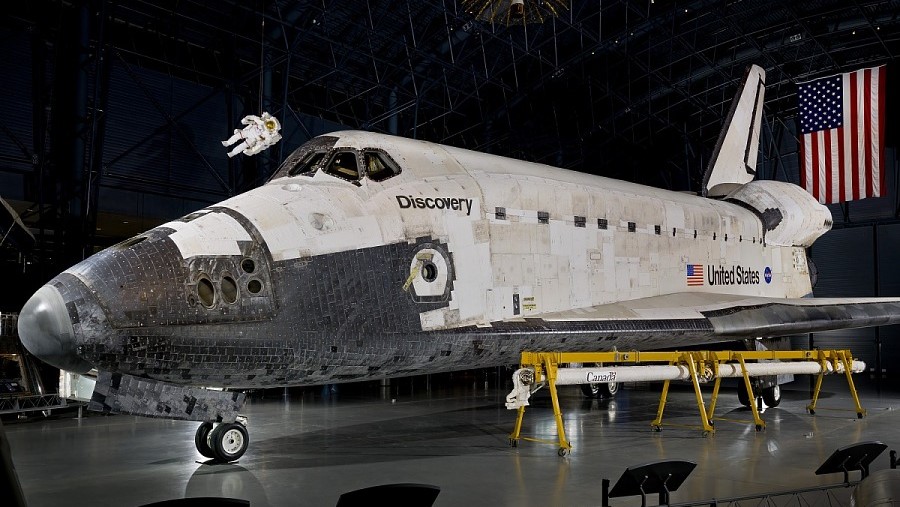
Space shuttle Discovery in the Smithsonian Institution’s Stephen F. Udvar-Hazy Center of the National Air and Space Museum in Chantilly, Virginia
Space shuttle Discovery in the Smithsonian Institution’s Stephen F. Udvar-Hazy Center of the National Air and Space Museum in Chantilly, Virginia. Image credit: courtesy National Air and Space Museum.

In the course of its 39 missions spanning more than 26 years, Discovery flew virtually every type of mission envisioned for the space shuttle, including government and commercial satellite deployments and retrievals, launching and servicing scientific observatories such as the Hubble Space Telescope, resupplying the Russian Mir space station, and assembling and maintaining the International Space Station. Discovery also flew the return to flight missions after both the Challenger and Columbia accidents. Discovery flew its final mission, STS-133, in February 2011. The following year, the Smithsonian Institution’s National Air and Space Museum placed space shuttle Discovery on display at its Stephen F. Udvar-Hazy Center in Chantilly, Virginia.

Powered by WPeMatico

Get The Details…
Kelli Mars

PROPULSION TEST AREA

PROPULSION TEST AREA

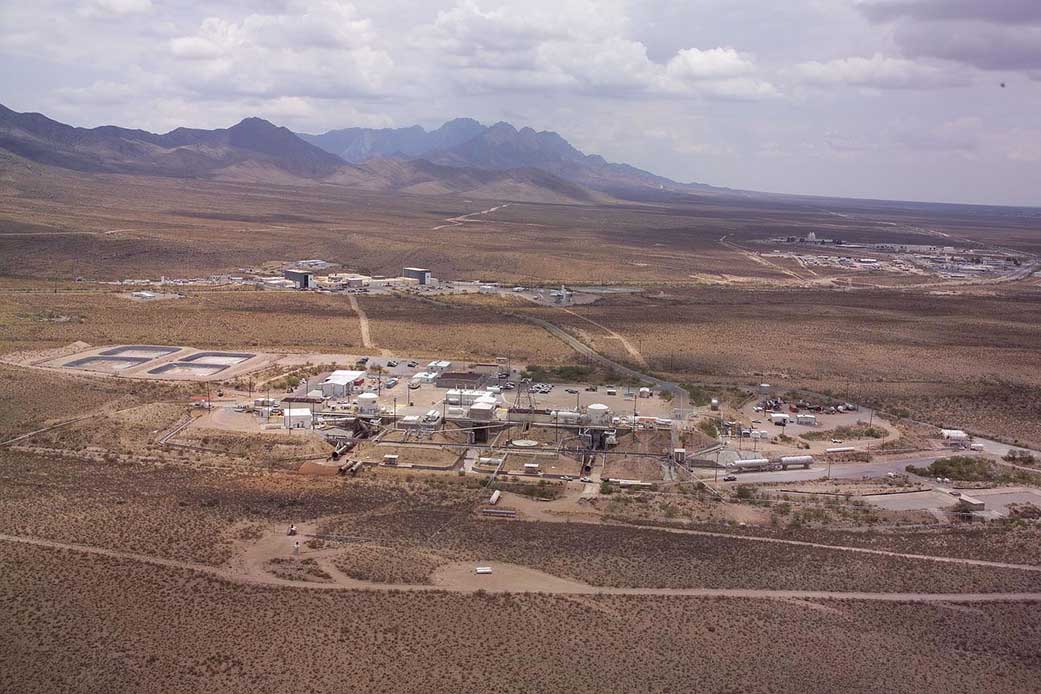
From the Apollo rocket engine testing of the 1960s to the spacecraft propulsion systems of today, our site has developed unique facilities to meet the testing needs for testing rocket propulsion systems.

Offering numerous ambient and altitude simulation test stands, we can test propulsion systems as well as single engines in multiple configurations and conditions.

Powered by WPeMatico

Get The Details…
Jeffrey E. Brubaker