NASA Sensor Produces First Global Maps of Surface Minerals in Arid Regions

NASA Sensor Produces First Global Maps of Surface Minerals in Arid Regions
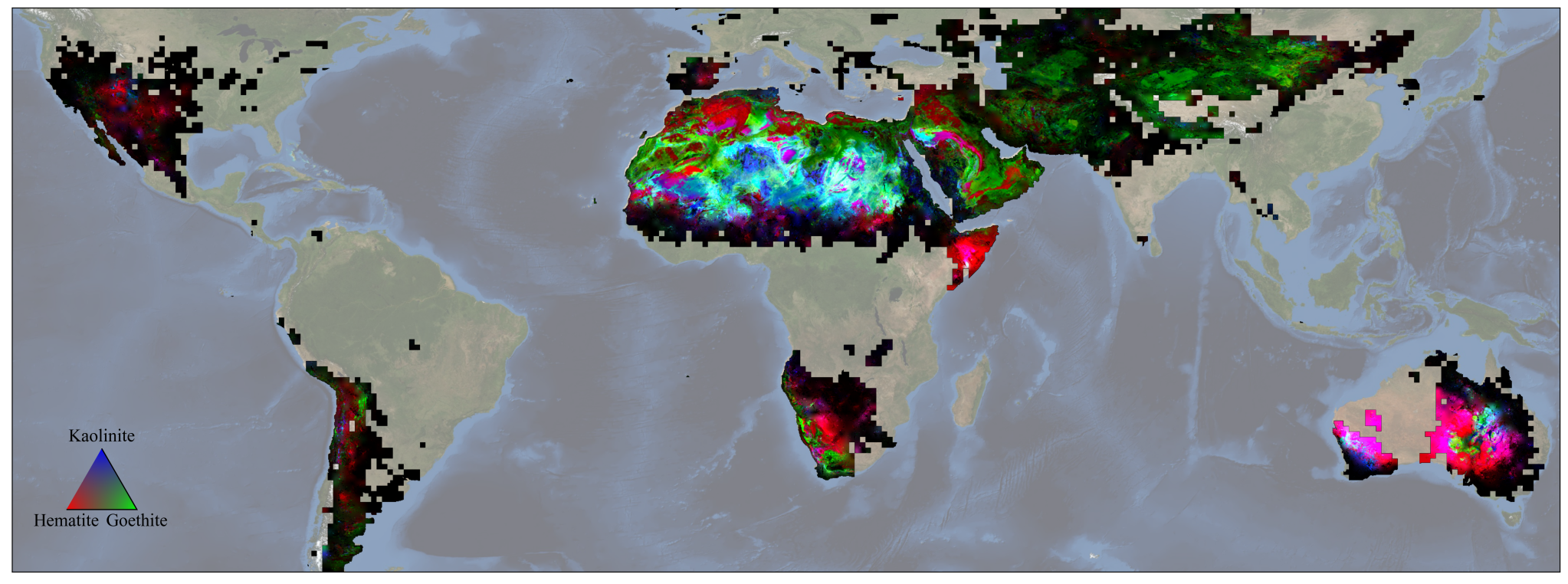
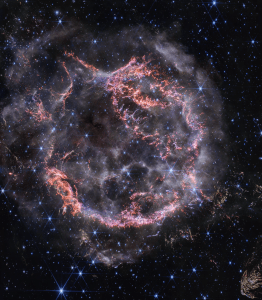
NASA’s EMIT produced its first global maps of hematite, goethite, and kaolinite in Earth’s dry regions using data from the year ending November 2023. The mission collected billions of measurements of the three minerals and seven others that may affect climate when lofted into the air as dust storms.
NASA/JPL-Caltech

EMIT delivers first-of-a-kind maps of minerals in Earth’s dust-source areas, enabling scientists to model the fine particles’ role in climate change and more.

NASA’s EMIT mission has created the first comprehensive maps of the world’s mineral dust-source regions, providing precise locations of 10 key minerals based on how they reflect and absorb light. When winds loft these substances into the air, they either cool or warm the atmosphere and Earth’s surface, depending on their composition. Understanding their abundance around the globe will help researchers predict future climate impacts.

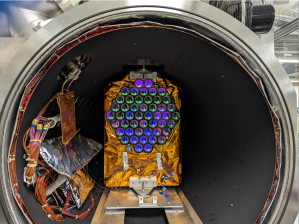
Launched to the International Space Station in 2022, EMIT – short for Earth Surface Mineral Dust Source Investigation – is an imaging spectrometer developed by NASA’s Jet Propulsion Laboratory in Southern California. The mission fills a crucial need among climate scientists for more detailed information on surface mineral composition.

Surveying Earth’s surface from about 250 miles (410 kilometers) above, EMIT scans broad areas that would be impossible for a geologist on the ground or instruments carried by aircraft to survey, yet it does this while achieving effectively the same level of detail.

EMIT, a NASA mission launched to the International Space Station in 2022, mapped hematite, goethite, and kaolinite in North Africa and the Arabian Peninsula. The three minerals are among 10 key substances the mission studied that are thought to influence climate change.
NASA/JPL-Caltech

To date, the mission has captured more than 55,000 “scenes” – 50-by-50-mile (80-by-80-kilometer) images of the surface – in its study area, which includes arid regions within a 6,900-mile-wide (11,000-kilometer-wide) belt around Earth’s mid-section. Taken together, the scenes comprise billions of measurements – more than enough to create detailed maps of surface composition.

The mission has also demonstrated a range of additional capabilities in its 17 months in orbit, including detecting plumes of methane and carbon dioxide being emitted by landfills, oil facilities, and other infrastructure.

“Wherever we need chemistry to understand something on the surface, we can do that with imaging spectroscopy,” said Roger Clark, an EMIT science team member and senior scientist at the Planetary Science Institute in Tucson, Arizona. “Now, with EMIT, we’re going to see the big picture, and that’s certainly going to open some eyes.” 

Dust and Climate

Scientists have long known that airborne mineral dust affects the climate. They know that darker, iron oxide-rich substances absorb the Sun’s energy and warm the surrounding air, while non-iron-based, brighter substances reflect light and heat, cooling the air. Whether those effects have a net warming or cooling impact, however, has remained uncertain.

Researchers have an idea of how dust travels through the atmosphere, but the missing piece has been the composition – the color, essentially – of the surface in the places dust typically originates, which until now was derived from fewer than 5,000 sample sites around the world. Based on billions of samples, EMIT’s maps offer much more detail.

“We’ll take the new maps and put them into our climate models,” said Natalie Mahowald, EMIT’s deputy principal investigator and an Earth system scientist at Cornell University in Ithaca, New York. “And from that, we’ll know what fraction of aerosols are absorbing heat versus reflecting to a much greater extent than we have known in the past.”

Dust and Ecosystems

Beyond harnessing EMIT’s mineral data to improve Earth climate modeling, scientists can use the information to study dust’s impact on the ecosystems where it lands. There’s strong evidence that particles settling in the ocean can spur phytoplankton blooms, which can have implications for aquatic ecosystems and the planet’s carbon cycle. Scientists also have shown that dust originating in the Andes of South America, as well as in parts of northern and sub-Saharan Africa, provides nutrients for rainforest growth in the Amazon basin.

EMIT data can enable researchers to pinpoint the sources of mineral dust and get a more detailed look at its composition, helping estimate the travel of key elements such as phosphorus, calcium, and potassium, which are thought to factor into this long-distance fertilization.

“EMIT could help us to build more intricate and finely resolved dust-transport models to track the movement of those nutrients across long distances,” said Eric Slessarev, a soil researcher at Yale University in New Haven, Connecticut. “That will help us to better understand the chemistry of soils in places very far from the dust-generating regions.” 

A New Generation of Science

Aside from tracking 10 key minerals that are part of its primary mission, EMIT data is being used to identify a range of other minerals, types of vegetation, snow and ice, and even human-produced substances at or near Earth’s surface. And with vastly more measurements at their disposal, researchers will be able to find statistical relationships between surface characteristics and other features of interest.

For example, they might spot signals in EMIT data that correspond with the presence of rare-earth elements and lithium-bearing minerals, said Robert Green, a senior research scientist at JPL and EMIT’s principal investigator. This new information could be used to look for those substances in previously unknown places.

“To this point we simply haven’t known the distribution of surface minerals over huge swaths of the planet,” said Phil Brodrick, a JPL data scientist who spearheaded the creation of the mineral maps. With the EMIT data, “there will likely be a new generation of science that comes out that we don’t know about yet, and that’s a really cool thing.”

More About the Mission

EMIT was selected from the Earth Venture Instrument-4 solicitation under the Earth Science Division of NASA’s Science Mission Directorate and was developed at NASA’s Jet Propulsion Laboratory, which is managed for the agency by Caltech in Pasadena, California. The instrument’s data is available at the NASA Land Processes Distributed Active Archive Center for use by other researchers and the public.

To learn more about the mission, visit:

https://earth.jpl.nasa.gov/emit/

News Media Contacts

Andrew Wang / Jane J. Lee
Jet Propulsion Laboratory, Pasadena, Calif.
626-379-6874 / 818-354-0307
andrew.wang@jpl.nasa.gov / jane.j.lee@jpl.nasa.gov

2023-180

Powered by WPeMatico

Get The Details…
Naomi Hartono

2024 Leadership Changes to Include NASA Stennis Director’s Retirement

2024 Leadership Changes to Include NASA Stennis Director’s Retirement

NASA meatball logo

NASA Administrator Bill Nelson announced Monday that after more than 30 years of service, the agency’s Stennis Space Center Director Richard Gilbrech will retire on Saturday, Jan. 13.

Stennis Deputy Director John Bailey will serve as acting center director after Gilbrech’s departure, and a permanent successor will be identified following a search and competition.

Nelson also announced Chief of Staff Susie Perez Quinn will transition to a senior advisor role at the end of the year, and Bale Dalton will succeed her beginning Monday, Jan. 1.

“Please join me in welcoming new leadership across NASA, who will continue leading our agency to unparalleled success,” said Nelson. “I’m thankful for Rick’s, Susie’s, and Bale’s leadership and wish Rick all the best in his new adventure.”

Gilbrech has served as center director at Stennis for more than a decade and in leadership and engineering roles at NASA since 1991. He has led teams at Stennis in Bay St. Louis, Mississippi, NASA’s Langley Research Center in Hampton, Virginia, and NASA Headquarters in Washington, focusing on propulsion test technology, the space shuttle, and the X-33 in various roles, including as associate administrator for NASA’s Exploration Systems Mission Directorate and deputy center director at both Stennis and Langley.

Most recently, Gilbrech has been instrumental in the growth of commercial partnerships at Stennis, leveraging the center’s unique capabilities and expertise as America’s largest rocket propulsion test site.

Quinn has served as chief of staff since 2021, working with Nelson and senior staff to shape the strategic direction of the agency, while overseeing and articulating various policies and programs, with a focus climate change.

In addition to his experience at NASA as deputy chief of staff, Dalton is a captain in the U.S. Navy Reserves. He received his bachelor’s degree from the U.S. Naval Academy, Master of Public Policy from the Harvard Kennedy School, and Master of Business Administration from the Wharton School.

“With new transitions and the end of the calendar year approaching, it’s a time to pause and reflect on all that NASA has achieved this year. We’re living through the golden era of space exploration, and it’s because of our world-class workforce that we continue to lead the world in air and space – and I can’t wait to see what’s to come,” added Nelson.

Learn more about NASA’s missions online at:

https://www.nasa.gov

-end-

Jackie McGuinness / Cheryl Warner
Headquarters, Washington
202-358-1600
jackie.mcguiness@nasa.gov / cheryl.m.warner@nasa.gov

C. Lacy Thompson
Stennis Space Center, Bay St. Louis, Miss.
228-688-3050
calvin.I.thompson@nasa.gov

Share

Details

Last Updated

Dec 11, 2023

Powered by WPeMatico

Get The Details…
Abbey A. Donaldson

NASA Engineer Named in Forbes 30 Under 30 List of Innovators

NASA Engineer Named in Forbes 30 Under 30 List of Innovators

Clare Luckey, an engineer at NASA’s Johnson Space Center in Houston, has been named one of Forbes’ 30 under 30 Class of 2024. The other NASA honoree is Katie Konans, audio and podcasting lead at the agency’s Goddard Space Flight Center in Greenbelt, Maryland.

Forbes’ 30 Under 30 list is a selection of young, creative, and bold minds the magazine’s experts consider revolutionaries, changing the course of business and society. Forbes evaluated more than 20,000 nominees to decide on 600 business and industry figures, with 30 selected in each of 20 industries.

An image of a person in a yellow striped button down and black blazer with a NASA and American flag in the background.
Official portrait of Clare Luckey. Credit: NASA/Josh Valcarcel 

“To be honored with such an award is truly humbling,” Luckey said. “This is a list of insanely talented people who are shaping the future, and I’m fortunate to be a part of it.” 

Clare Luckey is the co-lead of crew transit operations within the Mars Architecture Team, which is working on the first crewed mission to Mars. In addition to her work on Mars missions, she regularly does outreach in underserved communities to encourage students to pursue careers in STEM and space.

Clare began her NASA career as an intern in Johnson’s Center Operations Directorate, then was hired full-time as an integration lead for cargo resupply flights to the International Space Station. 

Luckey grew up in Southfield, Michigan. She earned her Bachelor of Science in space weather engineering from the University of Michigan, Ann Arbor, in 2017, and her Master’s in space architecture from the University of Houston in 2019.

Image of a person in a blue shirt with a NASA meatball emblem and grey pants smiling in front of a grey background.
Clare Luckey, an engineer at NASA’s Johnson Space Center in Houston. Credit: NASA/Bill Stafford

“One of my earliest STEM memories was in middle school, when a group of my friends and I participated in a Future Cities competition to design a city on Mars,” Luckey said. “We didn’t win – not even close – but it challenged us to think critically and creatively. I’m extremely fortunate that’s essentially what I get to do that in real life now! I think all kids deserve to have experiences like that, that inspire them to imagine a future beyond themselves. My parents worked hard to ensure that I’d have opportunities like that, especially coming from a place where not many people end up in engineering, let alone at NASA. I’m grateful to them for that.”

“To that end, I think it’s important to have a support system of people cheering you on,” she continued. “I don’t know where I’d be without the many people who have mentored, encouraged, and pushed me since I started as an intern in 2018. I hope to do that for others someday.”

Powered by WPeMatico

Get The Details…
Andrea Dunn

NASA’s MAVEN Observes the Disappearing Solar Wind

NASA’s MAVEN Observes the Disappearing Solar Wind

5 min read

Preparations for Next Moonwalk Simulations Underway (and Underwater)

In December 2022, NASA’s MAVEN (Mars Atmosphere and Volatile EvolutioN) mission observed the dramatic and unexpected “disappearance” of a stream of charged particles constantly emanating off the Sun, known as the solar wind. This was caused by a special type of solar event that was so powerful, it created a void in its wake as it traveled through the solar system.

Learn about the “disappearance” of the solar wind at Mars that was witnessed by MAVEN – an event last seen nearly a quarter-century ago at Earth.
Credit: NASA’s Goddard Space Flight Center
Download high-resolution video and images from NASA’s Scientific Visualization Studio.

Due to this event, MAVEN’s measurements at Mars showed that the number of particles making up the solar wind dropped significantly. Without the pressure of the solar wind, the Martian atmosphere and magnetosphere expanded by thousands of kilometers. MAVEN is the only asset currently at Mars able to simultaneously observe both the Sun’s activity and the response of the Martian atmosphere to these solar influences.

“When we first saw the data, and how dramatic the drop in the solar wind was, it was almost unbelievable,” said Jasper Halekas, professor at the University of Iowa and the lead author on a new study on the event. “We formed a working group to study the event, and we have found this time period to be rich with incredible findings.”

Mars, like all the planets in our solar system, is constantly immersed in the solar wind. The solar wind exerts pressure on the Martian magnetosphere and ionosphere, and drives much of the escape of the atmosphere. The solar event in December 2022 was caused by faster-moving solar wind that overtook slower moving solar wind, which acted like a broom, sweeping and compressing the two regions together. This interaction, called a stream interaction region, left behind a rare void of extremely low-density solar wind in its wake, which was observed by MAVEN. This “disappearance” of the solar wind led to some incredible interactions within Mars’ magnetosphere and ionosphere.

As the density of the solar wind dropped by a factor of 100, it caused the pressure to decrease and the magnetosphere and ionosphere of the planet were able to expand by thousands of kilometers­—more than tripled the typical size—and dramatically changed in character. The Sun’s magnetic field that typically is embedded within the Martian ionosphere was pushed outwards, which transformed the ionosphere from a magnetized to unmagnetized state. At the same time, the layer between the solar wind and the magnetosphere became unusually electromagnetically quiet. MAVEN’s observations of this dramatic event and subsequent transformation and expansion of the whole system is important to better understand the physics that drive atmospheric and water loss at Mars.

“We are really getting to see how Mars responds when the solar wind is effectively removed,” Halekas added. “It makes for a great outlier study on what Mars would be like if it were orbiting a less ‘windy’ star.” 

Disappearing solar wind events on this scale are extremely rare and are produced at a time of increasing solar activity, so this was the first time the MAVEN mission had the opportunity to observe such a phenomenon. While other spacecraft at Mars and Earth also observed aspects of this event, only MAVEN was able to simultaneously take measurements from both the Sun and the Martian atmosphere’s response to it.

“Observing extreme conditions is always scientifically invaluable,” said Shannon Curry, principal investigator for MAVEN at the University of California, Berkeley. “MAVEN was designed to observe these types of interactions between the Sun and the Martian atmosphere, and the spacecraft provided exceptional data during this truly anomalous solar event.”

As the Sun moves toward solar maximum, the peak of its 11-year activity cycle, the MAVEN mission could have an even bigger impact on our understanding of extreme solar events.

“This really shows the cross-divisional role that MAVEN plays at Mars,” said Gina DiBraccio, MAVEN deputy principal investigator and deputy director of the Heliophysics Science Division at NASA’s Goddard Space Flight Center in Greenbelt, Maryland. “MAVEN is not only observing the dynamics of the Martian atmosphere, it is also monitoring solar inputs to enhance our understanding of the Sun.”

The study is being presented at the American Geophysical Union Fall Meeting in San Francisco.

MAVEN’s principal investigator is based at the University of California, Berkeley, while NASA’s Goddard Space Flight Center in Greenbelt, Maryland, manages the MAVEN mission. Lockheed Martin Space built the spacecraft and is responsible for mission operations. NASA’s Jet Propulsion Laboratory in Southern California provides navigation and Deep Space Network support. The Laboratory for Atmospheric and Space Physics at the University of Colorado Boulder is responsible for managing science operations and public outreach and communications. The MAVEN team is preparing to celebrate the spacecraft’s 10th year at Mars in September 2024.

Willow Reed
Laboratory for Atmospheric and Space Physics at the University of Colorado Boulder

Media Contacts:
Nancy Neal Jones
NASA’s Goddard Space Flight Center

Powered by WPeMatico

Get The Details…
Jamie Adkins

NASA and Partners Study Contrail Formation

NASA and Partners Study Contrail Formation

2 min read

Preparations for Next Moonwalk Simulations Underway (and Underwater)

DC-8 aircraft conduct research in flight of condensation trails.
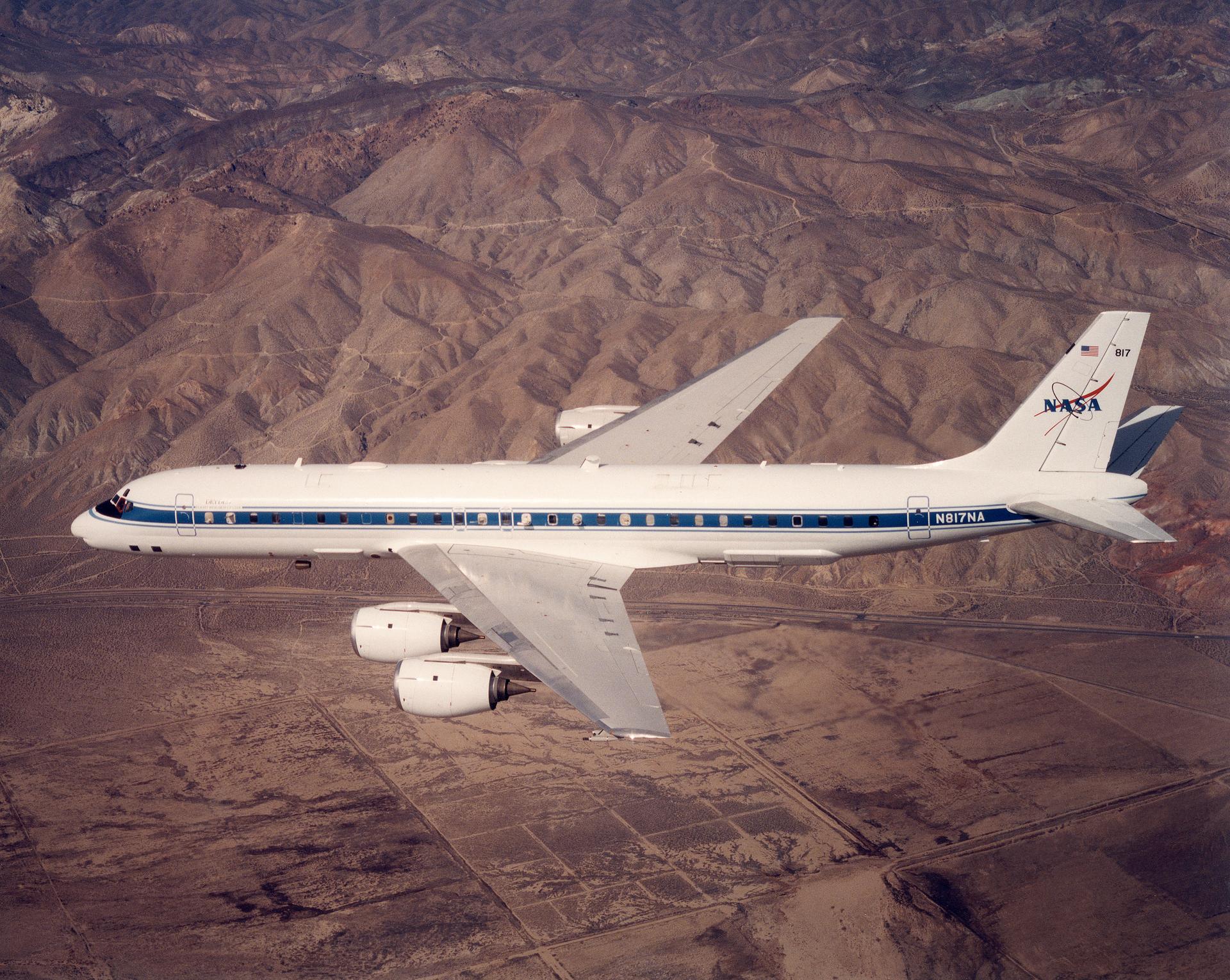
NASA Armstrong Flight Research Center’s DC-8 aircraft flew from California to Everett, Washington on Oct. 10 to conduct research on aircraft condensation trails. The contrails emitted from a Boeing 737-10 plane involved in the testing are visible as it flies past.
NASA / Jim Ross

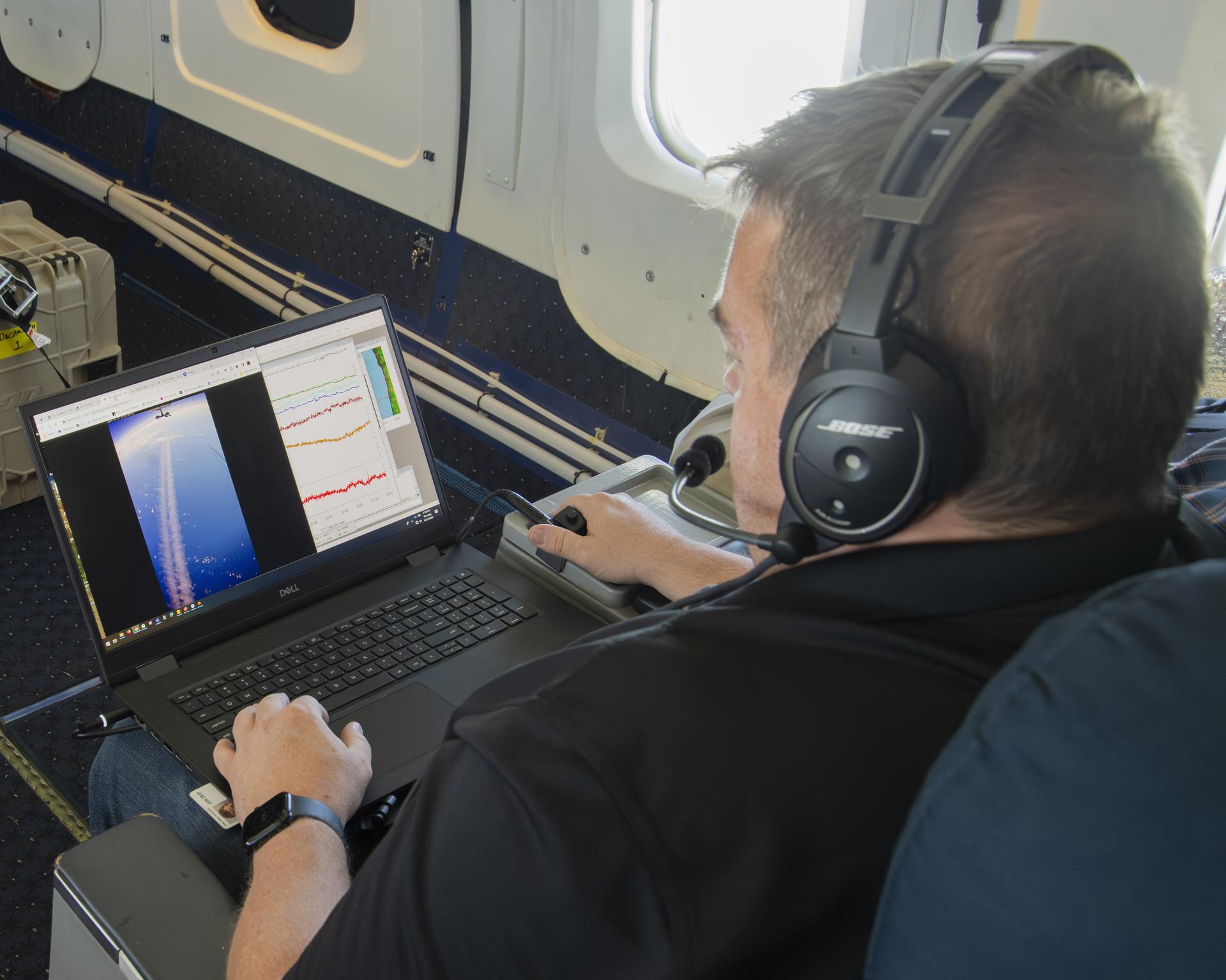
In a collaboration between multiple partners in the aviation industry, NASA is helping determine if the latest advances in aircraft engines and fuels can reduce atmospheric warming from condensation trails. Those condensation trails can trap heat in our atmosphere under specific conditions and increase the impact the aviation industry has on global warming.

NASA partnered with the Boeing ecoDemonstrator Explorer Program and others including General Electric Aerospace, the Federal Aviation Administration, the German Aerospace Center, United Airlines, and World Energy. Their goal was to see if sustainable aviation fuels and advanced engine technology can decrease contrail formation.

Rich Moore, NASA’s principal investigator for ecoDemonstrator, watches the livestream of footage from a camera located under the belly of the DC-8 on Oct. 10. The contrails from the Boeing plane are visible on his laptop monitor.
NASA / Jim Ross

In October, NASA Armstrong Flight Research Center’s DC-8 aircraft flew behind a Boeing ecoDemonstrator Explorer, a 737-10 passenger jet that the company plans to turn over to United Airlines, to capture and measure its emissions. Scientists outfitted the DC-8 with instruments to collect data that will compare the emissions from sustainable aviation fuel to the emissions from conventional jet fuel. In its fifth decade of flying science missions, the DC-8 is the largest flying science laboratory in the world and served as an ideal platform for experts from the Advanced Air Transport Technology project in NASA’s Advanced Air Vehicles Program, and other scientific partners. 

Innovative technologies like sustainable aviation fuel and more efficient engine designs require state-of-the-art test models and exhaustive research methods performed by the most qualified experts in the world. That is what the ecoDemonstrator Explorer Program as a collaboration provided. Results from this collaborative study will be publicly available within a year to help the aviation sector improve its environmental impact worldwide.

NASA’s DC-8 aircraft from Armstrong Flight Research Center in Edwards, California flies to Everett, Washington to conduct science research about reducing engine particle emissions.
NASA’s DC-8 overlooked the Cascade Mountain range in northwestern United States as it headed to Everett, Washington on Oct. 10 to conduct research on aircraft condensation trails. The white peak of Mount Rainier glows in the distance beyond a foggy mountain landscape.
NASA / Jim Ross

Powered by WPeMatico

Get The Details…
Lillian Gipson