NASA Provides Update on Venture-Class Launch Services

NASA Provides Update on Venture-Class Launch Services
NASA logo

NASA currently is working with several commercial companies as part of the agency’s VADR (Venture-Class Acquisition of Dedicated and Rideshare) launch services contract, providing new opportunities for science, and technology payloads.

These include:

  • ABL Space Systems of El Segundo, California
  • Astra Space Inc. of Alameda, California
  • Blue Origin Florida, LLC of Merritt Island, Florida
  • Firefly Space Transport Services of Cedar Park, Texas
  • L2 Solutions DBA SEOPS, LLC of Houston, Texas
  • Northrop Grumman Systems Corporation of Chandler, Arizona
  • Phantom Space Corporation of Tucson, Arizona
  • Relativity Space Inc. of Long Beach, California
  • Rocket Lab USA Inc. of Long Beach, California
  • SpaceX (Space Exploration Technologies Corp.) of Hawthorne, California
  • United Launch Services LLC of Centennial, Colorado

Building on NASA’s previous procurement efforts to foster development of a growing U.S. commercial launch market, VADR provides Federal Aviation Administration -licensed commercial launch services for payloads that can tolerate higher risk. By using a lower level of mission assurance, and commercial best practices for launching rockets, these highly flexible contracts help broaden access to space through lower launch costs.

Awards Update

Task orders under the VADR contract include launch services for several small satellite missions. CubeSats are a class of nanosatellites that use a standard size and form factor. The standard CubeSat size uses a “one unit” or “1U” measuring 10x10x10 centimeters and is extendable to larger sizes; 1.5, 2, 3, 6, and even 12U. A CubeSat typically weighs less than 2 kilogram (4.4 pounds) per unit.

Given the standardized size of these payloads and the ability to launch as a rideshare, rockets and launch dates are subject to change for these missions by the launch provider. This flexibility is one of the reasons NASA can cost-efficiently secure launch services for these small satellites.

  • NASA awarded L2 Solutions DBA SEOPS, LLC a task order to secure the launch of two 6U CubeSats for the agency’s Ames Research Center in California’s Silicon Valley as part of the agency’s Pathfinder Technology Demonstrator (PTD) series of missions. The demonstration flight tests the operation of a variety of novel CubeSat technologies in low Earth orbit, providing significant enhancements to the performance of these small and effective spacecraft. Over the course of multiple planned PTD missions, the successful demonstration of new subsystem technologies will increase small spacecraft capabilities, enabling direct infusion into a wider range of future science, and exploration missions. The two nanosatellites, PTD-4 and PTD-R, will launch on SpaceX’s Transporter-11 mission out of Vandenberg Space Force Base in Lompoc, California.
  • NASA awarded SpaceX a task order to launch Dione under the agency’s CubeSat Launch Initiative. The 6U CubeSat from Goddard Spaceflight Center in Greenbelt, Maryland, will quantify how Earth’s ionosphere and thermosphere respond to electromagnetic and kinetic energy inputs from the magnetosphere. The mission is a collaboration with Catholic University of America, Utah State University, and Virginia Tech. NASA’s Science Mission Directorate Heliophysics Division is funding this effort. Dione is targeted to launch no earlier than mid-2024.
  • NASA awarded SpaceX a task order to launch ARCSTONE under the agency’s CubeSat Launch Initiative. The 6U CubeSat, built at NASA’s Langley Research Center in Hampton, Virginia, will carry a spectrometer to low Earth orbit to establish a lunar calibration standard that will improve weather and climate sensors. ARCSTONE will use the Moon’s spectral reflectance for Earth science observations and is targeted to launch no earlier than mid-2025.
  • NASA awarded SpaceX a task order for the launch of TSIS-2 (Total and Spectral Solar Irradiance Sensor-2). TSIS-2 will measure the Sun’s energy input to Earth. Since 1978, various satellites have measured the Sun’s brightness above Earth’s atmosphere. TSIS-2 will add solar irradiance measurements. Unlike its predecessor TSIS-1, which operates from the International Space Station, TSIS-2 will ride on a free-flying spacecraft. Managed by NASA Goddard, TSIS-2 has instruments from the Laboratory for Atmospheric and Space Physics at the University of Colorado, Boulder. A launch date is under review.

    Previously Announced Task Orders:

    PREFIRE
    CubeSats for Phantom Space Corp.
    EscaPADE
    Two CSLI Missions Awarded to SpaceX
    TROPICS
    TRACERS

    Powered by WPeMatico

    Get The Details…
    Jason Costa
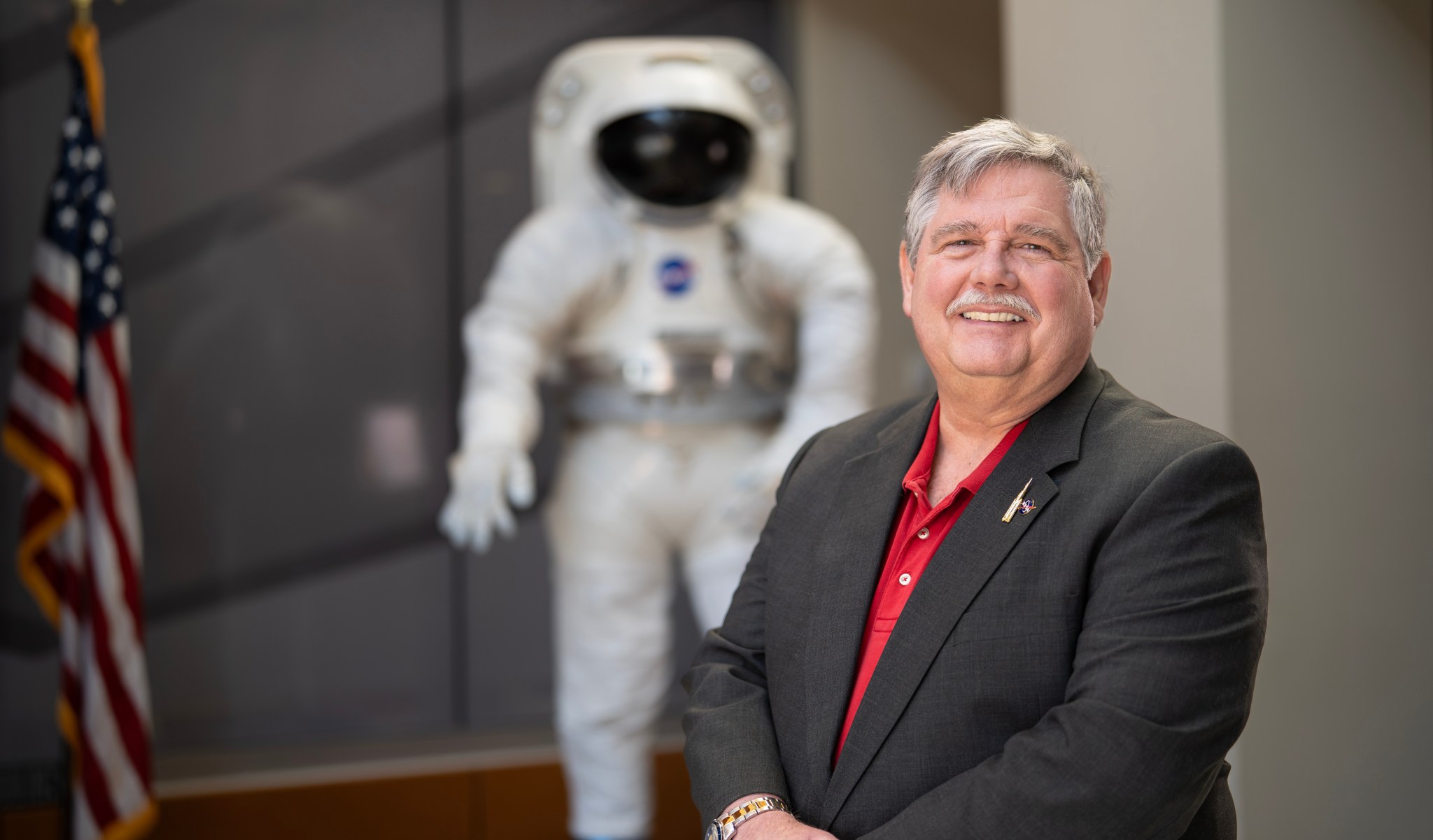
    I am Artemis: Bruce Askins

    I am Artemis: Bruce Askins

    Bruce Askins
    Bruce Askins

    Growing up, Bruce Askins was passionate about space and oceanography. His desire to explore other worlds always made him want to be an astronaut. Though he did not become an astronaut, Askins has built a 42-year career at NASA, and, as the infrastructure management lead for NASA’s SLS (Space Launch System) Program at the agency’s Marshall Space Flight Center in Huntsville, Alabama, Askins is an integral part for the next generation of explorers.

    Askins and his team are the gatekeepers and protectors of data and responsible for both cyber- security and physical security for the SLS Program. Under Askins’ leadership, his team ensures all data is stored properly, that information about the rocket shared outside NASA  is done with proper data markings, and access is given to those that need it.

    Askins wasn’t always familiar with the world of infrastructure and cyber security. As a mechanical engineering graduate from the University of Alabama in Huntsville, Askins began his career as part of NASA’s internship program. He considered himself imaginative, or “creatively driven,” which is why Askins originally pursued a career at NASA.

    “I always loved the design aspect of my early position in special test equipment,” Askins says. “Back then I drew everything by hand with a pencil before eventually transitioning to computers.”

    His creativity and interest in underwater worlds, along with his scuba diver certification, led him to have a hand in designing early test elements for NASA’s Hubble Space Telescope. At the Neutral Buoyancy Simulator, a former underwater training facility at Marshall, Askins interacted with a crew of astronauts supporting Hubble and designed the flight simulation hardware used for crew training on the Canadarm2 robotic arm that is still a part of the International Space Station today.

    Askins has been a part of the NASA family for almost half a century and is thrilled to be a part of the next era of space exploration to the Moon under Artemis.

    “To explore is one of the greatest things that we can all do, and with the Artemis Generation the sky’s the limit,” Askins said.

    SLS is part of NASA’s backbone for deep space exploration, along with the Orion spacecraft, advanced spacesuits and rovers, the Gateway in orbit around the Moon, and commercial human landing systems. SLS is the only rocket that can send Orion, astronauts, and supplies to the Moon in a single launch.

    Check out some of our other “I am Artemis” features.  

    Powered by WPeMatico

    Get The Details…
    Lee Mohon

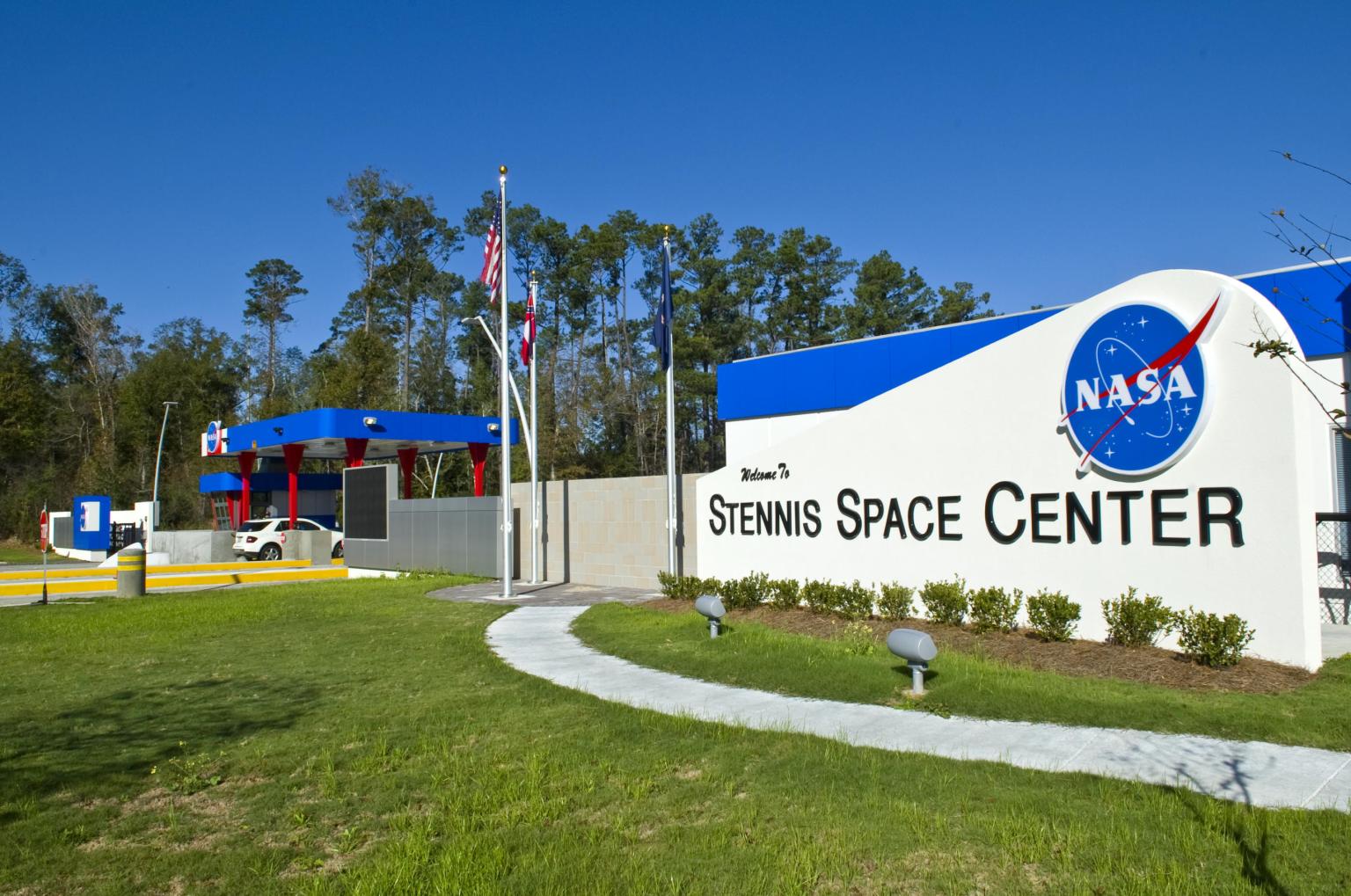
    NASA Stennis Continues Preparations for Future Artemis Testing

    NASA Stennis Continues Preparations for Future Artemis Testing

    3 min read

    Preparations for Next Moonwalk Simulations Underway (and Underwater)

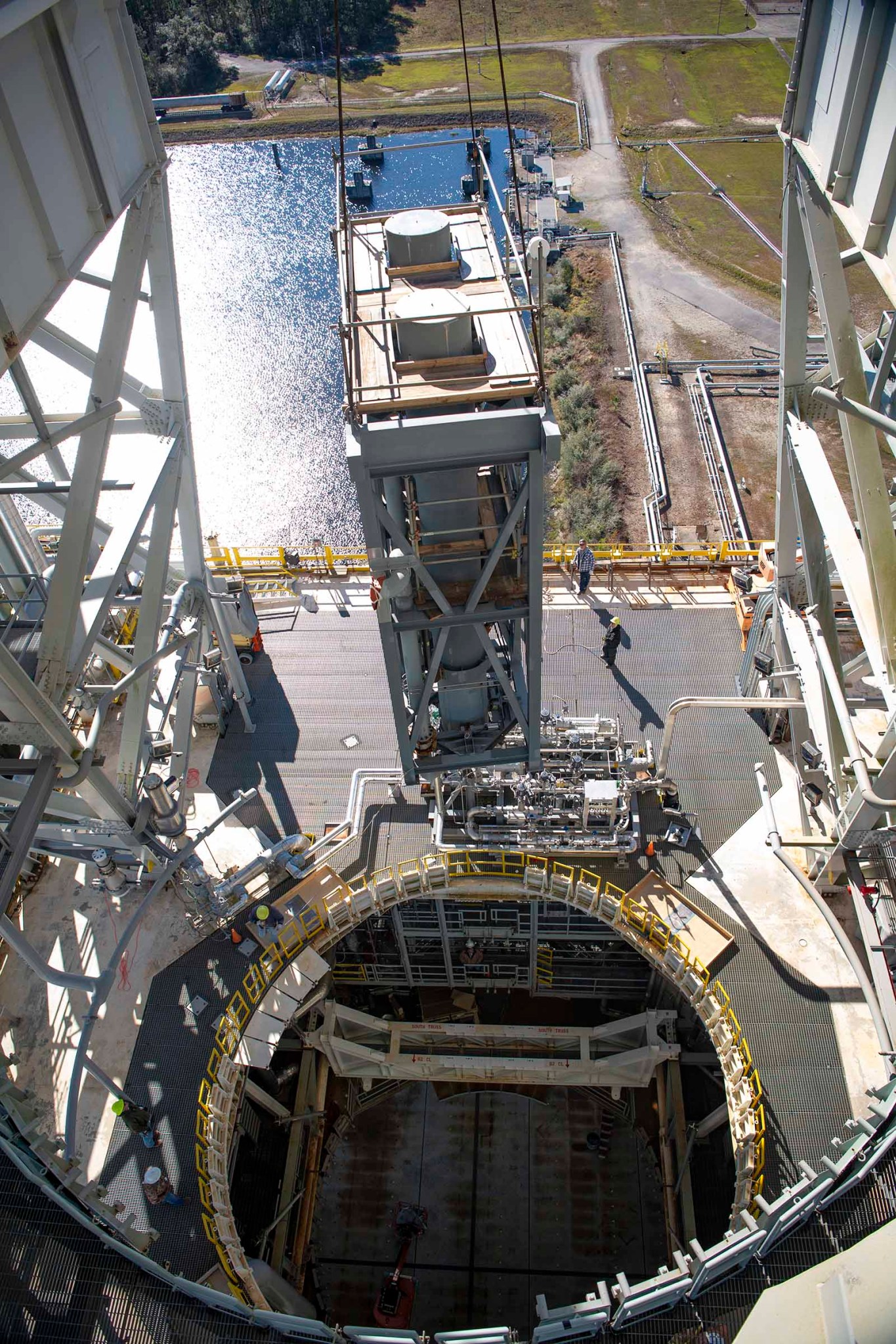
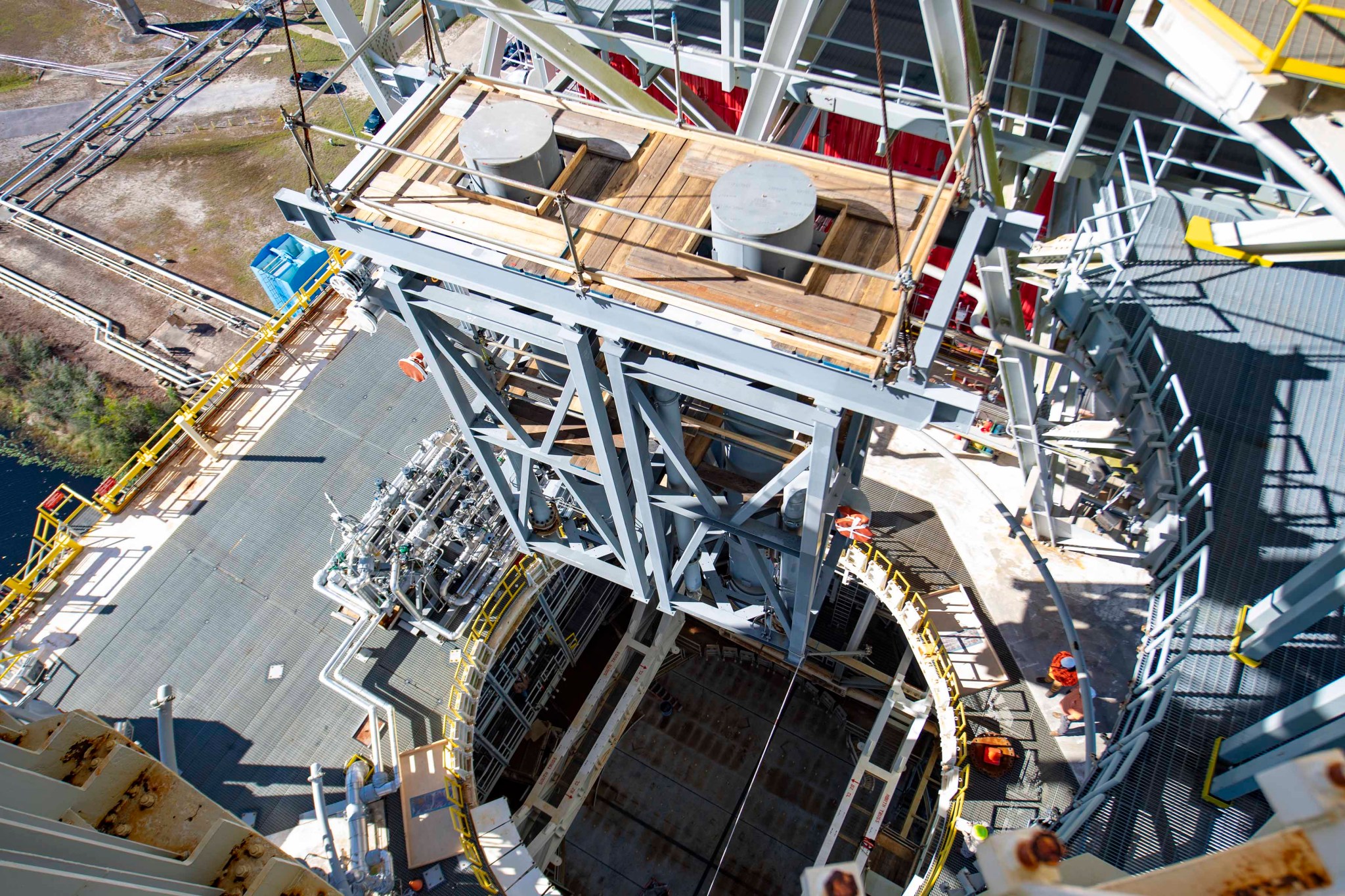
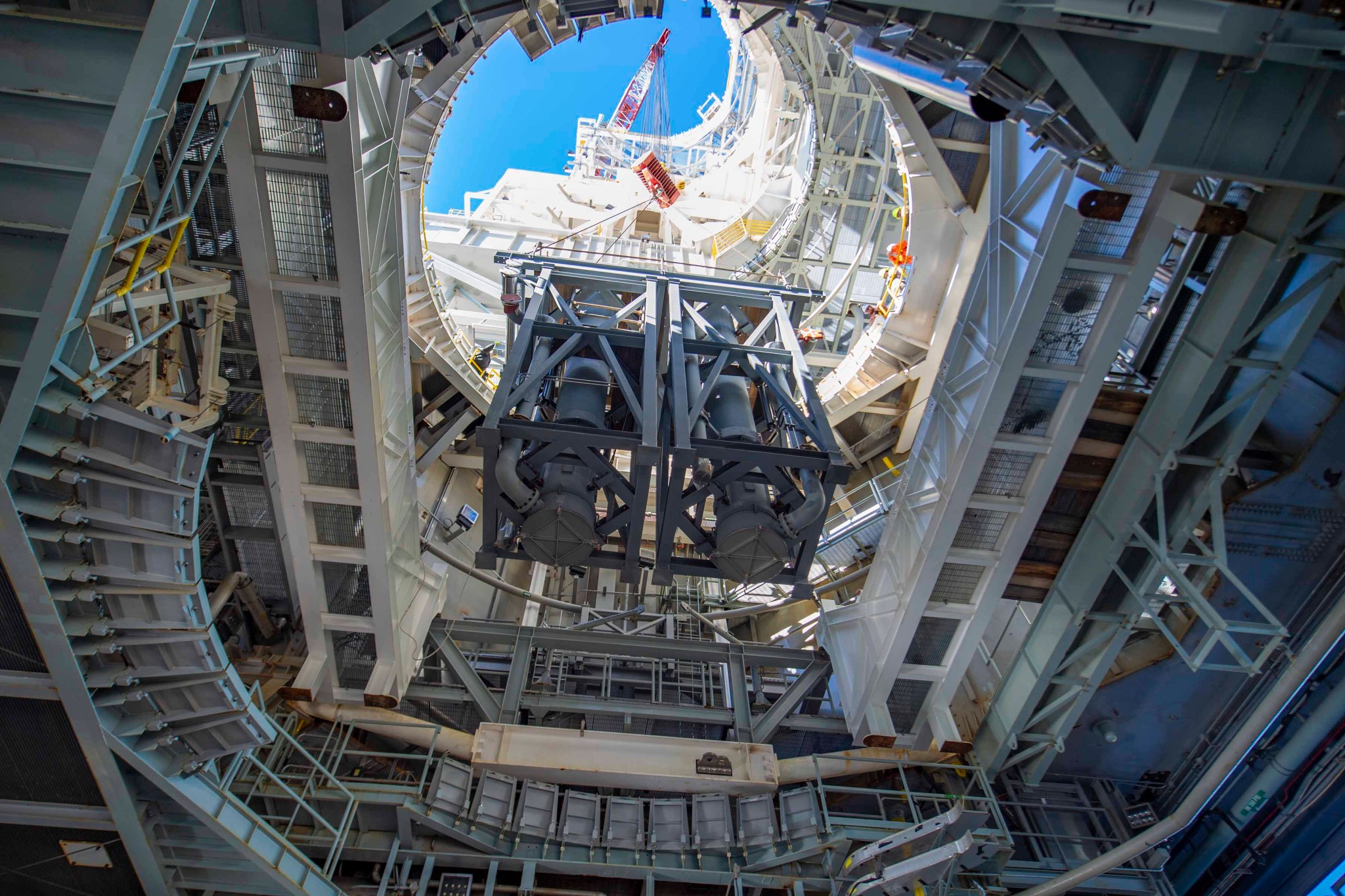
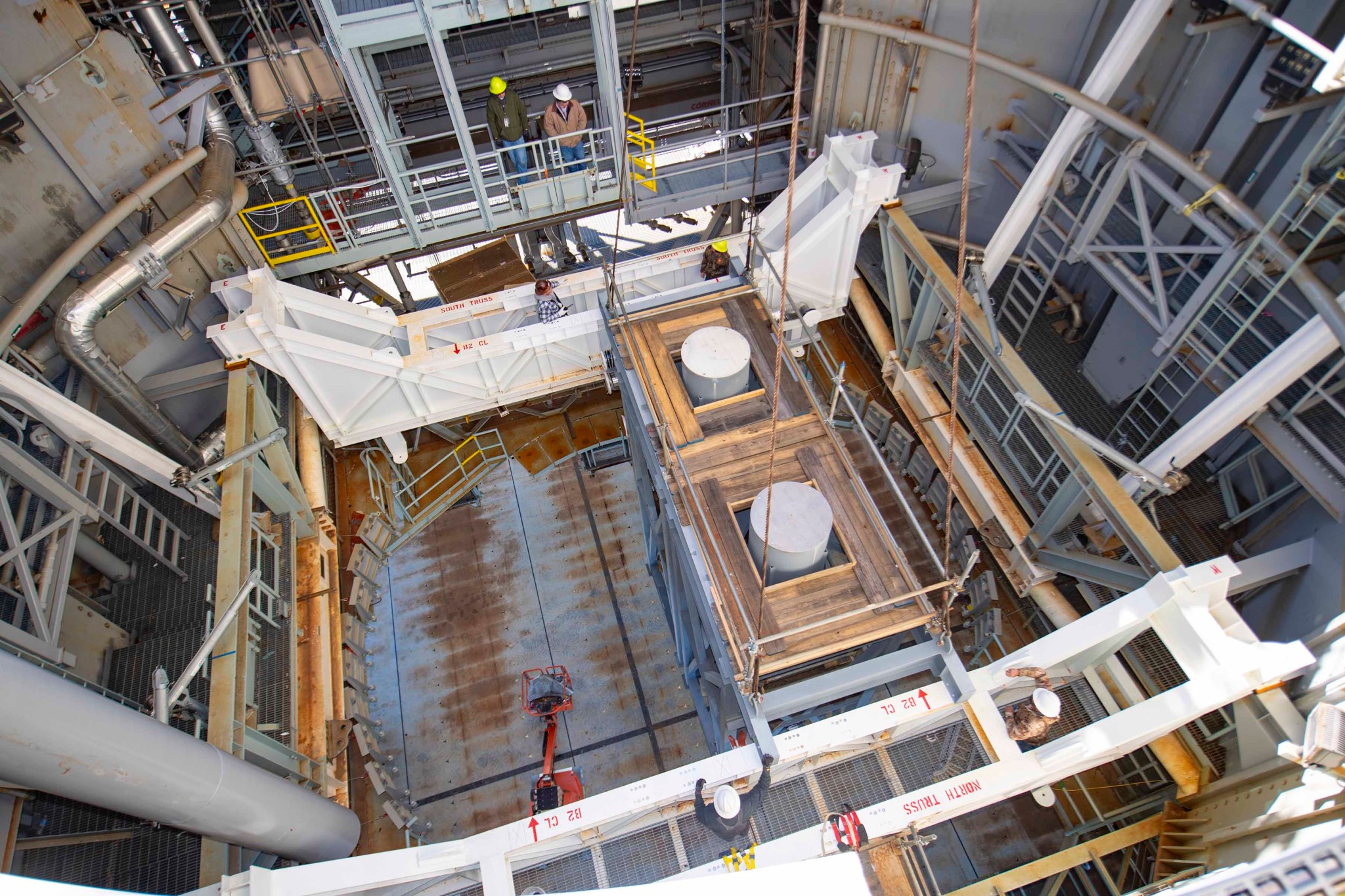
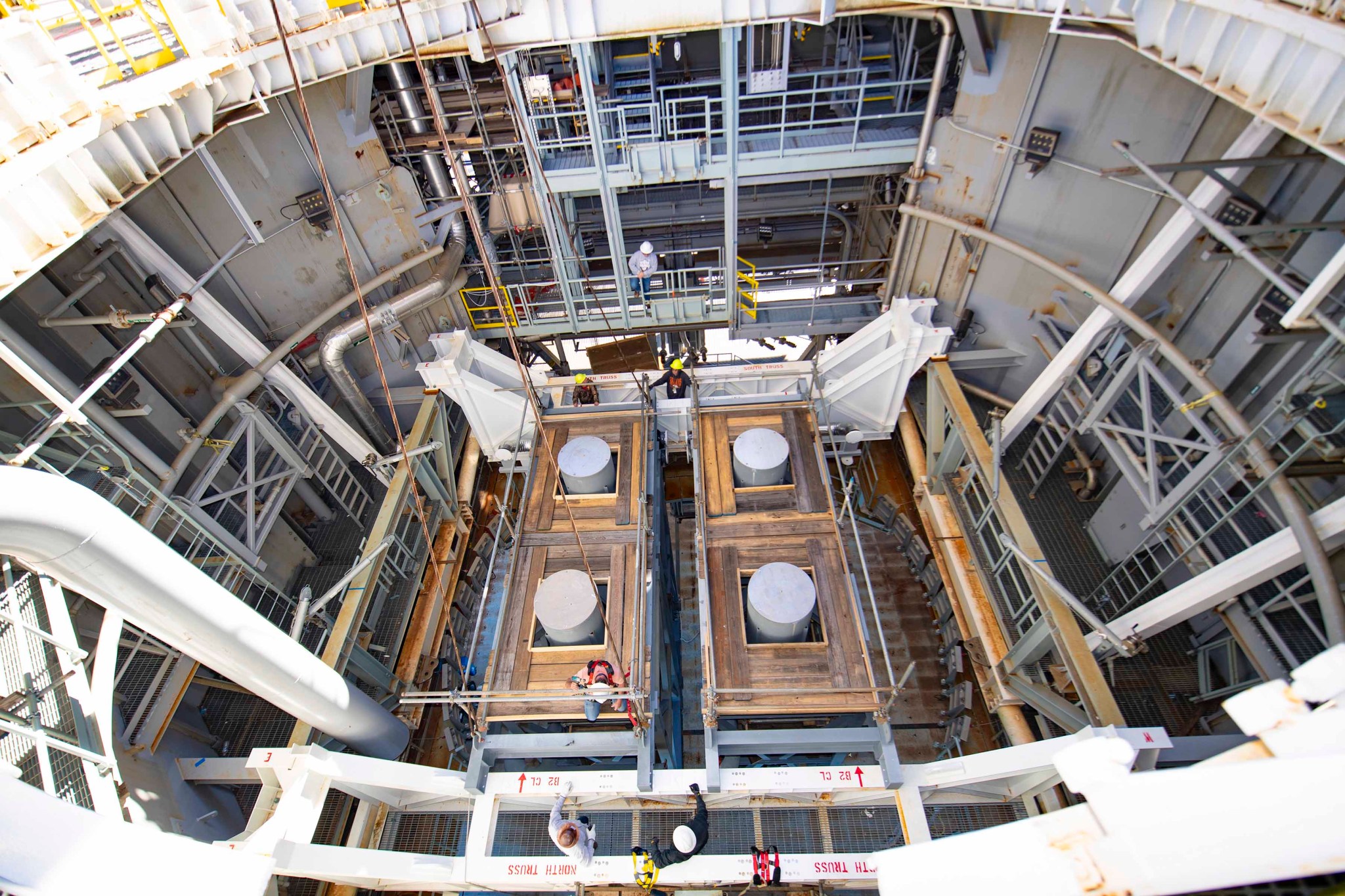
    Crews at NASA’s Stennis Space Center cleared a milestone Dec. 11, installing a key component in preparation for future Green Run testing of NASA’s new Exploration Upper Stage (EUS) vehicle for use on the SLS (Space Launch System) rocket.

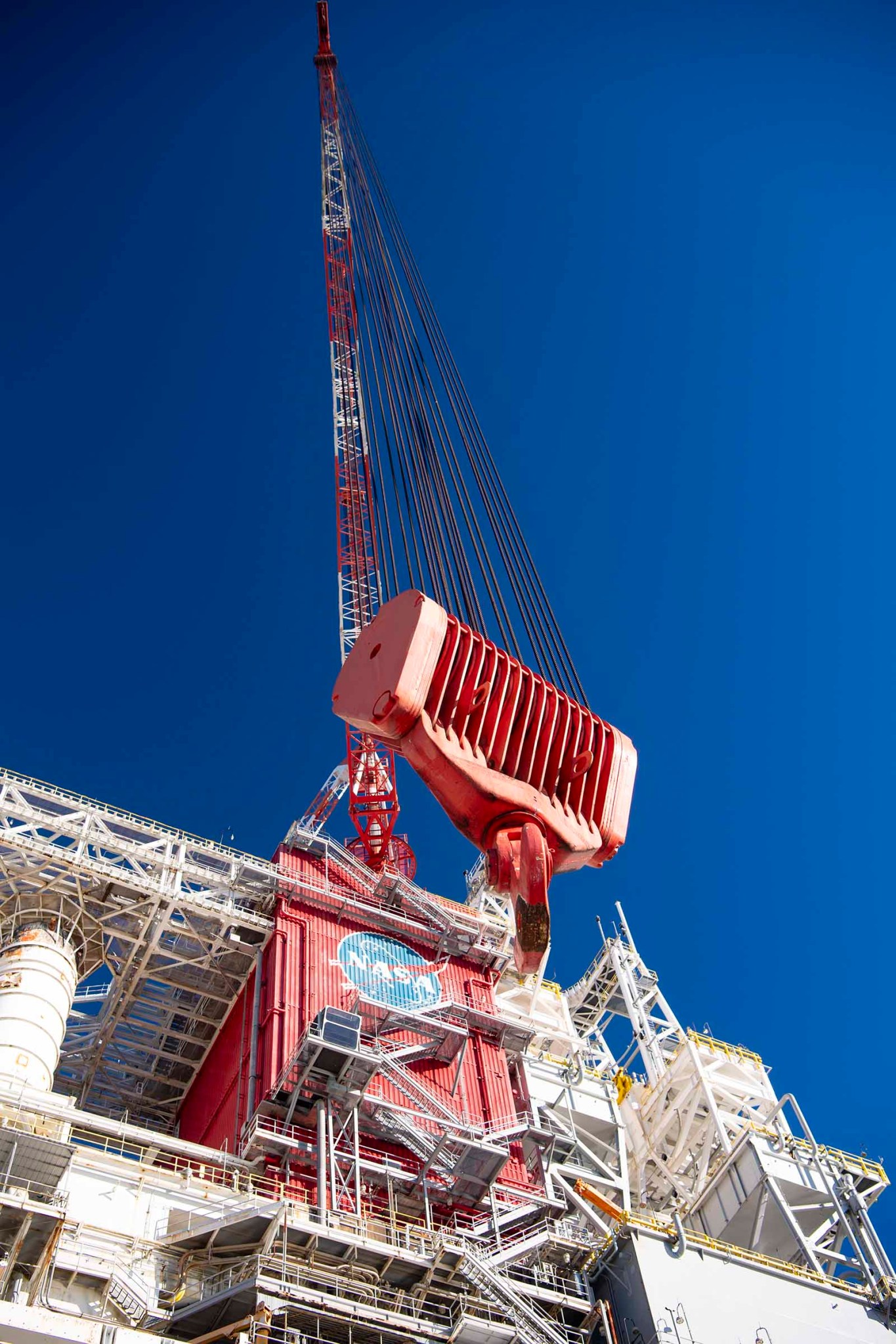
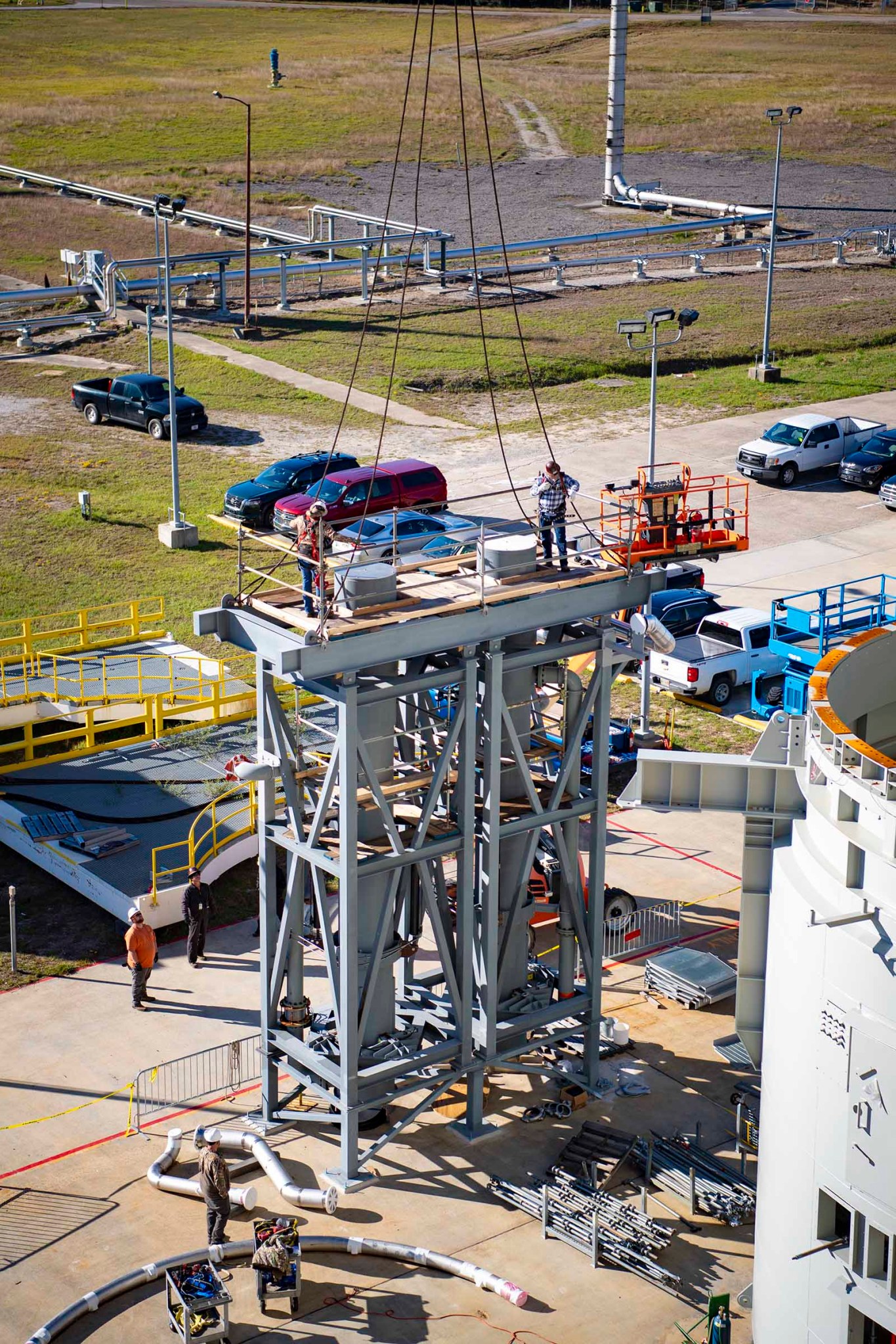
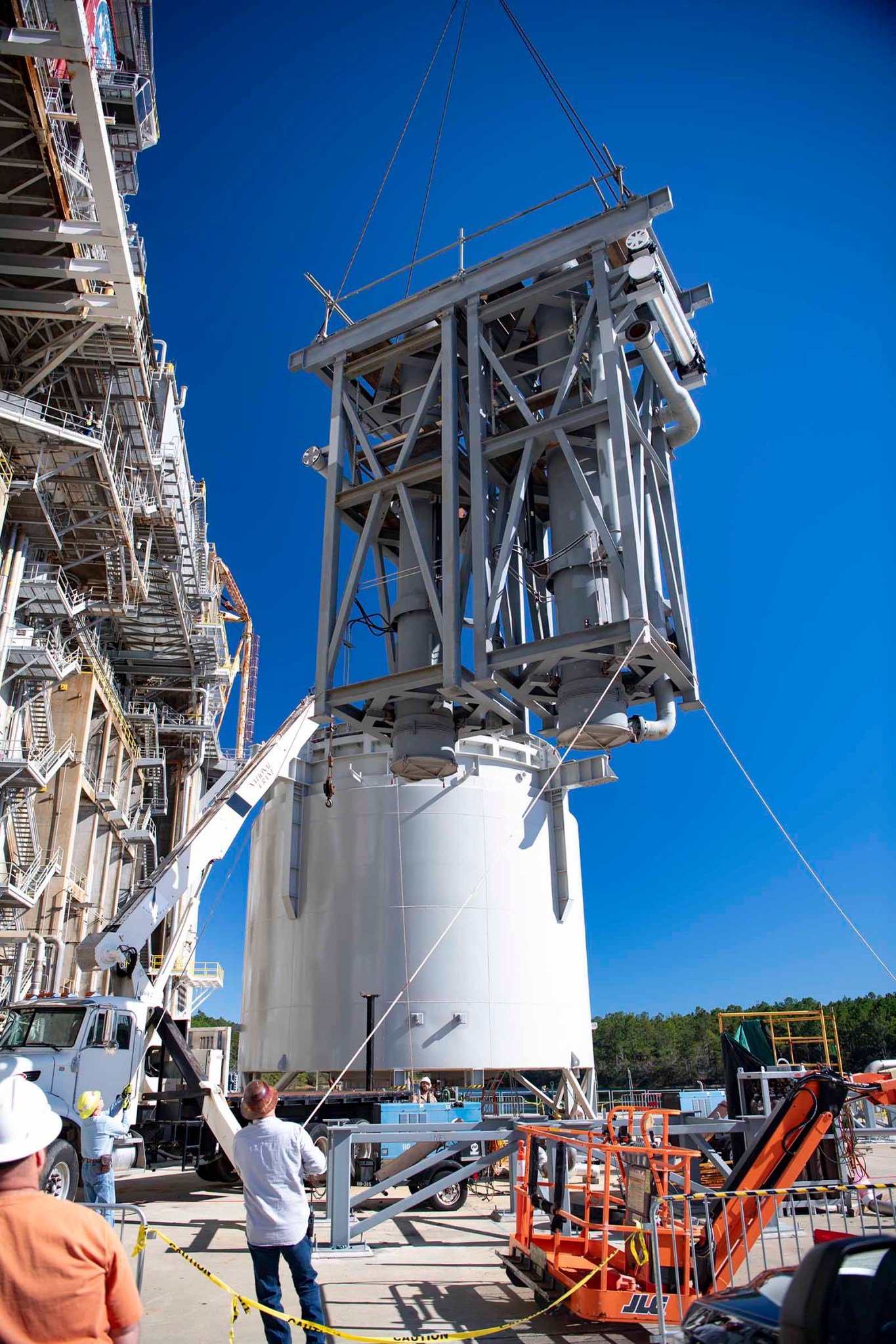
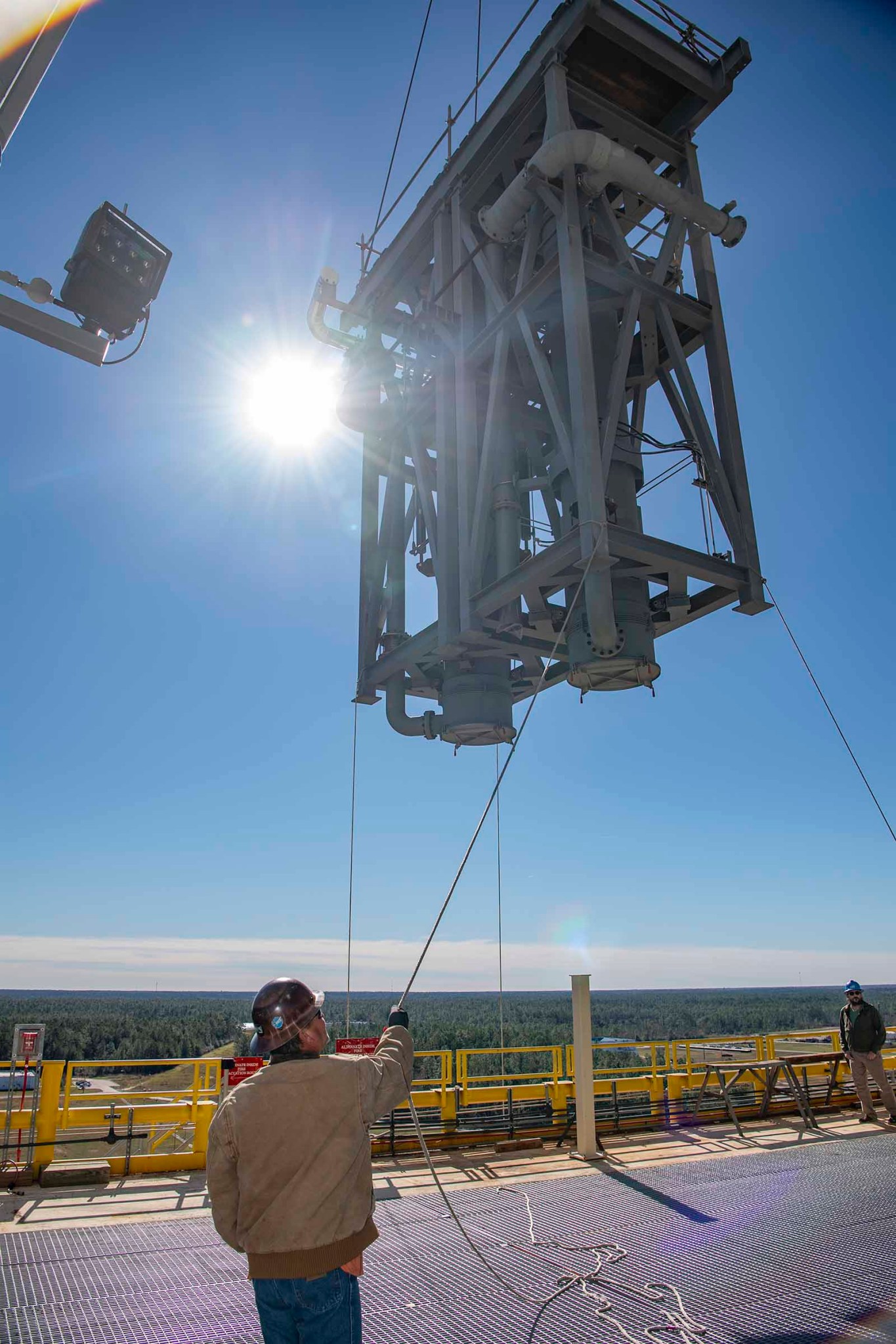
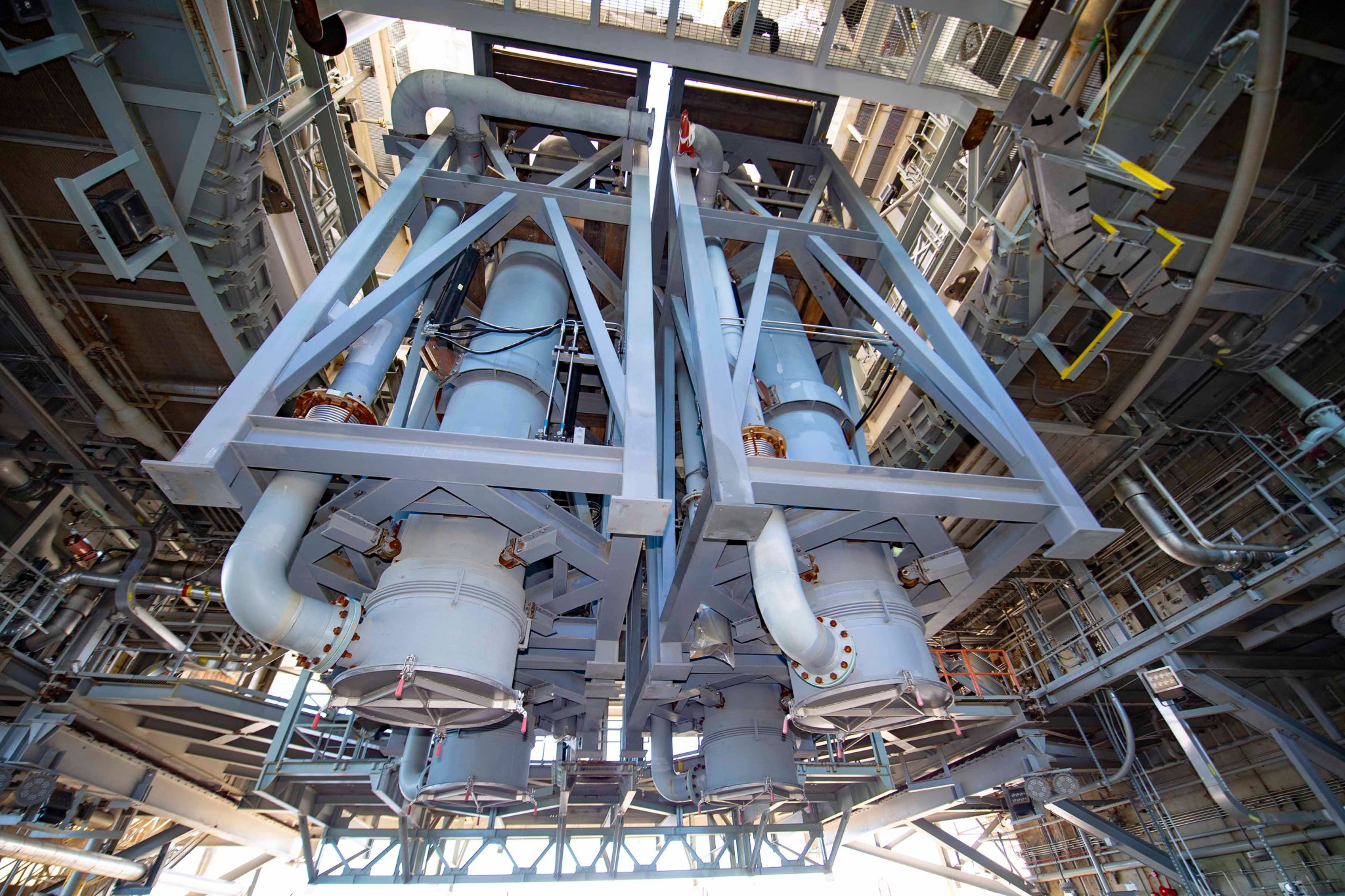
    Four large diffusers, each weighing 14 tons, were lifted by crane for installation on the Thad Cochran Test Stand (B-2). The diffusers are a critical component designed to help direct engine exhaust away from the EUS during hot fire testing to minimize heat exposure to sensitive vehicle systems.

    Installation of a key component of NASA’s new Exploration Upper Stage (EUS) vehicle
    NASA Stennis teams lift and install large diffusers onto the Thad Cochran Test Stand (B-2).
    NASA/Danny Nowlin
    Installation of a key component of NASA’s new Exploration Upper Stage (EUS) vehicle
    NASA Stennis teams lift and install large diffusers onto the Thad Cochran Test Stand (B-2).
    NASA/Danny Nowlin
    Installation of a key component of NASA’s new Exploration Upper Stage (EUS) vehicle
    NASA Stennis teams lift and install large diffusers onto the Thad Cochran Test Stand (B-2).
    NASA/Danny Nowlin
    Installation of a key component of NASA’s new Exploration Upper Stage (EUS) vehicle
    NASA Stennis teams lift and install large diffusers onto the Thad Cochran Test Stand (B-2).
    NASA/Danny Nowlin
    Installation of a key component of NASA’s new Exploration Upper Stage (EUS) vehicle
    NASA Stennis teams lift and install large diffusers onto the Thad Cochran Test Stand (B-2).
    NASA/Danny Nowlin
    Installation of a key component of NASA’s new Exploration Upper Stage (EUS) vehicle
    NASA Stennis teams lift and install large diffusers onto the Thad Cochran Test Stand (B-2).
    NASA/Danny Nowlin
    Installation of a key component of NASA’s new Exploration Upper Stage (EUS) vehicle
    NASA Stennis teams lift and install large diffusers onto the Thad Cochran Test Stand (B-2).
    NASA/Danny Nowlin
    Installation of a key component of NASA’s new Exploration Upper Stage (EUS) vehicle
    NASA Stennis teams lift and install large diffusers onto the Thad Cochran Test Stand (B-2).
    NASA/Danny Nowlin
    Installation of a key component of NASA’s new Exploration Upper Stage (EUS) vehicle
    NASA Stennis teams lift and install large diffusers onto the Thad Cochran Test Stand (B-2).
    NASA/Danny Nowlin
    Installation of a key component of NASA’s new Exploration Upper Stage (EUS) vehicle
    NASA Stennis teams lift and install large diffusers onto the Thad Cochran Test Stand (B-2).
    NASA/Danny Nowlin
    Installation of a key component of NASA’s new Exploration Upper Stage (EUS) vehicle
    NASA Stennis teams lift and install large diffusers onto the Thad Cochran Test Stand (B-2).
    NASA/Danny Nowlin
    Installation of a key component of NASA’s new Exploration Upper Stage (EUS) vehicle
    NASA Stennis teams lift and install large diffusers onto the Thad Cochran Test Stand (B-2).
    NASA/Danny Nowlin

    NASA’s new EUS is being built at NASA’s Michoud Assembly Facility in New Orleans as a more powerful SLS second stage to send the Orion spacecraft and heavier payloads to deep space as NASA continues its mission to explore the secrets of the universe for the benefit of all. The EUS is expected to fly on the Artemis IV mission following a series of Green Run tests of its integrated systems at NASA Stennis to demonstrate it is ready to fly. The test series will culminate with a hot fire of the four RL10 engines that will power the EUS.

    NASA Stennis teams lifted and installed large diffusers onto the Thad Cochran Test Stand (B-2) on December 11, 2023, in preparation for future Green Run testing of the new Exploration Upper Stage before it flies on the SLS (Space Launch System) rocket as part of NASA’s Artemis missions to the Moon and beyond.

    During an actual flight, critical EUS systems will be protected by the SLS interstage. To protect the systems during Green Run testing, teams are using an interstage simulator, a size-and-weight replica of the actual SLS interstage, and the connected diffusers.

    The system requires a high level of precision. The diffusers will be connected to the EUS engine nozzles using a flexible seal so gimbaling, or moving a rocket engine a few degrees along a tight circular axis to direct the thrust and “steer” the vehicle, can occur during testing. They also are designed to facilitate propellant connections and allow test teams access to the engine area as needed.

    The carbon steel diffusers were precisely designed by a joint NASA Stennis and Jacobs Engineering team, using computational models, subscale testing, and historical data. The units then were made by Custom Steel Fabricators in Columbia, Tennessee, and delivered by truck to NASA Stennis.

    Following lift and installation on the test stand, the diffuser system will be connected to the facility water and hydraulic supplies. A final checkout of the system will include a full test stand water flow demonstration.

    Share

    Details

    Last Updated

    Dec 13, 2023

    Editor
    NASA Stennis Communications
    Contact
    C. Lacy Thompson
    Location
    Stennis Space Center

    Powered by WPeMatico

    Get The Details…
    LaToya Dean

    2023 in Review: Highlights from NASA in Silicon Valley

    2023 in Review: Highlights from NASA in Silicon Valley

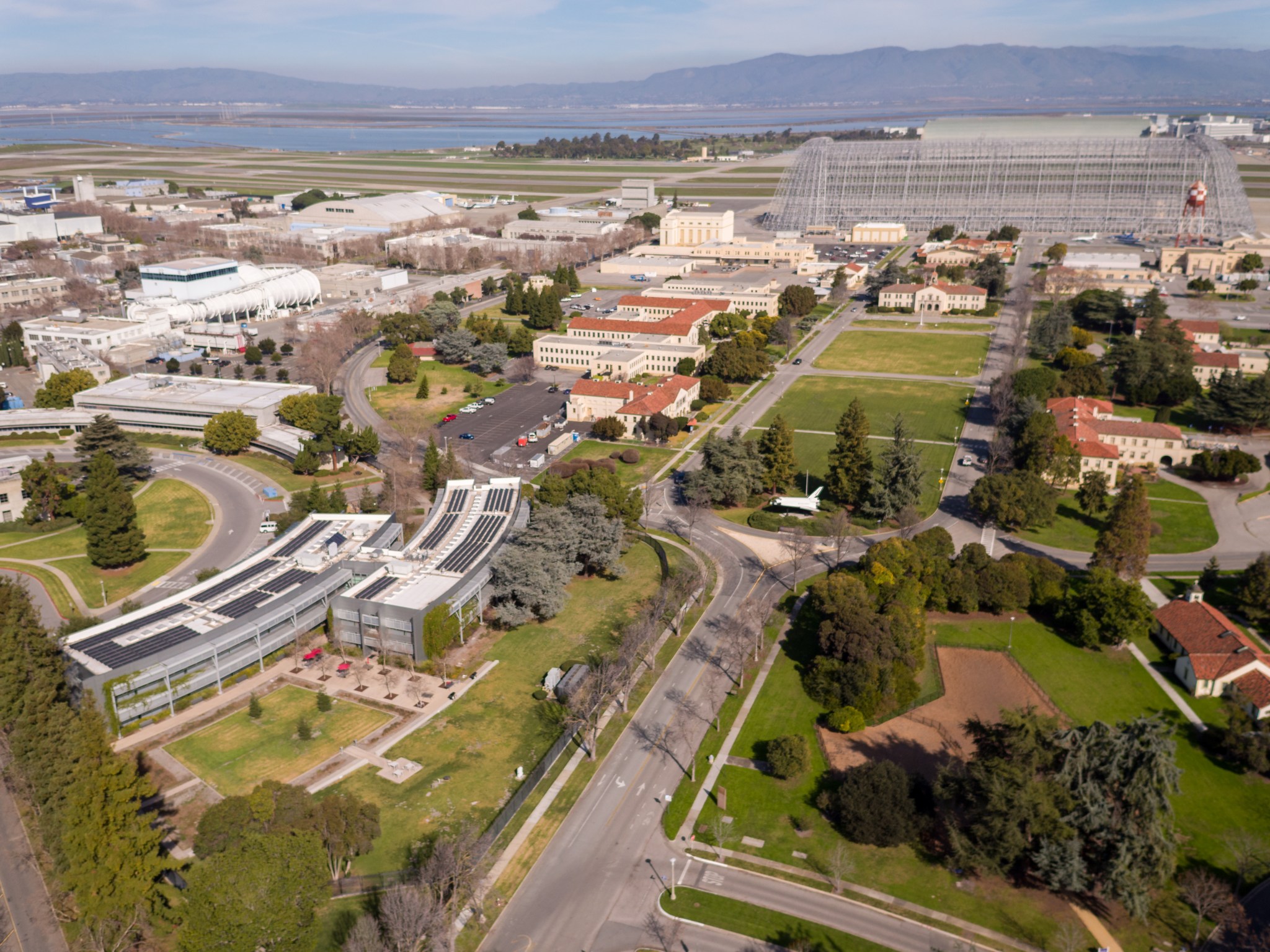
    It’s been another great year at NASA’s Ames Research Center in California’s Silicon Valley. Join us as we review some of the highlights of the science, engineering, and innovation from 2023.

    Announcing a New Innovation Hub Planned for NASA Research Park at Ames

    NASA

    Berkeley Space Center is a proposed new campus of the University of California, Berkeley, and an innovation hub for research and advances in astronautics, aeronautics, quantum computing, climate studies, and more. Planning to join Ames as a tenant of our NASA Research Park in Silicon Valley, the new campus aims to bring together researchers from the private sector, academia, and the government to tackle the complex scientific, technological, and societal issues facing our world.

    Mapping Water Distribution on the Moon’s South Pole

    NASA

    Using data collected by the now-retired Stratospheric Observatory for Infrared Astronomy (SOFIA), researchers shared the first detailed, wide-area map of water distribution on the Moon. Understanding how much water lies beneath the lunar surface, and how it’s distributed, will help guide future missions like VIPER, as well as prospective sites for human habitats.

    Colliding Moons May Have Formed Saturn’s Rings

    NASA

    New research suggests Saturn’s icy moons and rings were formed by a collision a few hundred million years ago, creating debris that gathered into the planet’s dusty, icy rings or clumped together to form moons.

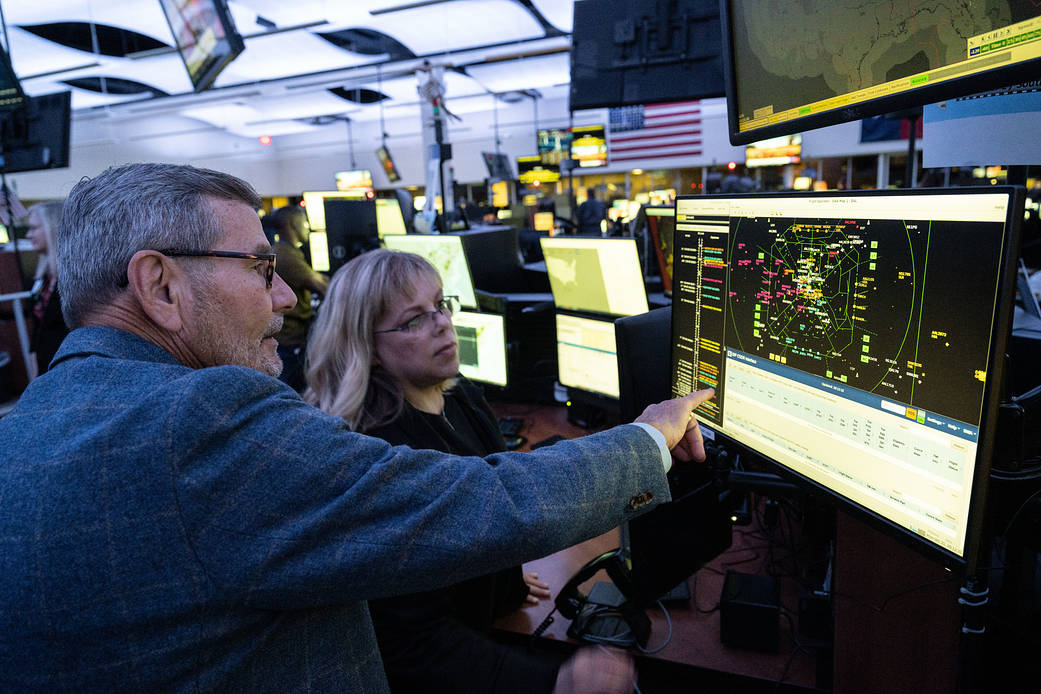
    NASA and Airlines Partner to Save Fuel and Reduce Delays

    Computer screens at the Southwest Airlines Network Operations Control Center in Dallas, Texas, display NASA's Digital Information Platform Collaborative Digital Departure Reroute (CDDR) tool.
    NASA/James Blair

    This year, NASA partnered with five major U.S. airlines on an air traffic decision-making tool that saved more than 24,000 pounds of jet fuel in 2022 for flights departing from Dallas-Fort Worth International Airport and Dallas Love Field Airport. Partners include American Airlines, Delta Air Lines, JetBlue Airways, Southwest Airlines and United Airlines.

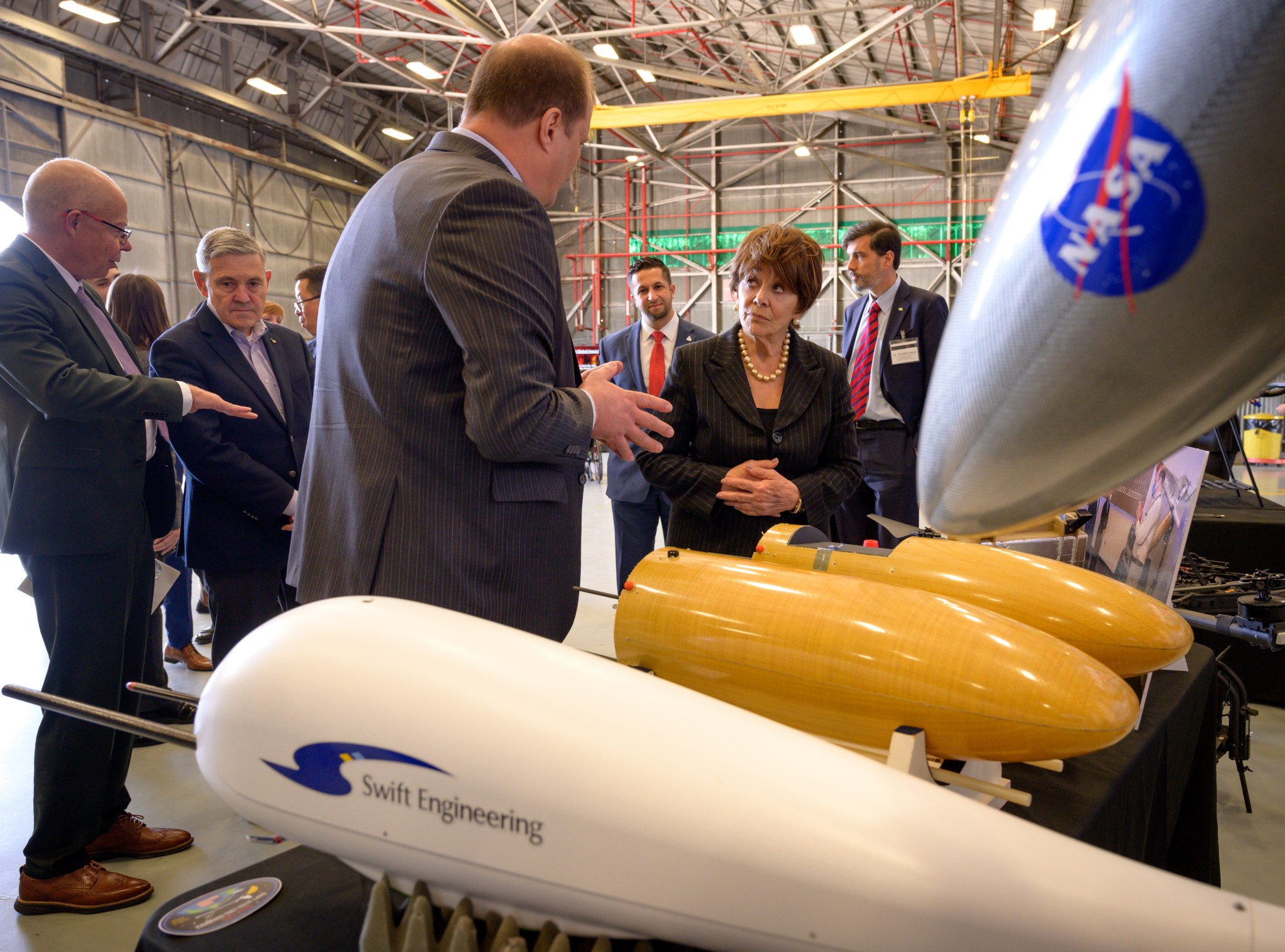
    NASA Leaders View Climate Science, Wildfire Innovations at Ames

    A man in a gray suit with back to camera talks with a woman in a dark suit next to a display of drone components: two orange conical pieces, a white component with a Swift Engineering logo, and a gray piece with NASA logo.
    NASA/Dominic Hart

    NASA’s top leadership, industry experts, and legislative officials visited Ames in April to learn about about the center’s climate science efforts and innovations in aeronautics that will help scientists and engineers better understand climate change and mitigate natural disasters like wildland fires.

    Starling Takes Flight

    Blue Canyon Technologies/NASA

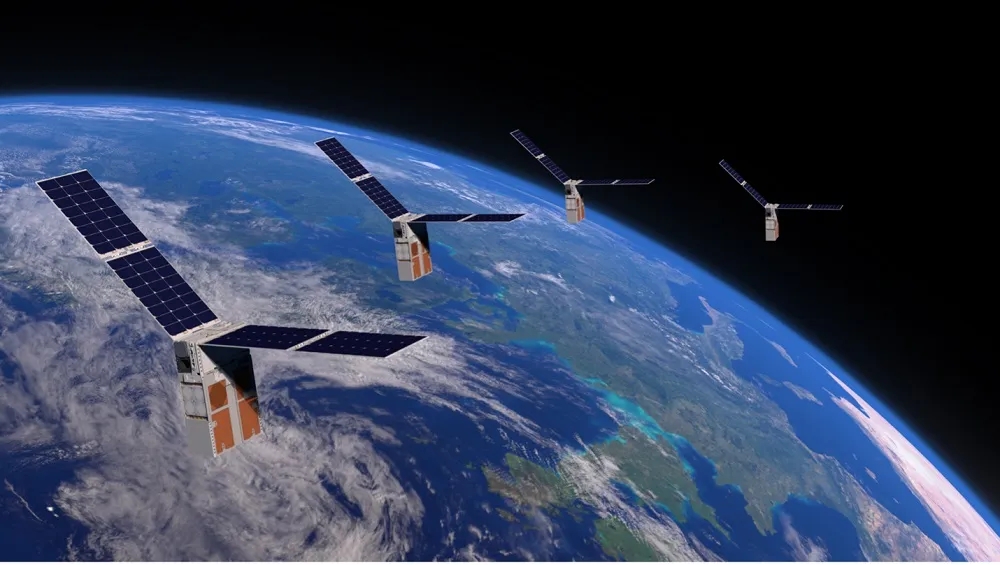
    In July NASA’s Starling mission, managed at Ames, launched four CubeSats into low-Earth orbit to test robotic swarm technologies for space. You can track mission milestones via the Small Satellite Missions blog, and follow the mission live in NASA’s Eyes on the Solar System 3D visualization.

    NASA’s First Robotic Moon Rover

    Engineers in white suits assemble and test NASA's first robotic Moon rover in a clean room at NASA's Johnson Space Center in Houston.
    NASA/Robert Markowitz

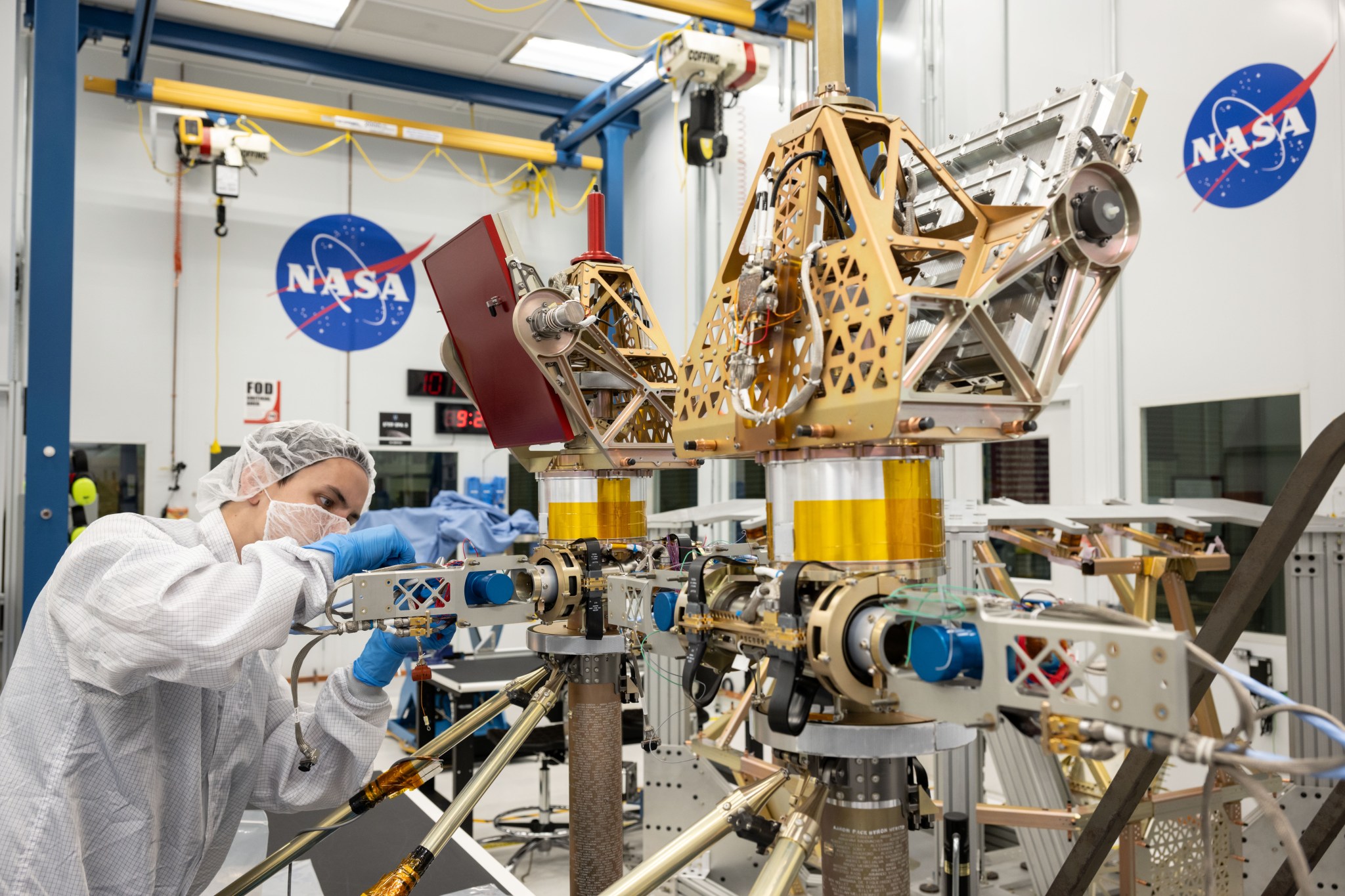
    This year engineers began assembling NASA’s first robotic Moon rover, VIPER — short for the Volatiles Investigating Polar Exploration Rover — and the agency is giving the public a front row seat to watch along as the rover takes shape. While individual components, such as the rover’s science instruments, lights, and wheels, were assembled and tested, the VIPER team also completed software development, mission planning, and tricky tests of the rover’s ability to drive off the Astrobotic Griffin lunar lander and onto the lunar surface.

    Bringing Home Ancient Space Rocks

    NASA/Keegan Barber

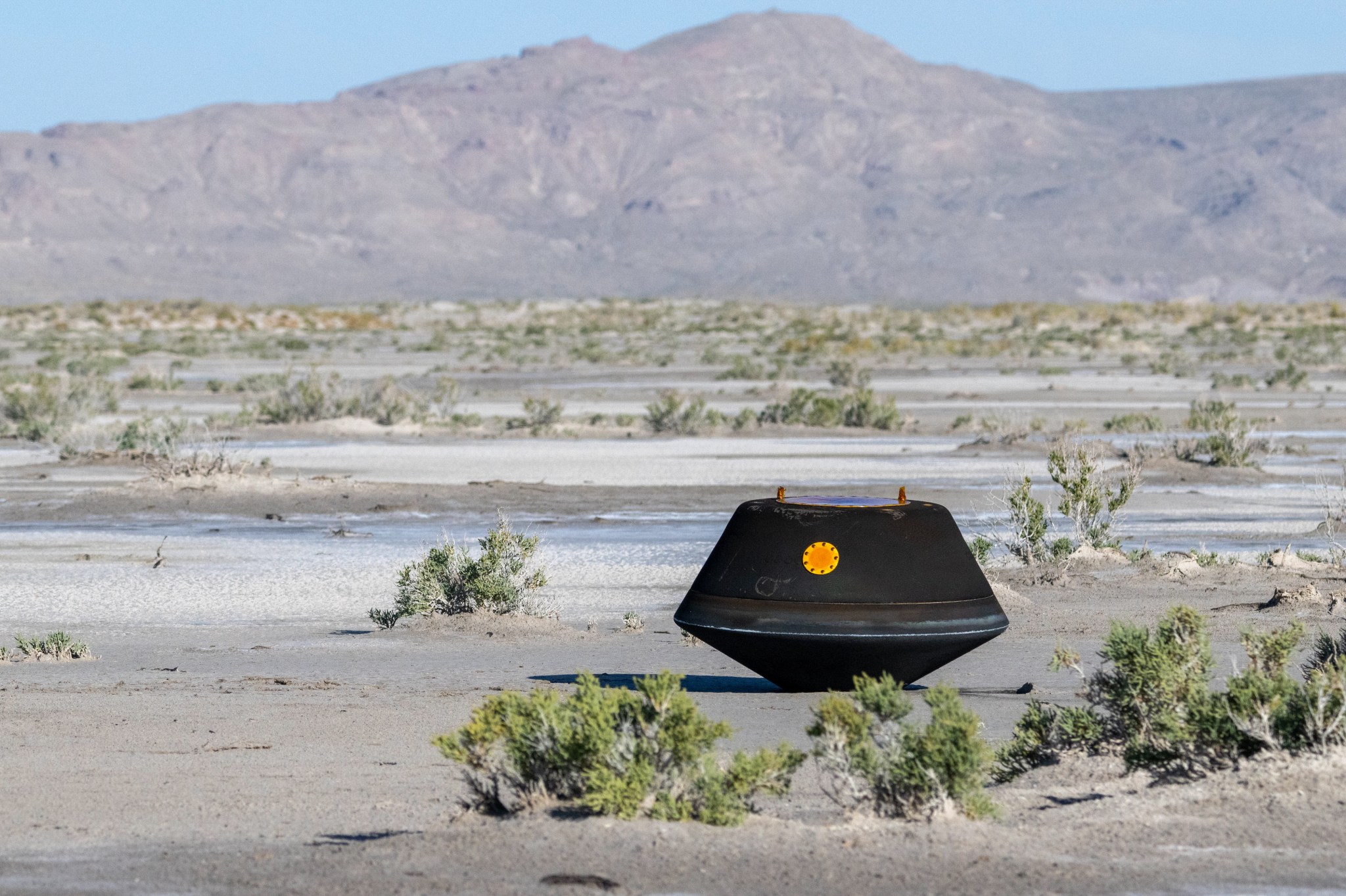
    NASA’s OSIRIS-REx mission – short for the Origins, Spectral Interpretation, Resource Identification, and Security-Regolith Explorer – returned to Earth in Sept. 2023, bringing with it extraterrestrial rocks and dust that it scooped up from an asteroid estimated to be 4.5 billion years old. Ames contributed to the spacecraft’s heat shield, anti-contamination systems, post-landing sample curation, and more.

    Preparing to Send Yeast to the Moon’s Surface for Astronaut Health

    A person holds a small plastic cartridge with electronics on one side.
    NASA/Dominic Hart

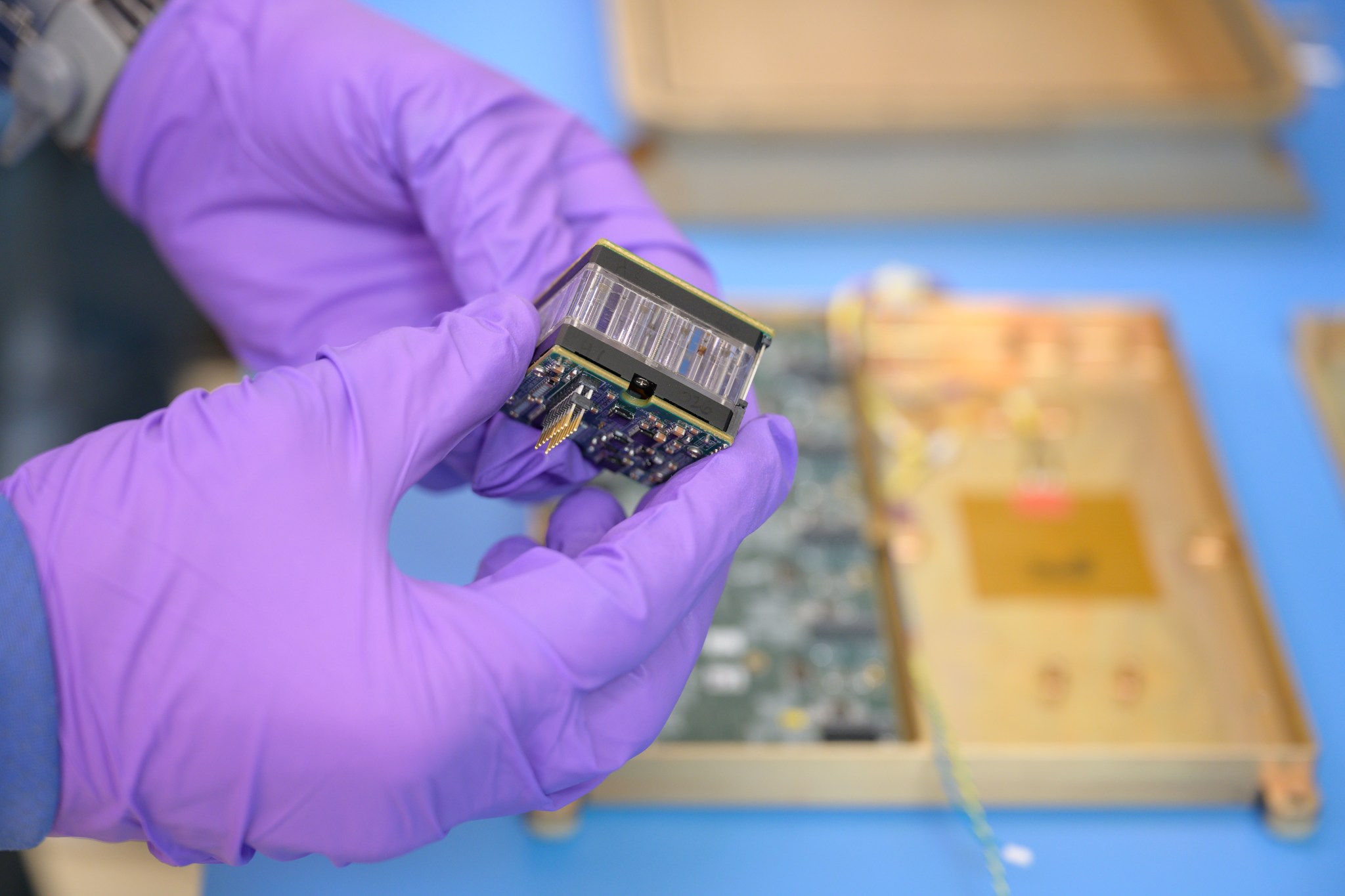
    NASA’s plans to explore the Moon and eventually go to Mars will bring humans deeper into space for longer duration missions than ever before. These extended missions beyond low Earth orbit pose certain health risks to astronauts. The Lunar Explorer Instrument for Space Biology Applications team is preparing an experiment to study yeast’s biological response to the lunar environment to help understand and mitigate health risks for astronauts.

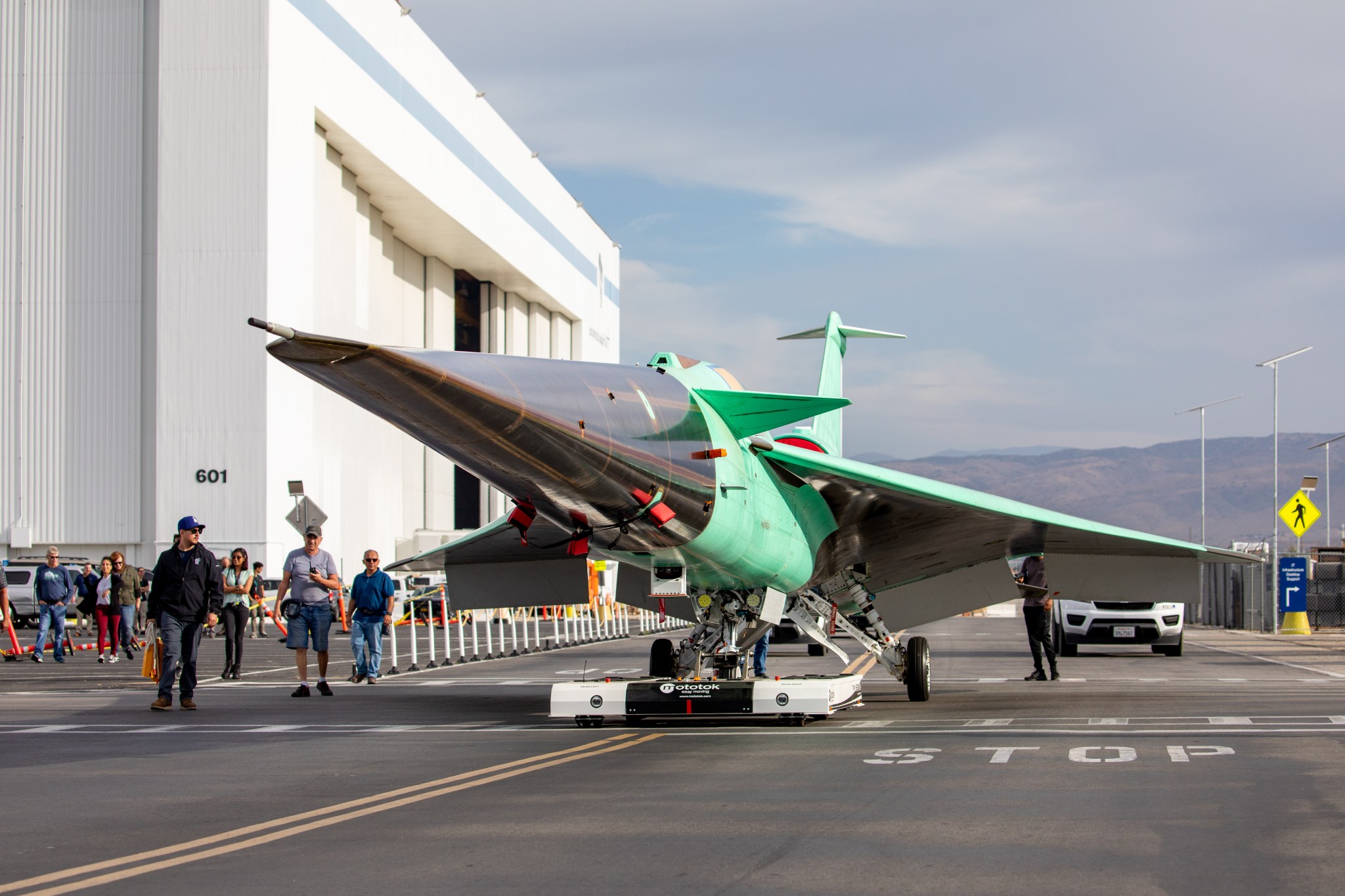
    X-59 Team Moves Toward First Flight in 2024

    The X-59 Quesst aircraft is rolled out at Lockheed Martin’s facility in Palmdale, California. Photo credit: Lockheed Martin
    Lockheed Martin/Gary Tice

    This year, NASA’s X-59 team installed the finishing touches to the aircraft’s tail structure and moved it from its assembly facility to the flight line to perform structural testing. The X-59 quiet supersonic aircraft will take its first flight in 2024.

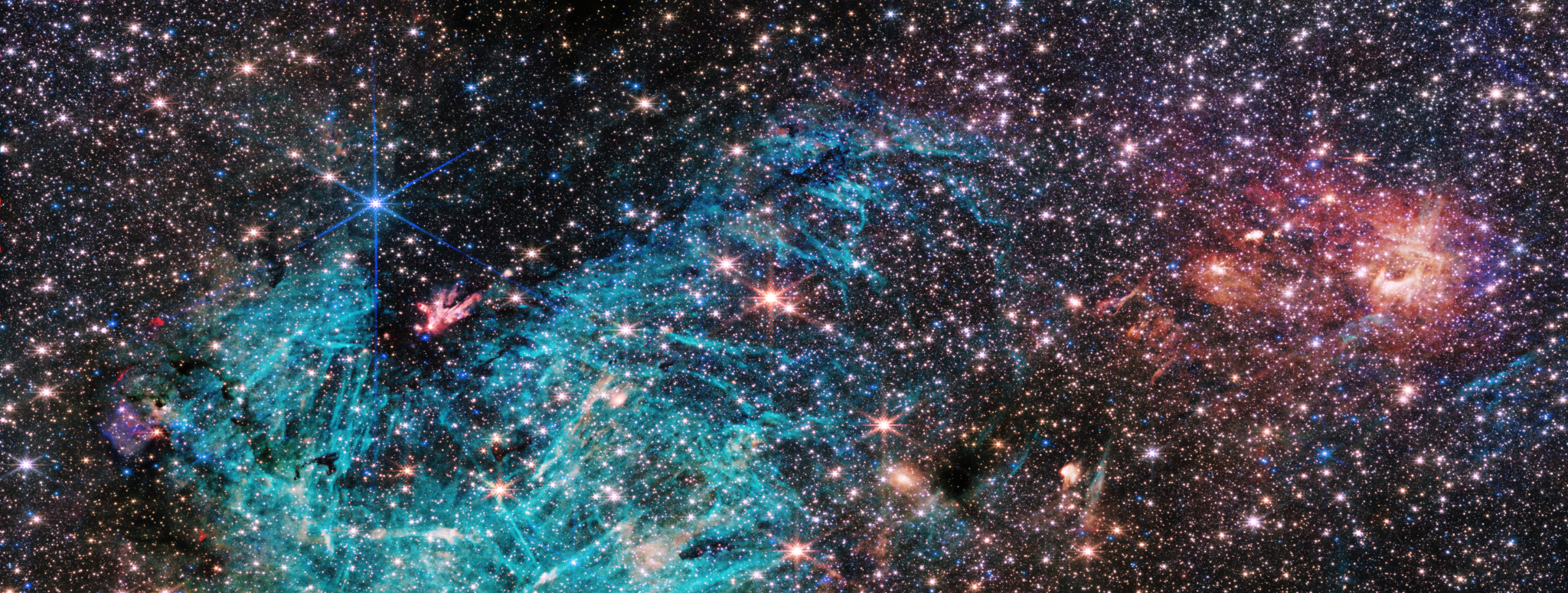
    Celebrating a Stellar Year for Webb Telescope Science

    A crowded region of space, full of stars and colorful clouds, more than twice as wide as it is tall. A funnel-shaped region of space appears darker than its surroundings with fewer stars. It is wider at the top edge of the image, narrowing towards the bottom. Toward the narrow end of this dark region a small clump of red and white appears to shoot out streamers upward and left. A large, bright cyan-colored area surrounds the lower portion of the funnel-shaped dark area, forming a rough U shape. The cyan-colored area has needle-like, linear structures and becomes more diffuse in the center of the image. The right side of the image is dominated by clouds of orange and red, with a purple haze.
    NASA, ESA, CSA, STScI, and S. Crowe (University of Virginia)

    The James Webb Space Telescope’s Near-Infrared Camera instrument produced a feast for the eyes with a view into a star-forming region, named Sagittarius C, in the heart of the Milky Way. The image reveals a portion of the dense center of our galaxy in unprecedented detail, including never-before-seen features astronomers have yet to explain.

    Supercomputer Simulations Lead to Air and Space Innovations

    NASA

    Simulations and models developed using technology at the NASA Advanced Supercomputing Facility (NAS) help researchers and engineers develop innovations in air and space. Modeling turbofan engines could lead to designs that reduce engine noise and improve efficiency by understanding where noise is generated inside the machine.

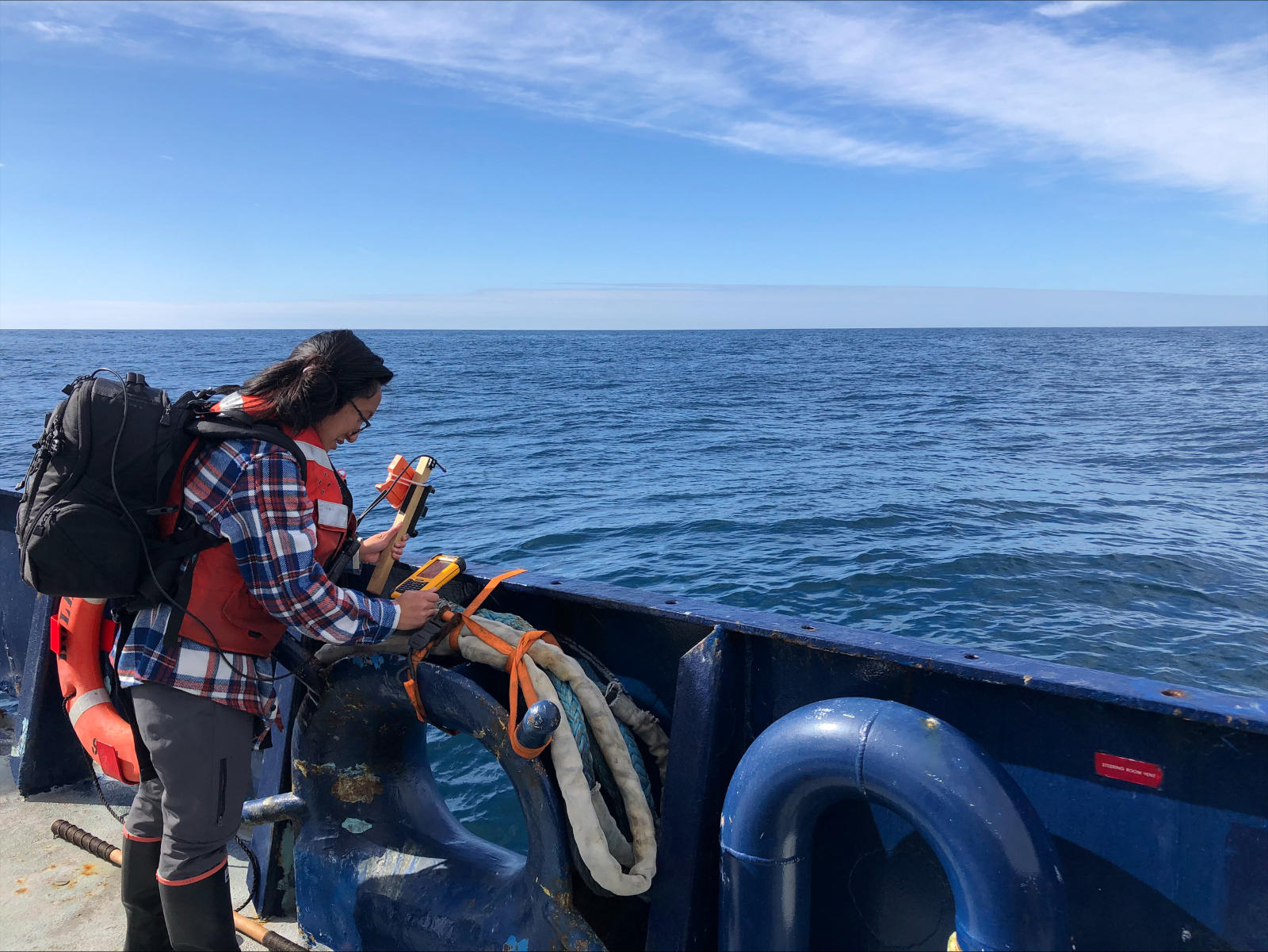
    S-MODE Sails the Seas and Soars through the Sky

    A field researcher stands at the edge of a boat overlooking the edge toward the ocean surface. She wears a backpack full of gear and holds an instrument facing the ocean.
    NASA/Avery Snyder

    The Sub-Mesoscale Ocean Dynamics Experiment (S-MODE) logged its final field expedition, and they took a team from the TODAY Show along for the ride. S-MODE combined airborne instruments, research ships, and autonomous ocean gliders to get an unprecedented look at how gas and heat exchange at the ocean’s surface impacts Earth’s climate.

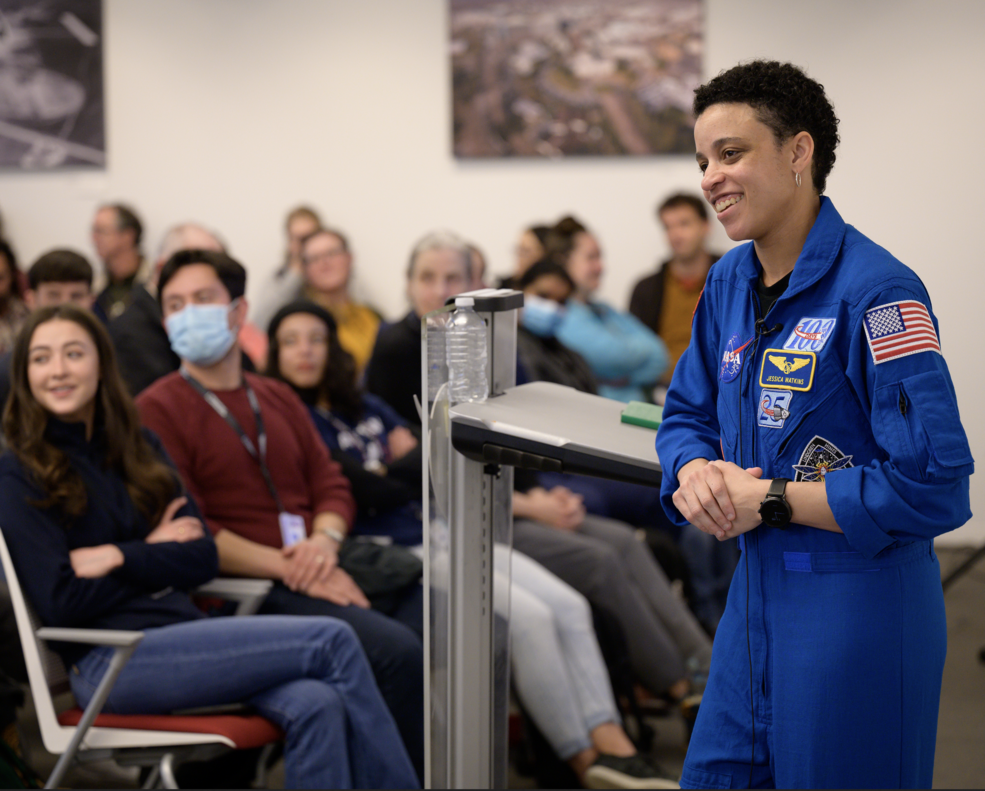
    From Intern to Astronaut, and Back to Ames

    Astronaut Jessica Watkins speaking at Ames Feb. 28, 2023.
    NASA/Dominic Hart

    NASA astronaut Jessica Watkins, who was once an intern at Ames, returned to the Bay Area in Feb. 2023 to visit with local elementary schools and speak with Ames employees. Watkins started her career with NASA at Ames, where she conducted research on Mars soil simulant supporting the Phoenix Mars Lander mission.

    Second Gentleman Joins East Bay Kids for STEM Activities

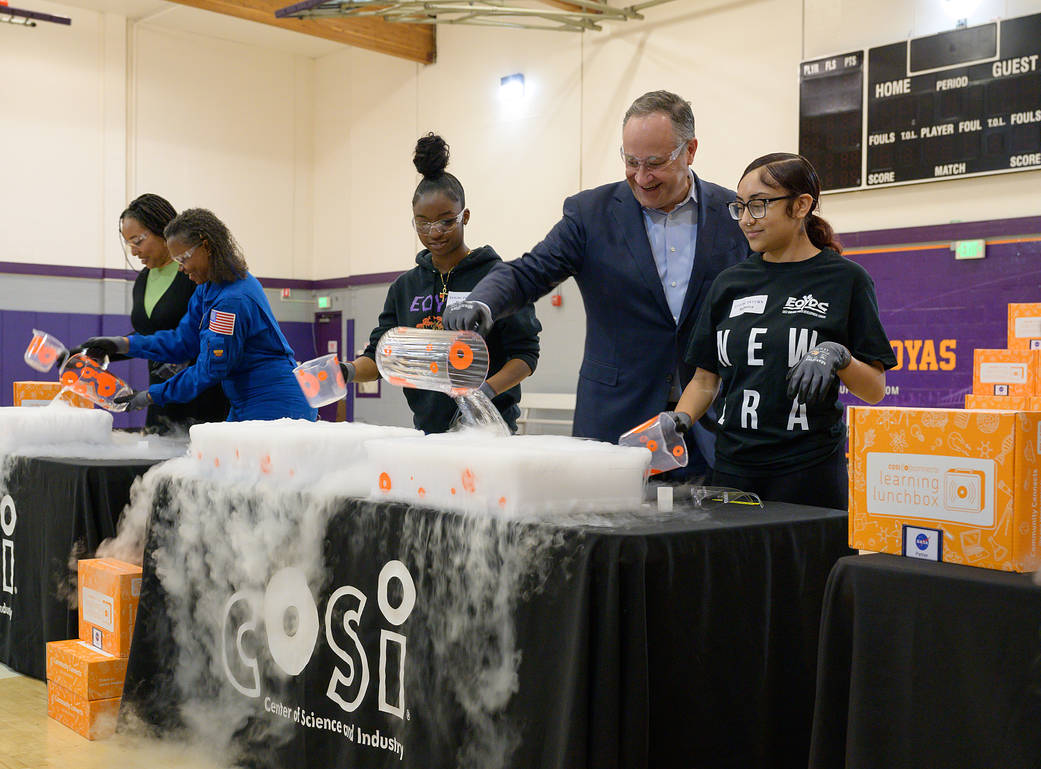
    Second Gentleman Douglas Emhoff participates in a “Make a Cloud” demonstration with students and NASA astronaut Dr. Yvonne Cagle at the East Oakland Youth Development Center in Oakland, California.
    NASA/Dominic Hart

    Nearly 100 East Bay kids and their families got to experience the thrill of “launching a rocket” and “making clouds” at a fun-filled STEM event hosted in honor of Women’s History Month at the East Oakland Youth Development Center in Oakland, California, in March 2023. Second Gentleman Douglas Emhoff, NASA Ames Research Center Director Dr. Eugene Tu, and NASA astronaut Dr. Yvonne Cagle joined kids at the Manzanita Community School for hands-on activities and to distribute approximately 500 STEM Artemis Learning Lunchboxes aimed to inspire the Artemis generation to learn about NASA’s Artemis Program.

    Top Leaders in Our Midst Hailed from the White House and Australia

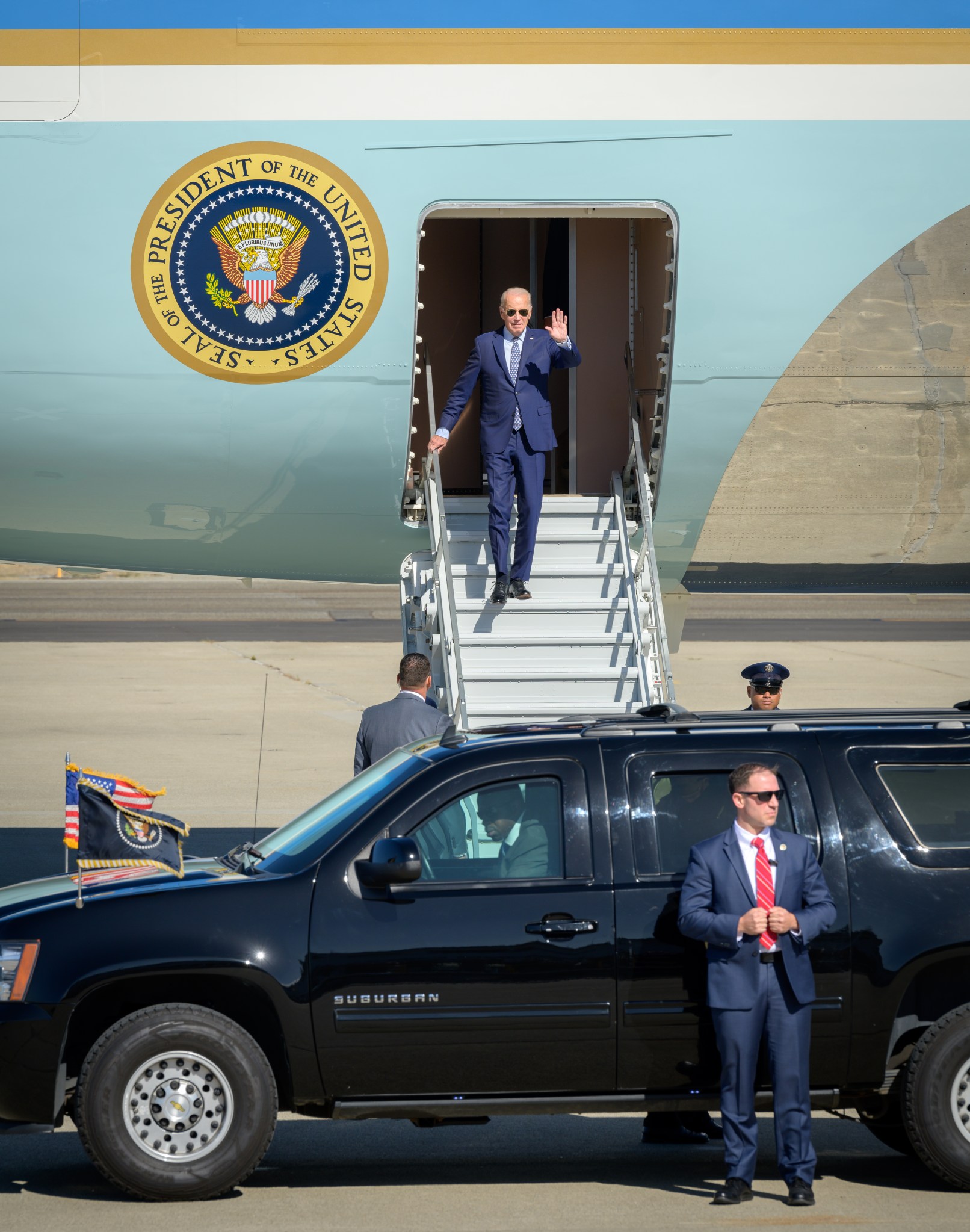
    NASA/Dominic Hart

    In January, U.S. President Joe Biden landed at Moffett Federal Airfield, at Ames, on his way to visit storm-damaged regions in the state. Research conducted at our Silicon Valley center could help predict extreme climate-related weather events. Later in the spring, Vice President Kamala Harris arrived at Moffett before delivering remarks at a local company, and leaders of the Australian Space Agency visited Ames to learn about the center’s missions supporting NASA’s Artemis program, including the VIPER Moon rover, which will launch to the lunar South Pole in late 2024.

    Powered by WPeMatico

    Get The Details…
    Arezu Sarvestani

    2023 in Review: Artemis II Crew Visits Kennedy

    2023 in Review: Artemis II Crew Visits Kennedy

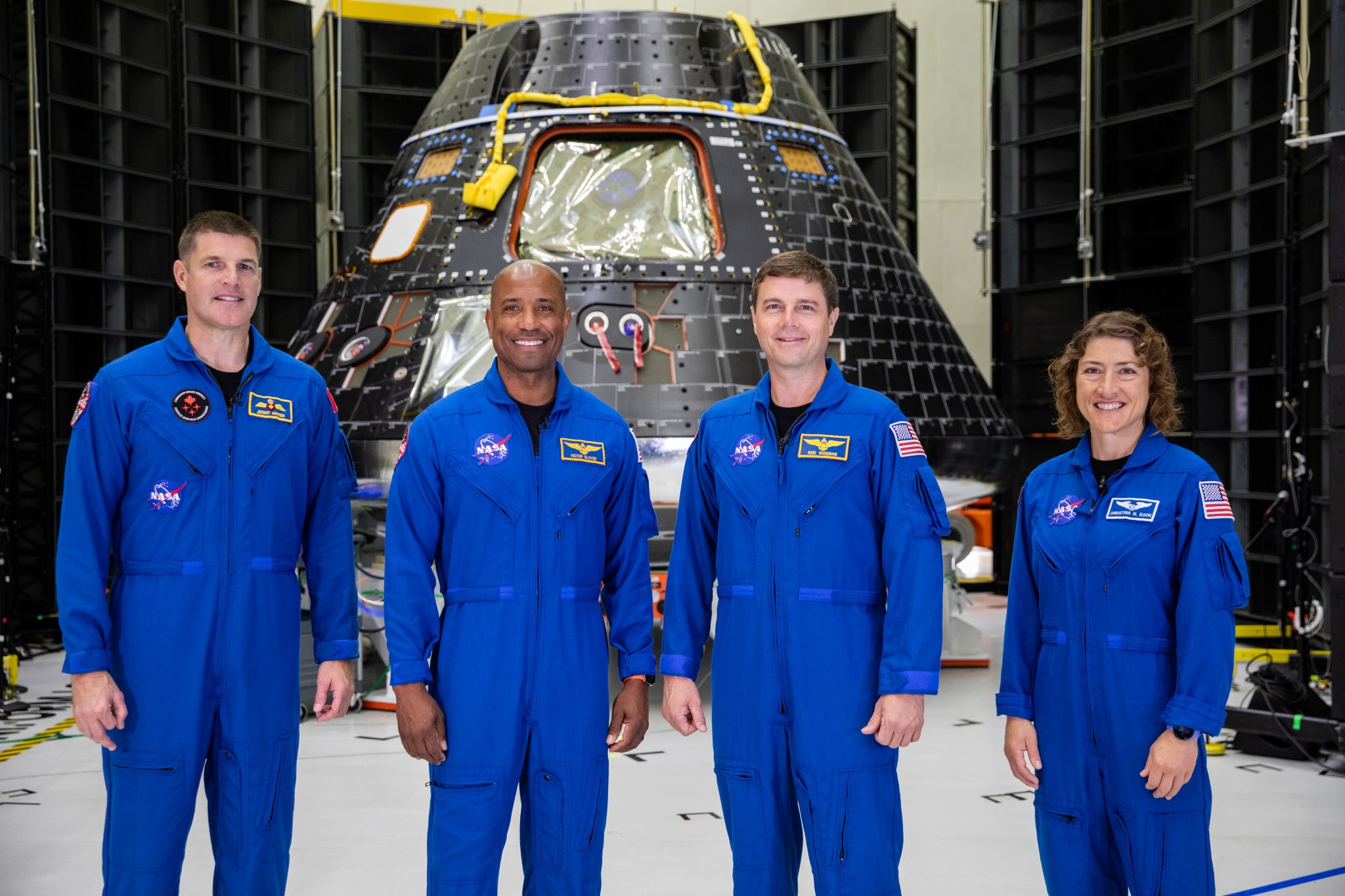
    Four astronauts wearing blue flight suits stand inside a building, with the Orion crew module behind them. They are, from left, Jeremy Hansen, Victor Glover, Reid Wiseman, and Christina Koch. Glover is a Black man, and Koch is a White woman. Orion is cone-shaped, with a flat top. It is black and has yellow wiring on it, as well as blue dots around some panels.
    NASA / Kim Shiflett

    On Aug. 8, 2023, Artemis II crew members (from left) Jeremy Hansen, Victor Glover, Reid Wiseman, and Christina Koch took a photo in front of their Orion crew module at NASA’s Kennedy Space Center in Florida. Announcing the crew and continuing work on the Space Launch System rocket and Orion are part of the significant steps taken this year toward the agency’s goal of landing the first woman and first person of color on the Moon.

    Look back on NASA’s achievements in 2023.

    Image Credit: NASA

    Powered by WPeMatico

    Get The Details…
    Monika Luabeya