


Northwest Earth and Space Science Pathways Project Celebrates Student Innovation Through ROADS from Earth to Venus National Challenge
4 min read
Northwest Earth and Space Science Pathways Project Celebrates Student Innovation Through ROADS from Earth to Venus National Challenge
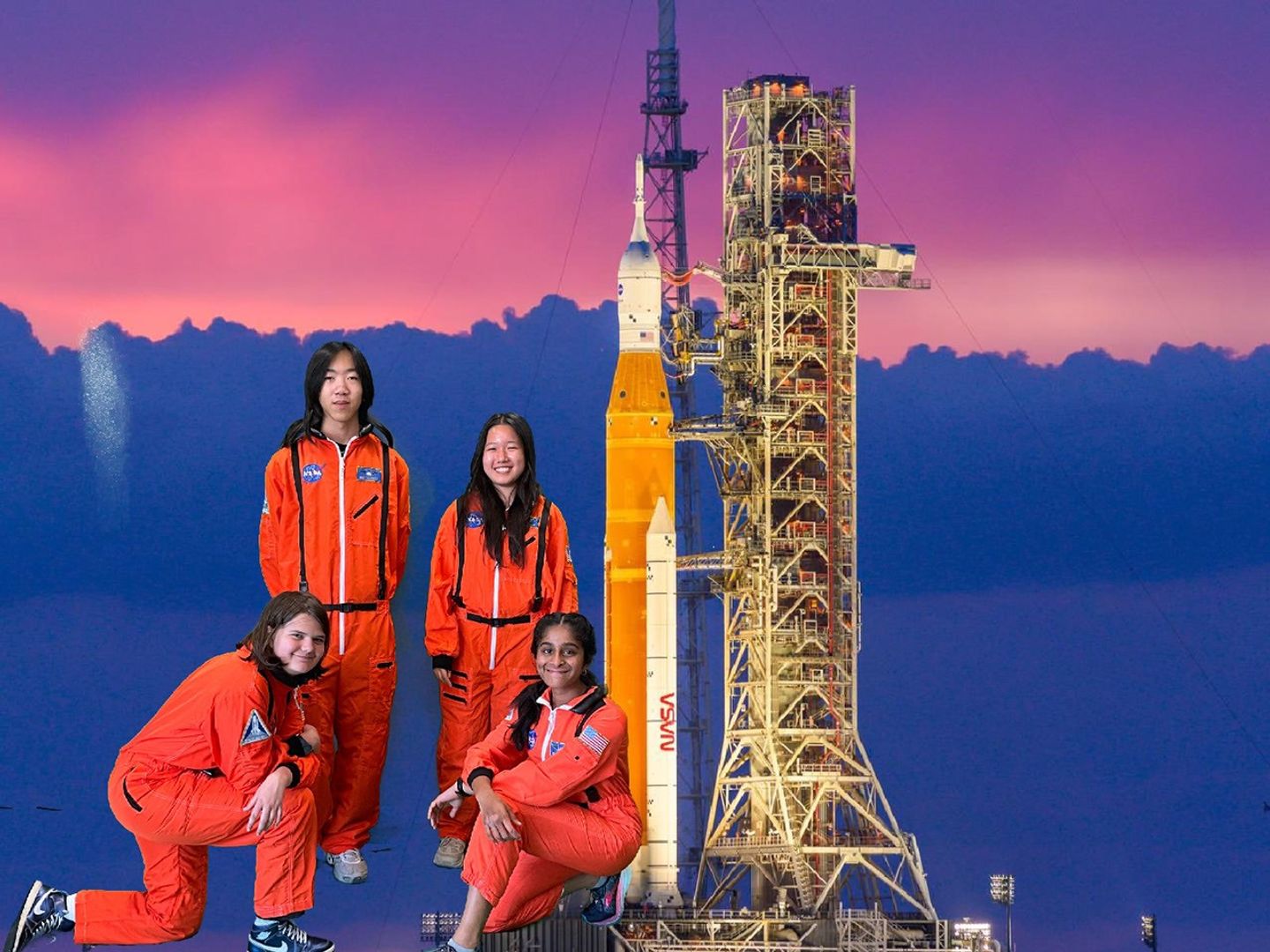
The Northwest Earth and Space Science Pathways (NESSP) project recently concluded its 2025–2026 ROADS (Rover Observation And Discoveries in Space) from Earth to Venus National Challenge, a NASA Science Activation program student challenge that engaged more than 500 students on 120 teams from eight states in authentic science and engineering experiences inspired by Venus exploration.
The challenge began with educator professional development in August 2025, preparing teachers and mentors to guide students through the ROADS experience. Registered teams then worked through challenge checkpoints from January through May 2026, with in-person Hub events held in April and May 2026 to give students opportunities to showcase their work, connect with peers, and engage with NASA-inspired STEM (Science, Technology, Engineering, and Mathematics) activities.
NESSP, led by Central Washington University in Ellensburg, Washington, creates opportunities for students and educators to connect with NASA science through hands-on STEM learning. The ROADS framework challenges upper elementary, middle, and high school students to work collaboratively on mission-inspired activities that mirror the ways NASA scientists and engineers investigate planetary environments and prepare for future exploration.
Throughout the academic year, ROADS from Earth to Venus teams completed eight Mission Objectives focused on science, engineering, teamwork, and communication. Students documented their work in Mission Development Logs, designed mission patches, modeled carbon movement on Earth and Venus, investigated the greenhouse effect, collected remote sensing data using kite-mounted cameras, programmed robotic rovers to navigate Venus-inspired terrain, explored NASA-related careers, and presented their final mission stories through virtual submissions and regional Hub events.
In addition to completing the challenge virtually, many students participated in in-person Hub events hosted by NESSP partner institutions, including Central Washington University, Montana State University, and Northern Arizona University. These events gave teams the opportunity to showcase their work, exchange ideas with peers, interact with mentors, and experience college campuses as part of a broader STEM learning community.
“The ROADS Challenge gives students the opportunity to do more than learn about NASA missions – they become part of the mission,” said Dr. Darci Snowden, Director of NESSP. “I am especially proud of this year’s teams. Students took on an exceptionally broad set of mission objectives, from modeling carbon cycles and designing experiments to conducting remote sensing operations with kites and programming rovers to navigate challenging terrain while collecting scientific data. These students participated because they were curious, motivated, and eager to learn. By investigating authentic mission challenges, collaborating with teammates, and sharing their ideas with others, students develop the confidence and skills needed to see themselves as future scientists, engineers, educators, and explorers.”
NESSP recognized top teams across elementary, middle, and high school divisions for outstanding participation and exemplary Mission Development Logs.
In the Elementary School Division, NESSP recognized The Evil Twins, The Acid Clouds, Flaming Asteroid Nebulas, and The NASA Intelligence, all from Silverdale, Washington.
In the Middle School Division, NESSP recognized Venus Ascenders from Mukilteo, Washington; Project Fuego Venus from Safford, Arizona; Galaxy Dragons from Sequim, Washington; The Four Folds from Hardin, Montana; and Crater Lake Crusaders from Medford, Oregon.
In the High School Division, NESSP recognized Laborantem from Columbus, Montana; Velocity to Venus from Sequim, Washington; Puget Sound Propulsion from Mukilteo, Washington; and Evergreen Explorers from Mukilteo, Washington.
Highlights from this year’s challenge, including student presentations and special recognitions, are available through the ROADS from Earth to Venus Virtual Recognition Ceremony on the NESSP YouTube channel, @nwessp.
Educators, families, and community organizations can continue to access ROADS from Earth to Venus activities and educational resources, along with materials from previous ROADS challenges, through the NESSP website at www.nwessp.org.
NASA’s Northwest Earth and Space Science Pathways project is supported by NASA cooperative agreement award number 80NSSC22M0006 and is part of NASA’s Science Activation Portfolio, which connects learners with authentic NASA science experiences through partnerships with educators and community organizations.
Share
Details
Related Terms
Explore More
Powered by WPeMatico
