


What’s Up: May 2026 Skywatching Tips from NASA
Shooting stars before dawn, a brilliant meetup between the Moon and Venus and a rare blue moon to end the month
The Eta Aquarid meteor shower brings shooting stars before dawn, the Moon meets brilliant Venus after sunset, and May wraps up with a rare Blue Moon.
Skywatching Highlights
- May 5 + 6 : Best time to see the Eta Aquarids
- May 18: Moon and Venus conjunction
- May 31: Blue moon
Transcript
Shooting stars before dawn, a brilliant meetup between the Moon and Venus, and a rare “Blue Moon” to end the month.
That’s What’s Up this May.
First up: the Eta Aquarid meteor shower, which peaks in early May.
These shooting stars come from Halley’s Comet. Every year, Earth passes through the comet’s dusty trail, and those tiny particles burn up in our atmosphere. That’s what creates those bright streaks across the sky.
Halley’s Comet last passed through the inner solar system in 1986, and won’t return until 2061.
The Eta Aquarids appear to come from the constellation Aquarius. That’s where the shower gets its name.

These meteors are fast, racing into Earth’s atmosphere at about 40 miles per second. And because they’re moving so quickly, they can leave behind glowing trails that linger for a moment after the flash.
At peak, the shower can produce up to about 50 meteors an hour under ideal skies. The best time to watch? In the hours before dawn, looking generally toward the eastern sky.
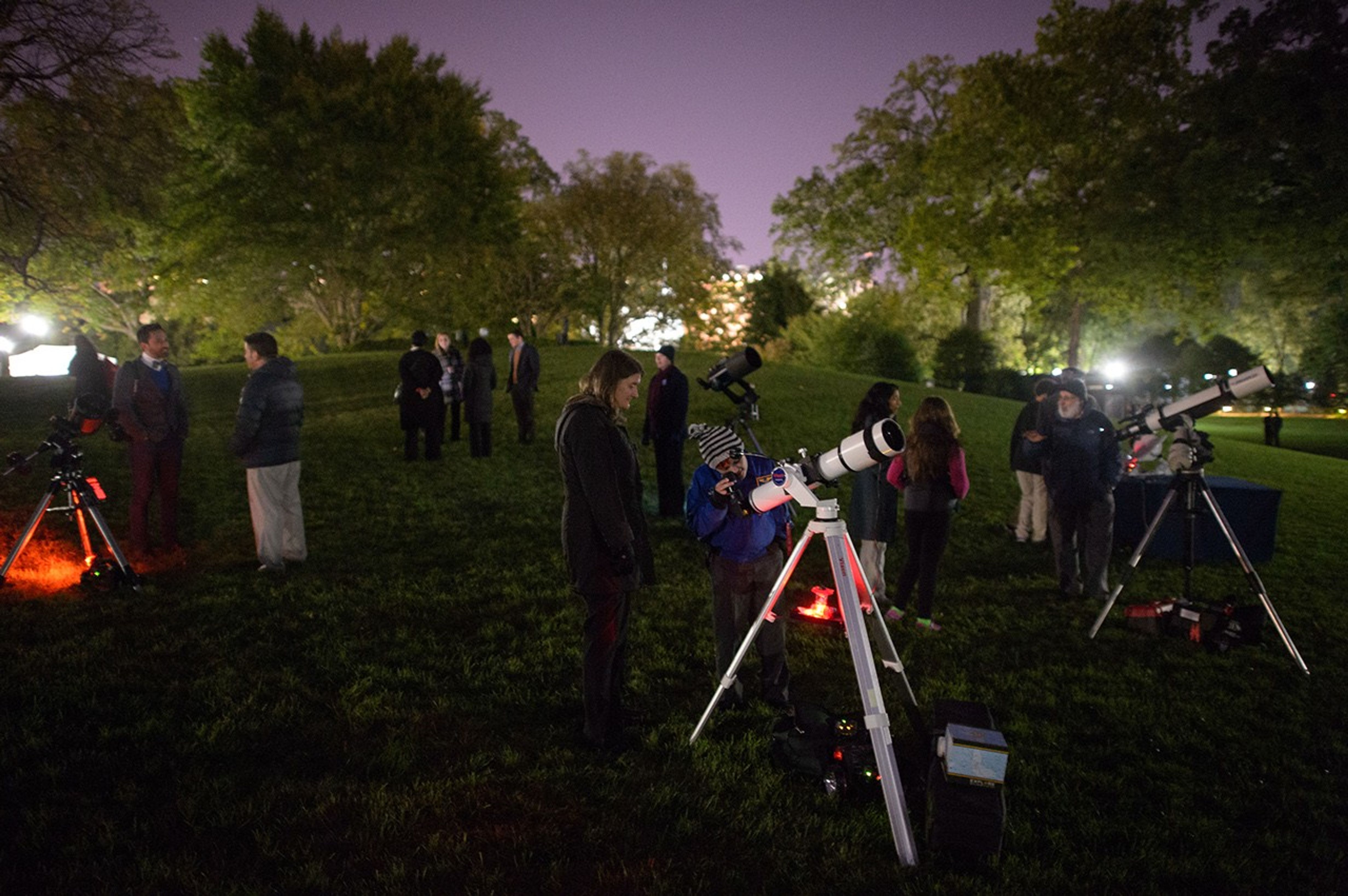
For the best chance of seeing meteor showers, go somewhere dark, let your eyes adjust for about 20 to 30 minutes, and avoid bright lights, including your phone screen.
The peak is expected around May 5th to 6th, but bright moonlight this year may wash out some of the fainter meteors.
On May 18th, look west just after sunset.

The Moon gets a bright little sidekick as Venus shines nearby. The crescent Moon helps point the way, making this an easy one to spot.
Venus is one of the brightest objects we can see from Earth, often called the Evening Star.
The Moon and Venus look close together because they line up from our point of view on Earth. But in reality, they’re separated by millions of miles in space.
Last month, Artemis II launched right around the time of the April 1st Full Moon, sending astronauts around the Moon for the first time in more than 50 years and giving us some spectacular new views of our closest neighbor.
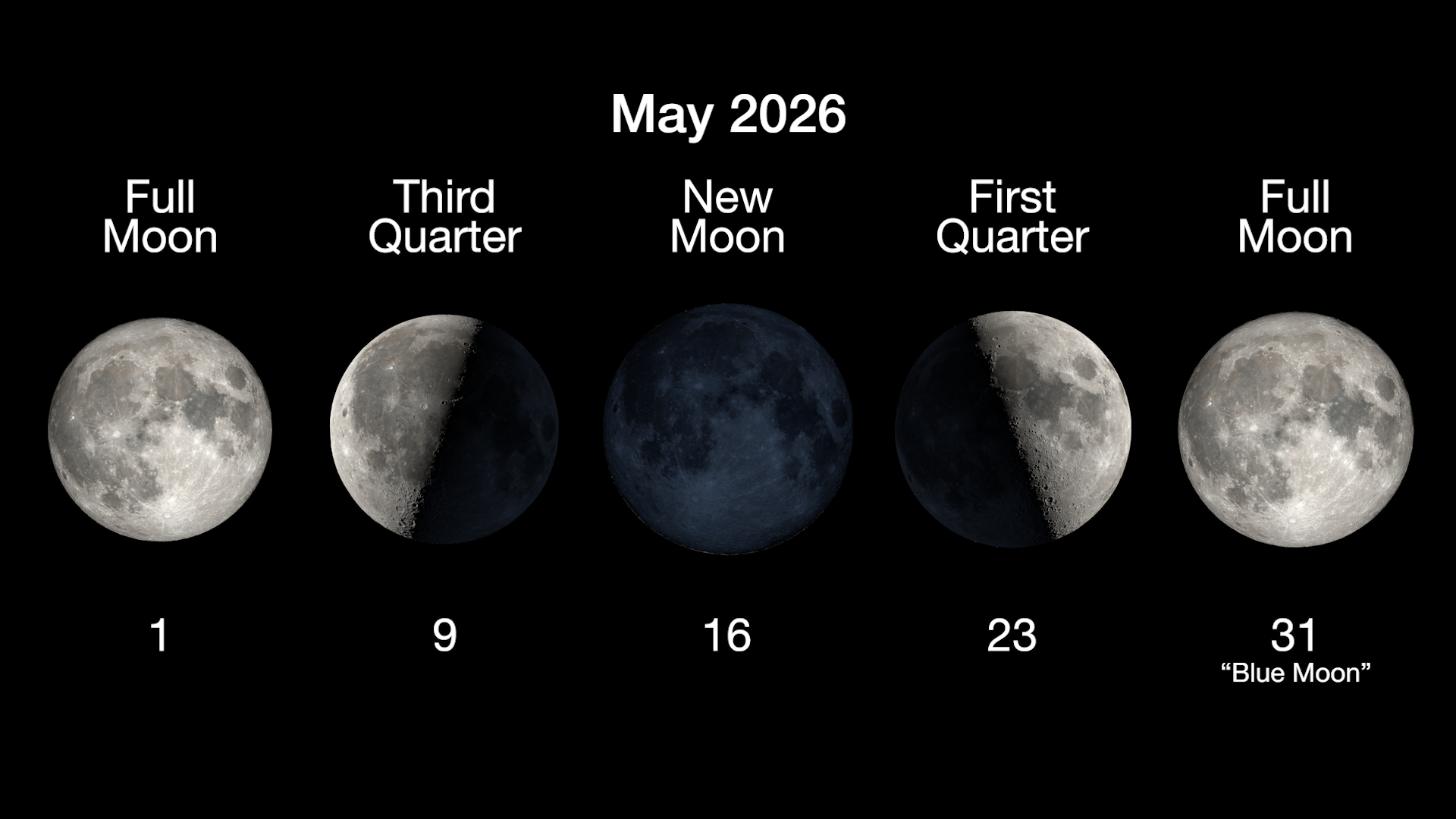
And now, May ends with another lunar moment: a Full Moon on May 31st. This one is a Blue Moon.
But it actually won’t look blue.
Blue Moon is the name given to the second Full Moon in a single calendar month. It’s a relatively rare event, hence the phrase “once in a blue moon.”
So whether you’re up before sunrise or out after sunset, May is a great time to look up.
Here are the phases of the Moon for May.
You can stay up to date on all of NASA’s missions exploring the solar system and beyond at science.nasa.gov.
I’m Raquel Villanueva from NASA’s Jet Propulsion Laboratory, and that’s What’s Up for this month.

Powered by WPeMatico
