
Recent activity on the 23cm band RNSS Coexistence Studies

Recent activity on the 23cm band RNSS Coexistence Studies

CEPT LogoThe Chair of IARU Region 1 Spectrum Affairs, Barry Lewis G4SJH, reports on the work being done in defending the interests of the Amateur Services in the 1240-1300 MHz band.

His IARU Region 1 post reads:

IARU is continuing to represent the amateur services interests in the 23cm band Galileo/GLONASS radio navigation satellite service coexistence discussions in the CEPT project teams.

The most recent CEPT SE40 project team meeting was held from 24th to 26th March 2021 and the IARU R1 was represented by Barry Lewis, G4SJH (Region 1 SRLC chair). At that meeting the first coexistence calculations were introduced by one CEPT administration, based on some initial assumptions about the amateur service operation. The IARU is continuing to work with the regulators to refine the details of these assumptions and make them and the calculations more representative of typical amateur station characteristics and band usage. These first calculations are considered only as a starting point and the meeting agreed that further work is needed to develop the calculations into a more comprehensive study.

Measurement campaigns have shown that the potential for coexistence depends very much on the frequency of the amateur service transmissions in the 23cm band with respect to the RNSS receiver bandwidth. This aspect needs to be considered more carefully once the initial scenarios and calculations are agreed.

In addition the IARU continues to have questions about the protection criteria required by the RNSS receivers and in particular how they relate to RNSS operational and service provision behaviour. IARU has ensured alignment of the amateur and amateur service information being used in CEPT with that being used in the parallel work in the ITU‑R relating to WRC-23 AI 9.1b.

Source IARU Region 1 https://iaru-r1.org/

The meeting Input paper “Amateur versus RNSS, interference areas” that was submitted by France as well as other meeting documents can be downloaded from
https://cept.org/ecc/groups/ecc/wg-se/se-40/client/meeting-documents/?flid=28532

Get The Details…
m5aka AMSAT-UK

Powered by WPeMatico
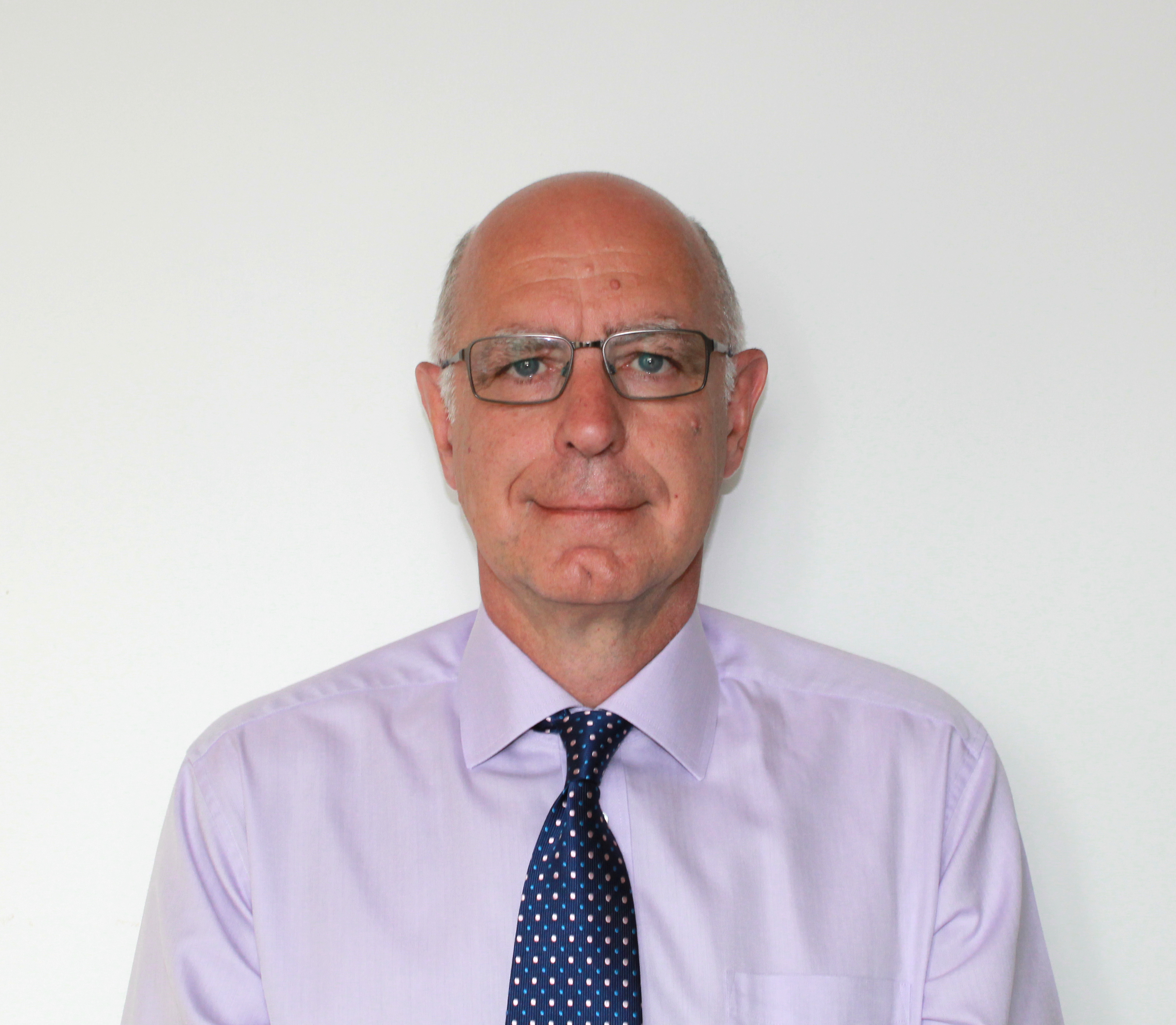
RSGB awards Louis Varney Cup to Dave Crump G8GKQ

RSGB awards Louis Varney Cup to Dave Crump G8GKQ

Dave Crump G8GKQ

Dave Crump G8GKQ

At the RSGB AGM held on Saturday, April 24, 2021 the Society awarded the Louis Varney Cup for advances in space communications to Dave Crump G8GKQ.

Dave accepts this award as Chair of the British Amateur Television Club. His leadership of the BATC community, both in the UK and overseas, has been instrumental in enabling the QO100 satellite wideband transponder to be fully utilized with many new DATV systems being developed since the launch of the spacecraft.

This award acknowledges the exciting and significant contributions made by many members of the BATC, both in terms of software and hardware.

RSGB 2021 Awards and Trophies
https://rsgb.org/main/agm-2021/2021-trophies-and-awards/

Info on the QO-100 Geostationary satellite transponders
https://amsat-uk.org/satellites/geo/eshail-2/

Get The Details…
m5aka AMSAT-UK

Powered by WPeMatico
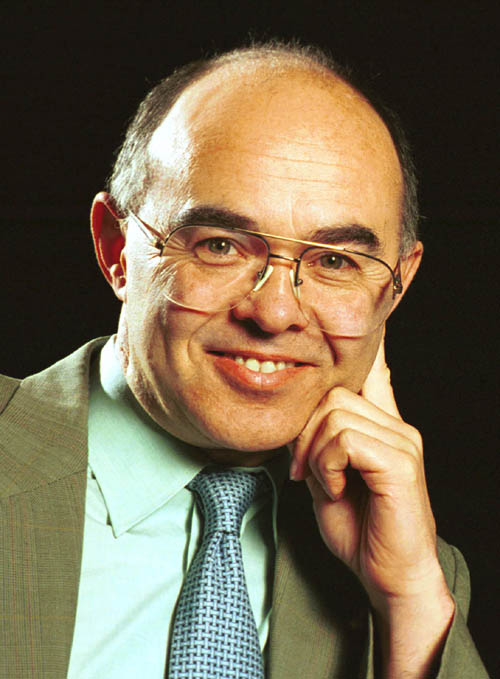
Radio amateur G3YJO on BBC Radio 4

Radio amateur G3YJO on BBC Radio 4

Professor Sir Martin Sweeting G3YJO

Professor Sir Martin Sweeting G3YJO

Radio amateur Professor Sir Martin Sweeting G3YJO, was the guest on the Radio 4 show The Life Scientific that was broadcast on Tuesday, April 20.

Martin Sweeting G3YJO pioneered the original SmallSats revolutions with the UOSAT-1 and UOSAT-2 spacecraft that carried amateur radio payloads and launched in the early 1980’s. They led to the founding of Surrey Satellite Technology Ltd (SSTL) of which he is Executive Chairman.

You can listen to, or download, an MP3 recording of the BBC show which mentions amateur radio and AMSAT from the BBC website at https://bbc.co.uk/programmes/m000v7pb

What is Amateur Radio? http://www.essexham.co.uk/what-is-amateur-radio

Free UK amateur radio Online Training course https://essexham.co.uk/train/foundation-online/

Get The Details…
m5aka AMSAT-UK

Powered by WPeMatico
Contests on QO-100 allowed in time for Yuri Gagarin contest

Contests on QO-100 allowed in time for Yuri Gagarin contest

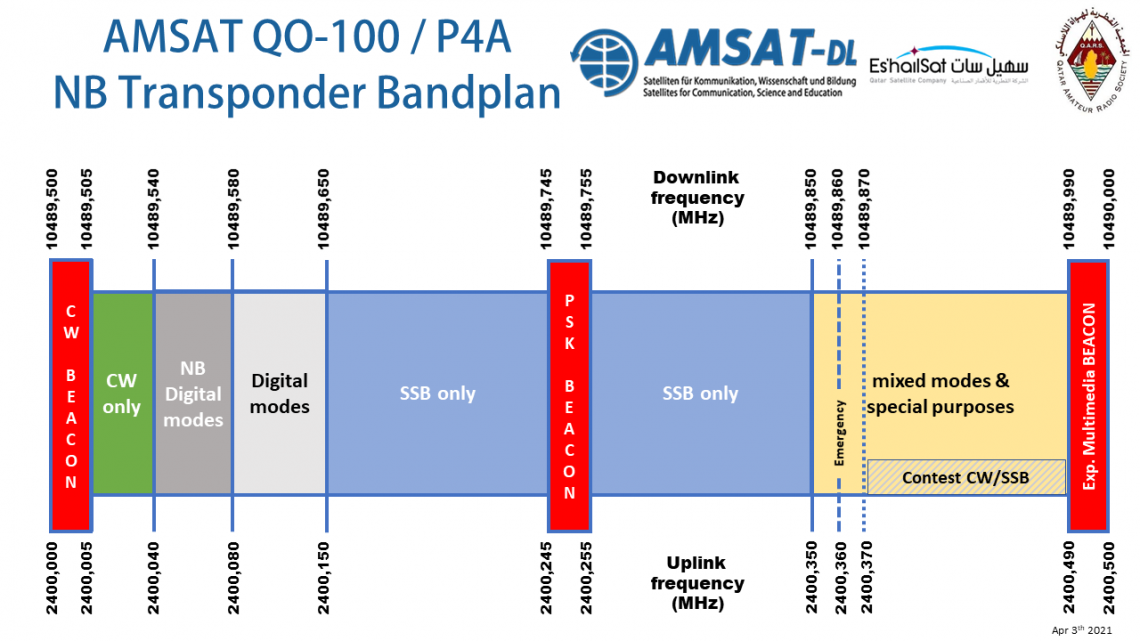
AMSAT QO-100 NB Transponder BandplanOn April 4, AMSAT-DL announced the opening of the QO-100 NB satellite transponder to general contest operation in the upper mixed-mode range. This weekend (April 10-11) will see the Yuri Gagarin contest.

The contest area on the QO-100 geostationary satellite NB transponder for both CW and SSB is:

Uplink area 2400.370 – 2400.490 MHz
Downlink area 10489.870 – 10489.990 MHz

Of course, the usual QO-100 NB transponder guidelines also apply here. Therefore, the bandwidth should still be limited to 2.7 kHz and the transmitting power should be reduced to the necessary level, i.e. only as much power as necessary should be used.

Read the AMSAT-DL announcement at https://amsat-dl.org/en/contests-on-qo-100-allowed/

The Yuri Gagarin International DX Contest 2021 is dedicated to the memory of Yuri Gagarin, who realized the first human flight to space, on April 12, 1961.

It runs from 2100 GMT on April 10 until 2100 GMT on April 11, 2021, and the categories include:
• SAT Single operator – Satellite QSOs
• SAT-GS Single operator – Geostationary Satellite QSOs

Contest rules are at http://gc.qst.ru/en/section/32

Get The Details…
m5aka AMSAT-UK

Powered by WPeMatico

More than a million UVQSat telemetry frames received

More than a million UVQSat telemetry frames received


AMSAT-Francophone Logo

AMSAT-F have issued an update on the UVQSat CubeSat, they plan to conduct further test on the FM transponder.

In a post to the AMSAT Bulletin Board the AMSAT-F President Christophe Mercier says:

More than 1,200,000 frames have been received on the AMSAT-F experimental database this week https://amsat.electrolab.fr/

It is possible to visualize the data via an online Dashboard:
https://amsat.electrolab.fr/grafana/d/ujwd-SaMz/uvsqsat?orgId=1

These data were collected by more than 50 stations in the world via the UVSQsat decoder software. The software allows to send the data to the AMSAT-F and Satnogs databases. The continuous reception of telemetry is valuable to the project team that is piloting the satellite.

Although the downloading of large amounts of data is done over Europe, this also took place over Japan with the help of Japanese radio amateurs.

It is noted that a new version of the UVSQSAT Decoder software is available with new features (new ASCII telemetry decoded, performance improvement,..)

The commissioning phase has been successfully completed. Now the UVSQsat project team with Radioclub F6KRK and AMSAT-Francophone will conduct further tests on the transponder to ensure that it can be operated over a period of several days without taking any risk to the satellite.

For this we are looking for volunteer radio amateurs to participate in these tests on all continents. If you are interested contact AMSAT-Francophone, email amsatfamsat-f.org

73
Christophe Mercier
AMSAT-F president
https://amsat-f.org/

Get The Details…
m5aka AMSAT-UK

Powered by WPeMatico