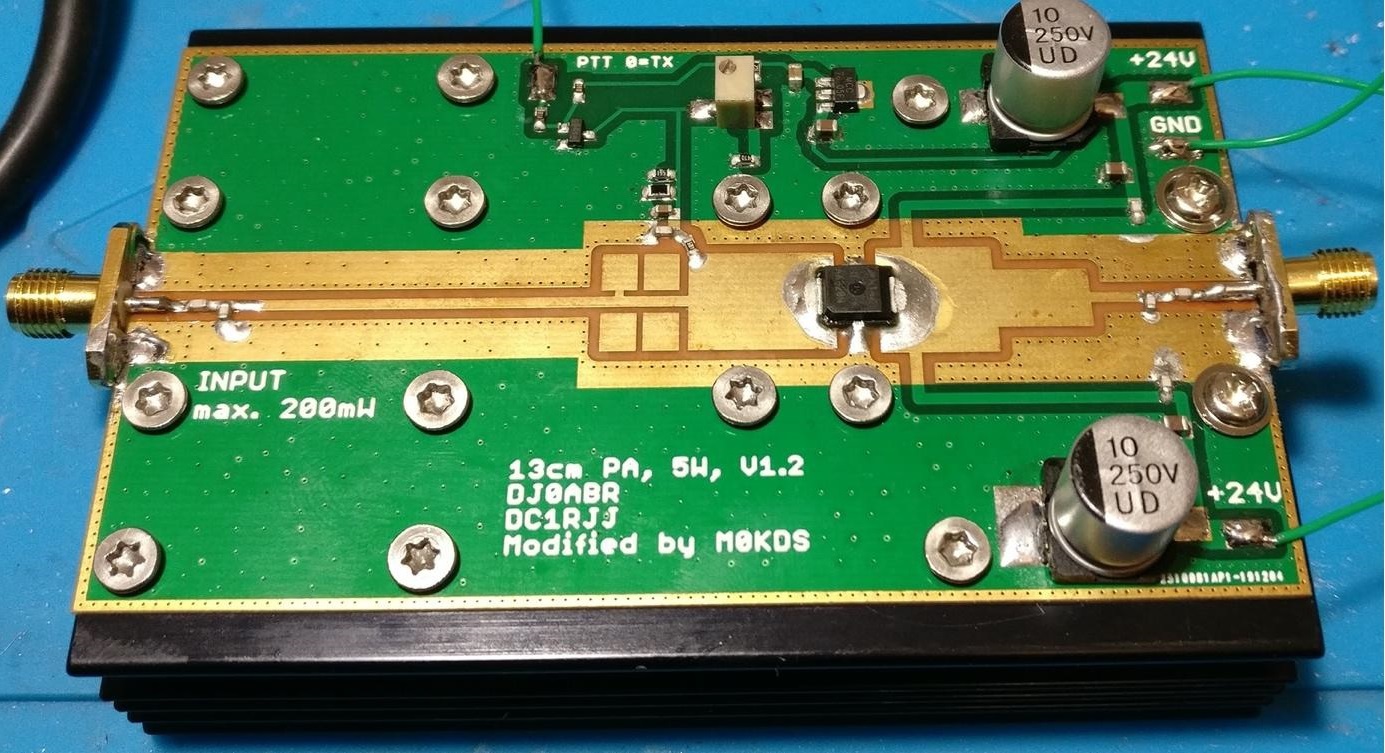
A21EME Moonbounce and QO-100 Dxpedition

A21EME Moonbounce and QO-100 Dxpedition

A21EMEChris PA2CHR has released a video of the A21EME eight band Moonbounce and QO-100 satellite DXpedition to Botswana in October 2019.

Watch A21EME EME DXpedition to Botswana, October 2019

The A21EME Story https://hb9q.ch/2018/?page_id=1659

QO-100 information https://amsat-uk.org/satellites/geo/eshail-2/

Get The Details…
m5aka AMSAT-UK

Powered by WPeMatico

ISS SSTV December 28 until January 1

ISS SSTV December 28 until January 1

ISS SSTV MAI-75 image 9/12 received by Chertsey Radio Club on Baofeng handheld

ISS SSTV image 9/12 received by Chertsey Radio Club on Baofeng handheld

Russian cosmonauts are expected to activate Slow Scan Television (SSTV) image transmissions on 145.800 MHz FM from the International Space Station from Saturday, December 28 to Wednesday, January 1.

ARISS will be supporting SSTV transmissions worldwide in memory of cosmonaut Alexei Leonov. Event runs from setup at 1100 GMT on December 28, 2019 until scheduled shutdown at 1820 GMT on January 1, 2020.

Transmissions will be sent on 145.800 MHz FM (5 kHz deviation) in the SSTV mode PD-120. Once received, images can be posted and viewed by the public at http://www.spaceflightsoftware.com/ARISS_SSTV/index.php

ISS SSTV uses a Kenwood TM D710E transceiver which is part of the amateur radio station located in the Russian ISS Service Module.

Please note that SSTV events are dependent on other activities, schedules and crew responsibilities on the ISS and subject to change at any time. You can check for updates regarding planned operation at:
ISS Ham https://twitter.com/RF2Space
ARISS Status https://twitter.com/ARISS_status
ARISS SSTV Blog https://ariss-sstv.blogspot.com/
AMSAT Bulletin Board http://www.amsat.org/mailman/listinfo/amsat-bb

You can receive signals from the ISS when it’s in range of the UK from anywhere in the world using these WebSDR’s, select 145800.00 kHz and FM:
SUWS VHF/UHF/Microwave WebSDR https://amsat-uk.org/2014/03/19/suws-vhfuhfmicrowave-websdr/
144-146 MHz WebSDR at Goonhilly https://amsat-uk.org/2019/08/24/goonhilly-144-146-mhz-websdr/

Read the MagPi article Pictures from space via ham radio
https://www.raspberrypi.org/magpi/pictures-from-space-via-ham-radio/

ISS SSTV info and links https://amsat-uk.org/beginners/iss-sstv/

Get The Details…
m5aka AMSAT-UK

Powered by WPeMatico

TF3YOTA active on Es’hail-2 / QO-100 satellite

TF3YOTA active on Es’hail-2 / QO-100 satellite

Elín Sigurðardóttir TF2EQ operating TF3YOTA on QO-100

Elín Sigurðardóttir TF2EQ operating TF3YOTA on QO-100

Iceland’s national amateur radio society, the IRA, reports Elín Sigurðardóttir TF2EQ, launched TF3YOTA from TF3IRA’s radio room in Skeljanes on December 19.

First at 14 MHz and when the conditions disappeared it switched to the IRA’s satellite station for communication via the Es’hail-2 / Qatar-Oscar-100 satellite. Ari Þórólfur Jóhannesson TF1A, IRA VHF Manager, assisted Elina and posted, among other things, a fun video of the contacts on Facebook.

The YOTA project began last year (2018) and will be operational in December each year. It is designed to increase young people’s interest in amateur radio. The project is under the auspices of IARU Area 1 and all national amateur radio amateurs in the Region are involved (as well as national members of Regions 2 and 3).

Elín Sigurðardóttir TF2EQ, is the IRA’s youth representative and YOTA project manager together with Árni Frey Rúnarsson, TF8RN. They plan to activate the call sign on as many HF bands (as required) throughout the month, as well as contacts on the OSCAR-100 satellite.

Source IRA https://tinyurl.com/IcelandIRA

QO-100 information https://amsat-uk.org/satellites/geo/eshail-2/

Get The Details…

m5aka

AMSAT-UK

Powered by WPeMatico
CAMSAT CAS-6 satellite will be launched soon

CAMSAT CAS-6 satellite will be launched soon

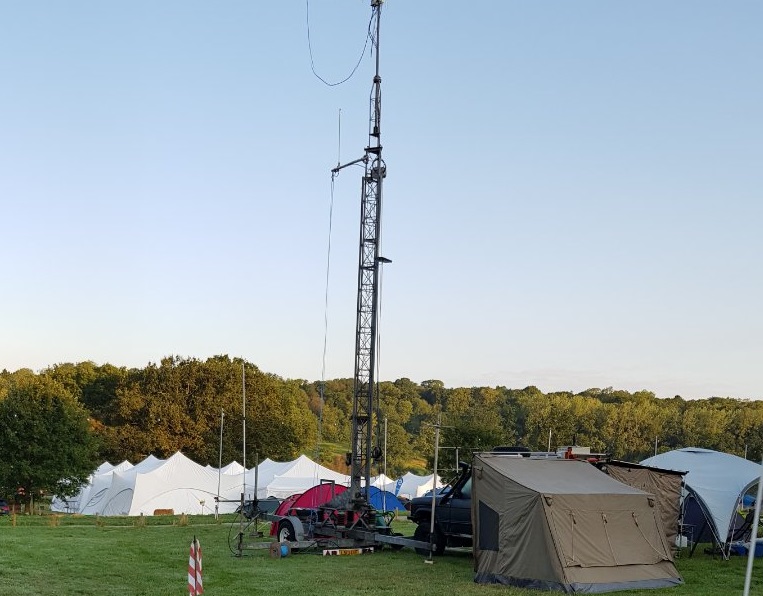
CAS-6 satellite - credit CAMSAT

CAS-6 satellite – credit CAMSAT

CAMST’s amateur radio payload CAS-6 piggybacked on a technology test satellite TIANQIN-1 will be launched at 3:21 UTC on December 20, 2019 at the Taiyuan Satellite Launch Center of China using a CZ-4B launch vehicle.

The primary payload of this launch is China-Brazil Earth Resources Satellite CBERS-4A.

Satellite Name: CAS-6/TIANQIN-1

Orbit:
• Orbit type : SSO
• Apogee : 629km
• Inclination : 97.89˚
• Period : 97min

Satellite Architecture: Micro-satellite
• Mass: 35kg
• Stabilization: three-axis stabilization system with its +Y surface facing the earth

Amateur Radio Payload:
• Call sign: BJ1SO
• VHF Antenna: one 1/4λ monopole antenna with max.0dBi gain is located at +Z side
• UHF Antenna: one 1/4λ monopole antenna with max.0dBi gain is located at -Z side
• CW Telemetry Beacon: 145.910 MHz 17dBm
• AX.25 4.8k Baud GMSK Telemetry: 145.890 MHz 20dBm
• U/V Linear Transponder Downlink: 145.925 MHz 20dBm, 20 kHz bandwidth, Inverted
• U/V Linear Transponder Uplink: 435.280 MHz

CAS-6 Satellites Digital Telemetry Description

CAS-6 CW Telemetry Encoding Format

CAMSAT News Release for CAS-6 Satellite

Get The Details…

m5aka

AMSAT-UK

Powered by WPeMatico
Calling Radio Amateurs: Help Find OPS-SAT!

Calling Radio Amateurs: Help Find OPS-SAT!

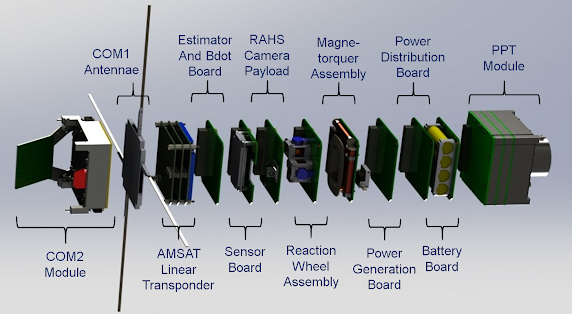
Decoding OPS-SAT's beacon

Decoding OPS-SAT’s beacon

ESA is challenging anyone with amateur radio equipment to catch the first signals from OPS-SAT, ESA’s brand new space software laboratory.

On December 17, the 3U CubeSat OPS-SAT will be launched into low-Earth orbit on a Soyuz rocket from Kourou in South America, together with ESA’s Cheops exoplanet-tracker.

Lift-off is scheduled for 08:54:20 GMT on Tuesday, December 17. Deployment will begin 15044.6 seconds later (T+15044.6 seconds), expected to be at 13:05:04 GMT.

15 minutes after satellite deployment, when the UHF antenna and solar array deployment have been confirmed, OPS-SAT will begin transmitting 9600 bps GMSK on 437.200 MHz. The first two passes over Europe are expected on the same evening.

The OPS-SAT flight control team has developed open source software which allows anyone to receive the 437.200 MHz beacon of OPS-SAT and decode it.

Full details in the ESA article at http://www.esa.int/Enabling_Support/Operations/Calling_radio_amateurs_help_find_OPS-SAT

OPS-SAT UHF Specification https://github.com/esa/gr-opssat/blob/master/docs/os-uhf-specs.pdf

OPS-SAT GitHub https://github.com/esa/gr-opssat/

Get The Details…

m5aka

AMSAT-UK

Powered by WPeMatico