Ten amateur radio CubeSats deployed from ISS
On July 21, 2022, during a spacewalk by Samantha Cristoforetti IZ0UDF and Oleg Artemyev, 10 amateur radio CubeSats were deployed from the International Space Station.
On his website Dmitry Pashkov R4UAB reports:
On July 21, 2022, during extravehicular activities (VKD-54), Russian cosmonaut Oleg Artemyev deployed ten Russian small spacecraft (MKA) – SWSU-55 No. 1 & R-390 (SWSU No. 5), SWSU-55 No. 2 (SWSU No. 6), SWSU-55 No. 3 (SWSU No. 7), SWSU-55 No. 4 (SWSU No. 8), SWSU-55 No. 5 (SWSU No. 9), SWSU-55 No. 6 (SWSU No. 10), SWSU-55 No. 7 & R-390 (SWSU No. 11), SWSU-55 No. 8 (SWSU No. 12), “Tsiolkovsky-Ryazan 1” and “Tsiolkovsky-Ryazan 2” according to the program of the space experiment “Radioskaf”.
The SWSU series satellites were developed at the Research Institute of Space Instrumentation (part of Roscosmos) and radio-electronic systems of southwestern State University (SWSU). The main developer of the SWSU series satellites is Egor Shilenkov (UB3WCL), Candidate of Technical Sciences, Director of the Center for Space Instrumentation, Advanced Research and Development of Southwestern State University.
The mission of the SWSU series satellites is to
create a peer-to-peer information network. Within the network, retransmission and parallel transmission to the ground monitoring point are organized.
– Study of the Earth’s magnetic field.
– measurement of the noise of the radio broadcast in outer space.
– transmission of photos (SSTV) and voice messages (AUDIO) to radio amateurs around the world. For each satellite, a personal phrase will be selected, which is translated into 8 different languages.
The Tsiolkovsky-Ryazan 1/2 satellites have special radio transmitting equipment designed to perform the scientific task of calibrating the sensitivity of radio telescopes of the Pushchino Radio Astronomy Observatory of the AstroSpace Center of the Lebedev Physical Institute of the Russian Academy of Sciences (PRAO ACC FIAN, http://www.prao.ru ). Also, these satellites can emit specialized radio signals to study the effects of the propagation of radio waves through the ionosphere using radio receiving equipment, which is supposed to be manufactured at the RSRTU and used as part of the radio telescopes of the PRAO ACCC FIAN.
The Radioskaf space experiment is carried out within the framework of the student program on space education of the youth of Russia and implements projects for the development, training and launch of experimental ultra-small spacecraft for various purposes in the process of extravehicular activities of cosmonauts. The director of the experiment “Radioskaf” is RSC Energia named after “S.P. Korolev”.
Frequency SWSU-55 No1 & R-390 (SWSU No5)
• Call Sign: RS10S
• Telemetry: 437.050 MHz 1200 bps . AX25 AFSK;
• Payload: 437.050 MHz 1200/2400/4800 bps . AX25 AFSK, SSTV, AUDIO, TEXT;
Frequency SWSU-55 No2 (SWSU No6)
• Call Sign: RS11S
• Telemetry: 437.050MHz 1200 bps. AX25 AFSK;
• Payload: 437.062 MHz 1200/2400/4800 bps . AX25 AFSK, SSTV, AUDIO, TEXT;
Frequency SWSU-55 No3 (SWSU No7)
• Call Sign: RS1S
• Telemetry: 437.050 MHz 1200 bps . AX25 AFSK;
• Payload: 437.075 MHz 1200/2400/4800 bps . AX25 AFSK, SSTV, AUDIO, TEXT;
Frequency SWSU-55 No4 (SWSU No8)
• Call Sign: RS2S
• Telemetry: 437.050 MHz 1200 bps . AX25 AFSK;
• Payload: 437.082 MHz 1200/2400/4800 bps . AX25 AFSK, SSTV, AUDIO, TEXT;
Frequency SWSU-55 (SWSU No9)
• Call Sign: RS3S
• Telemetry: 437.050 MHz 1200 bps . AX25 AFSK;
• Payload: 437.100 MHz 1200/2400/4800 bps . AX25 AFSK, SSTV, AUDIO, TEXT;
Frequency SWSU-55 No6 (SWSU No10)
• Call Sign: RS4S
• Telemetry: 437.050 MHz 1200 bps . AX25 AFSK;
• Payload: 437.087 MHz 1200/2400/4800 bps . AX25 AFSK, SSTV, AUDIO, TEXT;
Frequency SWSU-55 No7 & R-390 (SWSU No11)
• Call Sign: RS5S
• Telemetry: 437.050 MHz 1200 bps . AX25 AFSK;
• Payload: 437.1125 MHz 1200/2400/4800 bps . AX25 AFSK, SSTV, AUDIO, TEXT;
Frequency SWSU-55 No8 (SWSU No12)
• Call Sign: RS6S
• Telemetry: 437.050 MHz 1200 bps . AX25 AFSK;
• Payload: 437.000 MHz 1200/2400/4800 bps . AX25 AFSK, SSTV, AUDIO, TEXT;
Frequency Tsiolkovsky-Ryazan 1
• Call Sign: RS9S
• Telemetry: 437.050 MHz 1200 bps . AX25 AFSK;
• Payload: 437.025 MHz 1200 bps . AX25 AFSK, SSTV, AUDIO, TEXT;
Frequency Tsiolkovsky-Ryazan 2
• Call Sign: RS12S
• Telemetry: 437.050 MHz 1200 bps . AX25 AFSK;
• Payload: 437.0125 MHz 1200 bps . AX25 AFSK, SSTV, AUDIO, TEXT;
Watch TV News item about the CubeSats with Sergey Samburov RV3DR
Broadcast Feb 2022 – enable YouTube Closed Captions, Auto-translate
Source R4UAB https://r4uab.ru/2022/07/21/kosmonavt-oleg-artemev-s-borta-mks-zapustil-rossijskie-sputniki-po-programme-ke-radioskaf/
https://twitter.com/R4UAB
Get The Details…
m5aka
AMSAT-UK
Powered by WPeMatico
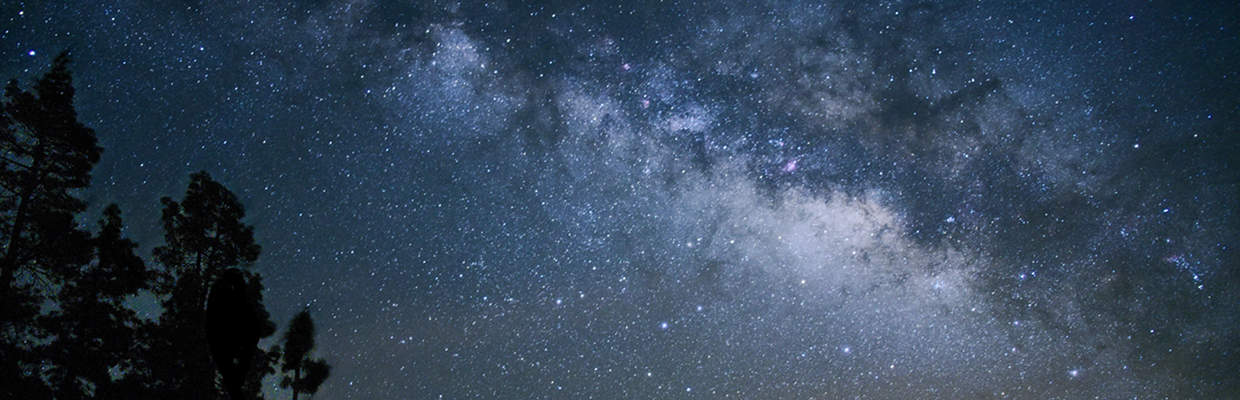


 Kjell Lindgren KO5MOS
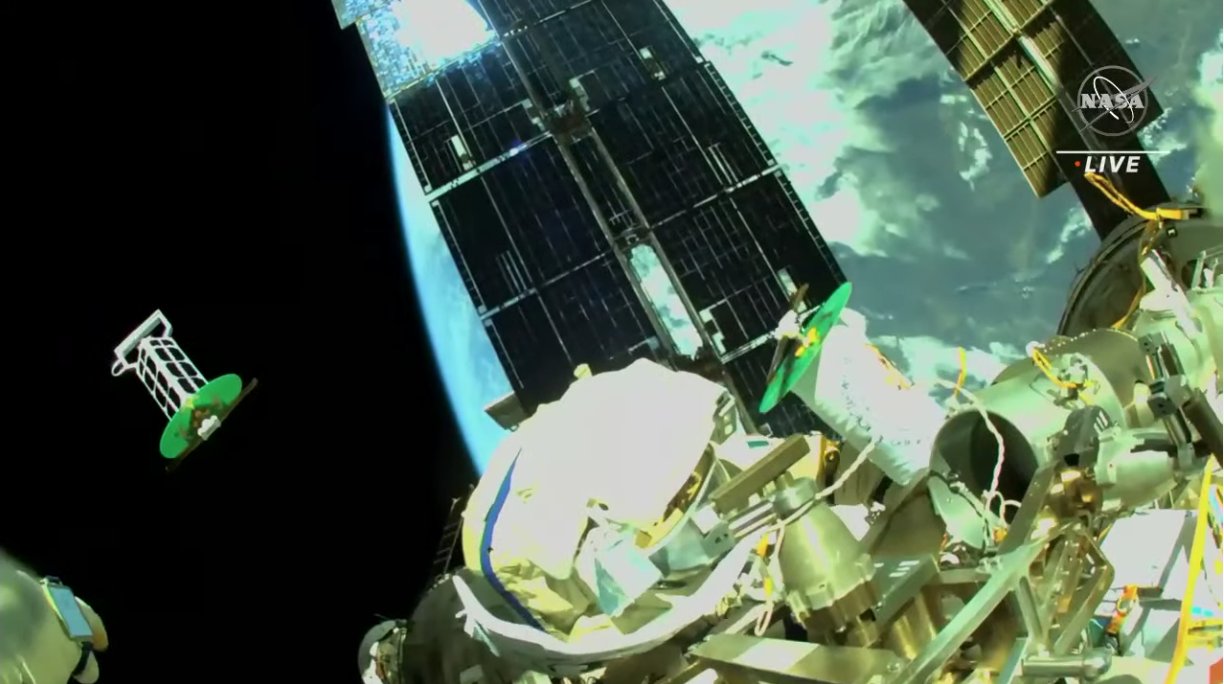 CubeSat released from the ISS

 E-members
 100vw, 300px»></a></p>
<p class=) AMSAT-UK FUNcube Mission Patch
AMSAT-UK FUNcube Mission Patch
