Crew Keeps Up Spacewalk Preps, Research, and Cargo Operations

Crew Keeps Up Spacewalk Preps, Research, and Cargo Operations
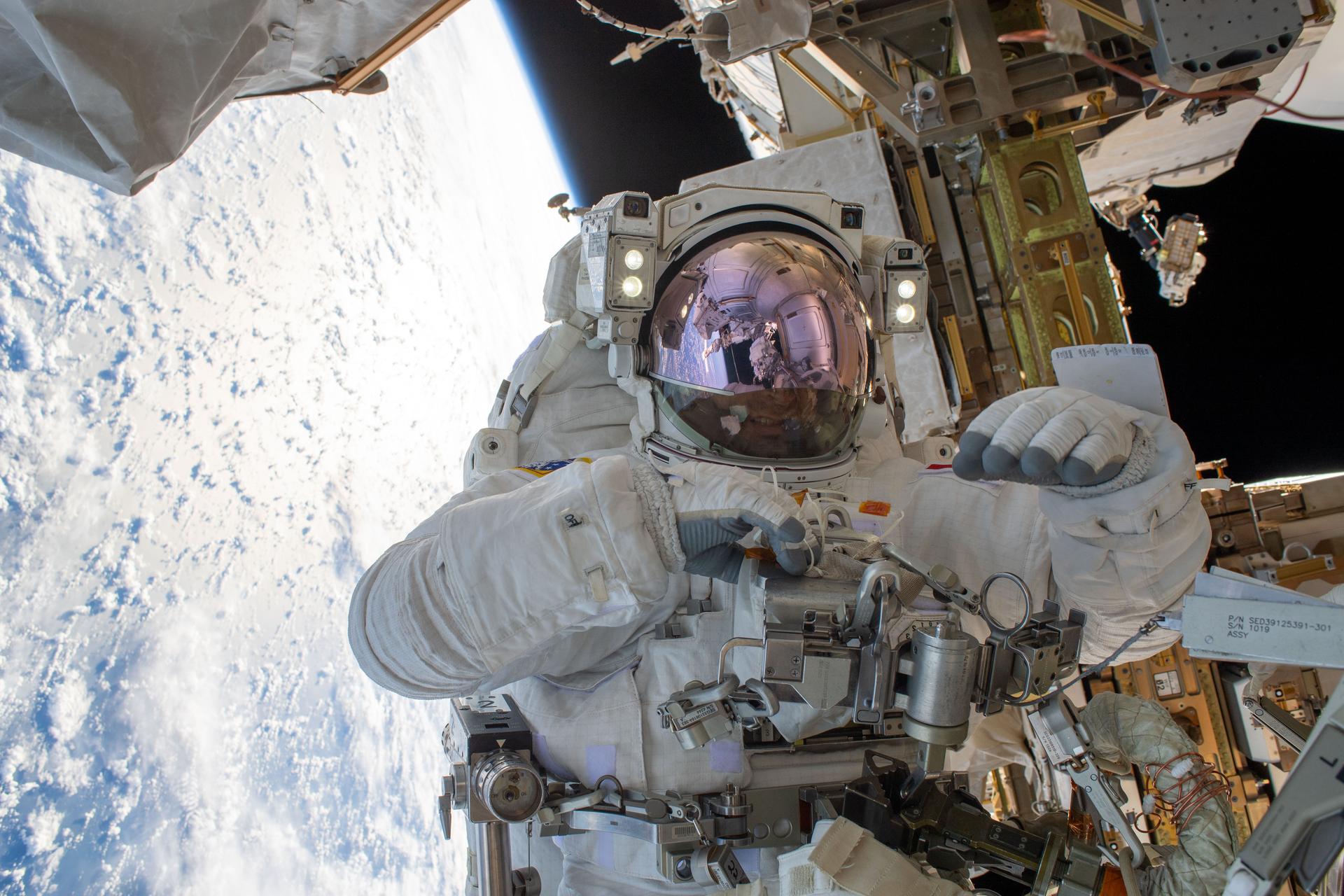
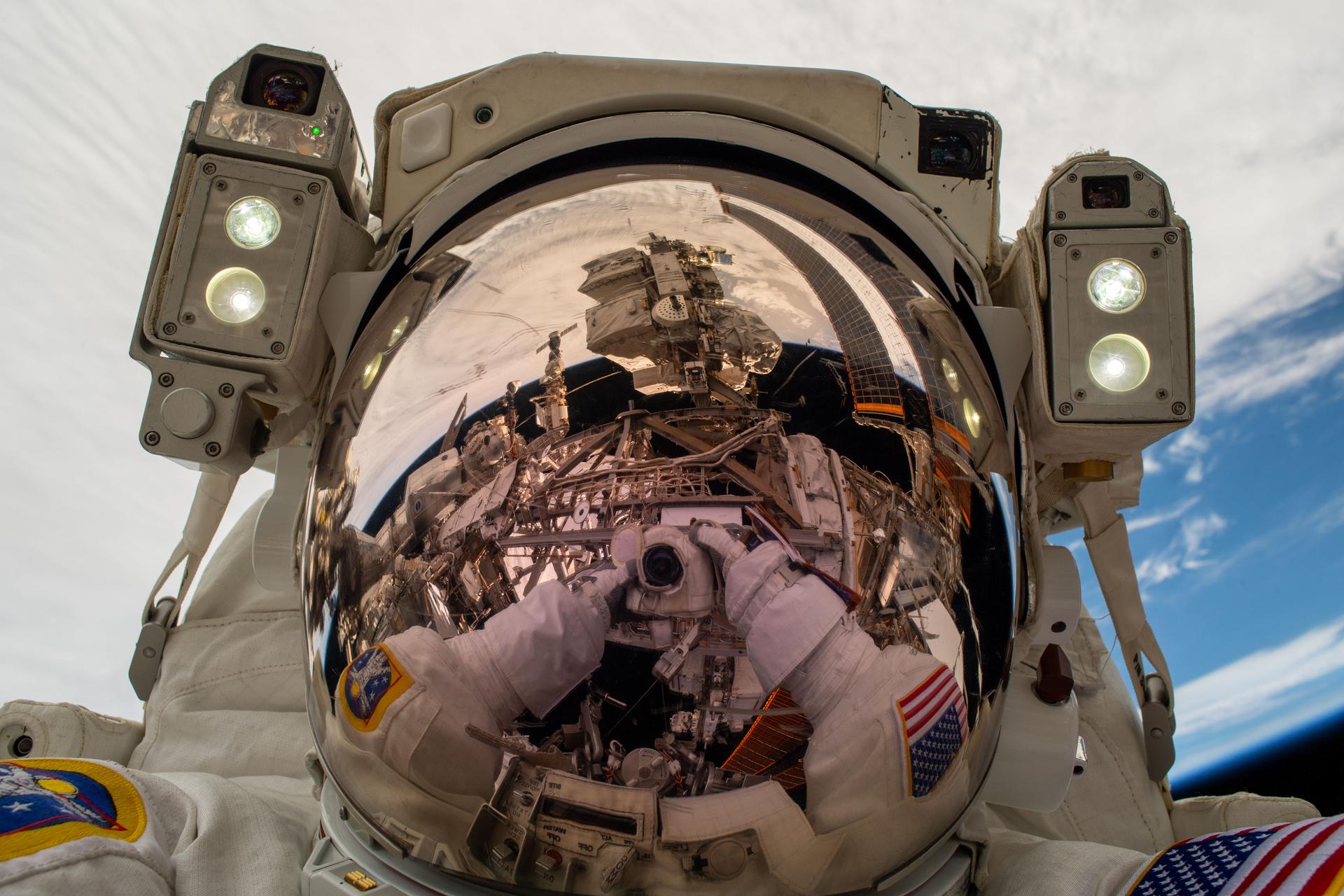
CSA (Canadian Space Agency) astronaut and Expedition 75 flight engineer Joshua Kutryk is pictured during a spacewalk with his spacesuit's helmet visor down to install a new roll-out solar array on the International Space Station's port side truss structure. The orbital outpost was soaring 267 miles above the South Atlantic Ocean at the time of this photograph.
CSA astronaut Joshua Kutryk is pictured during a spacewalk with his spacesuit’s helmet visor down to install a new roll-out solar array on the International Space Station’s port side truss structure on Oct. 29, 2026.
CSA

Expedition 75 is continuing preparations for the second and final spacewalk in a series of two to upgrade the International Space Station’s power generation system. The orbital residents are also conducting microgravity research and transferring cargo in and out of a U.S. cargo spacecraft.

Flight engineers Joshua Kutryk of CSA (Canadian Space Agency) and Anil Menon of NASA spent Tuesday organizing the tools and studying the procedures they will use during a spacewalk scheduled to start at 8:30 a.m. EST on Thursday. Kutryk and Menon started their shift inside the Quest airlock staging their spacewalking tools and inspecting the tethers that will secure the astronauts to the orbital outpost. Afterward, the pair reviewed the activities planned for the seven-hour excursion to install the eighth and final roll-out solar array on the orbital outpost’s starboard truss structure.

The installation job will complete the years-long process that began in June 2021 to augment the space station’s power generating capacity from 160 kilowatts to about 215 kilowatts. NASA+ and a variety of other streaming platforms will begin live continuous spacewalk coverage at 7 a.m. on Thursday.

NASA flight engineers Jessica Watkins and Luke Delaney also studied Thursday’s spacewalking procedures. Watkins and Delaney will assist Kutryk and Menon in and out of their spacesuits, monitor the spacewalking duo, and operate the Canadarm2 robotic arm.

Delaney started his shift pedaling on the Destiny laboratory module’s exercise cycle while wearing the Bio-Monitor’s sensor-packed vest and headband. His heart activity, blood pressure, and breathing rate were measured to observe how the cardiorespiratory system adapts to weightlessness, informing crew health measures on future missions to the Moon, Mars, and beyond.

Delaney also joined Menon and Watkins during a break in spacewalk preparations and swapped payloads inside a SpaceX Dragon cargo spacecraft that docked to the Harmony module’s space-facing port on Oct. 15. Dragon is expected to return to Earth in mid-November packed with completed science experiments and space station hardware for analysis.

Working in the orbiting complex’s Roscosmos segment, station commander Pyotr Dubrov installed Earth observation gear and programmed it for a daylong session to photograph landmarks in the Indian and Pacific oceans. Flight engineer Sergey Teteryatnikov completed a 24-hour session wearing electrodes that measured his heart activity and blood pressure, then studied super intelligence tools to boost crew efficiency. Flight engineer Anna Kikina started her shift by transferring water from the Progress 96 cargo spacecraft then inspected and cleaned ventilation systems inside the Zvezda service module.

Learn more about station activities by following the space station blog, @space_station on X, as well as the ISS Facebook and ISS Instagram accounts.

Get the latest from NASA delivered every week. Subscribe here.

Powered by WPeMatico

Get The Details…

Mark A. Garcia

Week Starts with Spacewalk Preps and Life Science

Week Starts with Spacewalk Preps and Life Science

NASA astronaut and Expedition 75 flight engineer Anil Menon points his camera toward his spacesuit’s helmet visor and takes an out-of-this-world “space selfie.” Menon participated in a spacewalk with CSA (Canadian Space Agency) astronaut Joshua Kutryk to install a new roll-out solar array on the International Space Station's port side truss structure.
NASA astronaut Anil Menon points his camera toward his spacesuit’s helmet visor and takes an out-of-this-world “space selfie” during a pscewalk on Oct. 29, 2026.
NASA

Editors note: This blog was updated on Nov. 2 to reflect an update in coverage and spacewalk start times.

Preparations continue for the second in the final series of spacewalks to upgrade the International Space Station’s power generation system on Thursday. Meanwhile, the Expedition 75 crew focused its research efforts on life science at the beginning of the week.

Flight engineers Joshua Kutryk of CSA (Canadian Space Agency) and Anil Menon of NASA will install the eighth and final roll-out solar array during a spacewalk planned to start at 7 a.m. EST on Thursday. The duo will work on the orbital outpost’s starboard truss structure opposite from the port truss structure where they installed a roll-out solar array on Oct. 29.

Upon completion of the installation job, which is expected to take about seven hours, the station’s power generating capacity will increase about 30 percent from 160 kilowatts to about 215 kilowatts. NASA+ begins its live spacewalk coverage at 5:30 a.m. on Thursday and also will stream on a variety of other platforms.

Kutryk and Menon joined NASA flight engineers Jessica Watkins and Luke Delaney on Monday and studied the Canadarm2 robotic arm procedures necessary to support Thursday’s spacewalk. The quartet also called down to mission controllers for a pair of pre-spacewalk conferences. The astronauts first discussed their mission readiness with spacewalk specialists then spoke to robotics engineers afterward about any Canadarm2 concerns.

Microgravity research was still on Monday’s schedule for the astronauts as they helped researchers advance human health on Earth and in space. Kutryk strapped on the Bio-Monitor’s sensor-packed vest and headband at the beginning of his shift and pedaled on the Destiny laboratory module’s exercise cycle. Results may show how an astronaut’s cardiorespiratory system adapts to weightlessness informing crew health measures on future missions to the Moon, Mars, and beyond. Delaney nourished growing vascular tissues samples that were printed inside the BioFabrication Facility. Watkins verified the operation of a portable DNA sequencer used to genetically analyze antibiotic-resistant bacteria in microgravity.

Expedition 75’s three cosmonauts stayed focused on their task list of space research and lab maintenance inside the orbiting complex’s Roscosmos segment. Station commander Pyotr Dubrov continued studying how to manufacture high-purity semiconductor crystals in microgravity that are superior to those produced on Earth. Flight engineer Sergey Teteryatnikov attached electrodes to himself for a 24-hour session measuring his heart activity and blood pressure. Flight engineer Anna Kikina worked on ventilation system maintenance then worked on cargo transfers inside the Progress 96 cargo spacecraft.

Learn more about station activities by following the space station blog, @space_station on X, as well as the ISS Facebook and ISS Instagram accounts.

Get the latest from NASA delivered every week. Subscribe here.

Powered by WPeMatico

Get The Details…

Mark A. Garcia

Space Crops and Advanced Tech Wrap Up Week Following Spacewalk

Space Crops and Advanced Tech Wrap Up Week Following Spacewalk

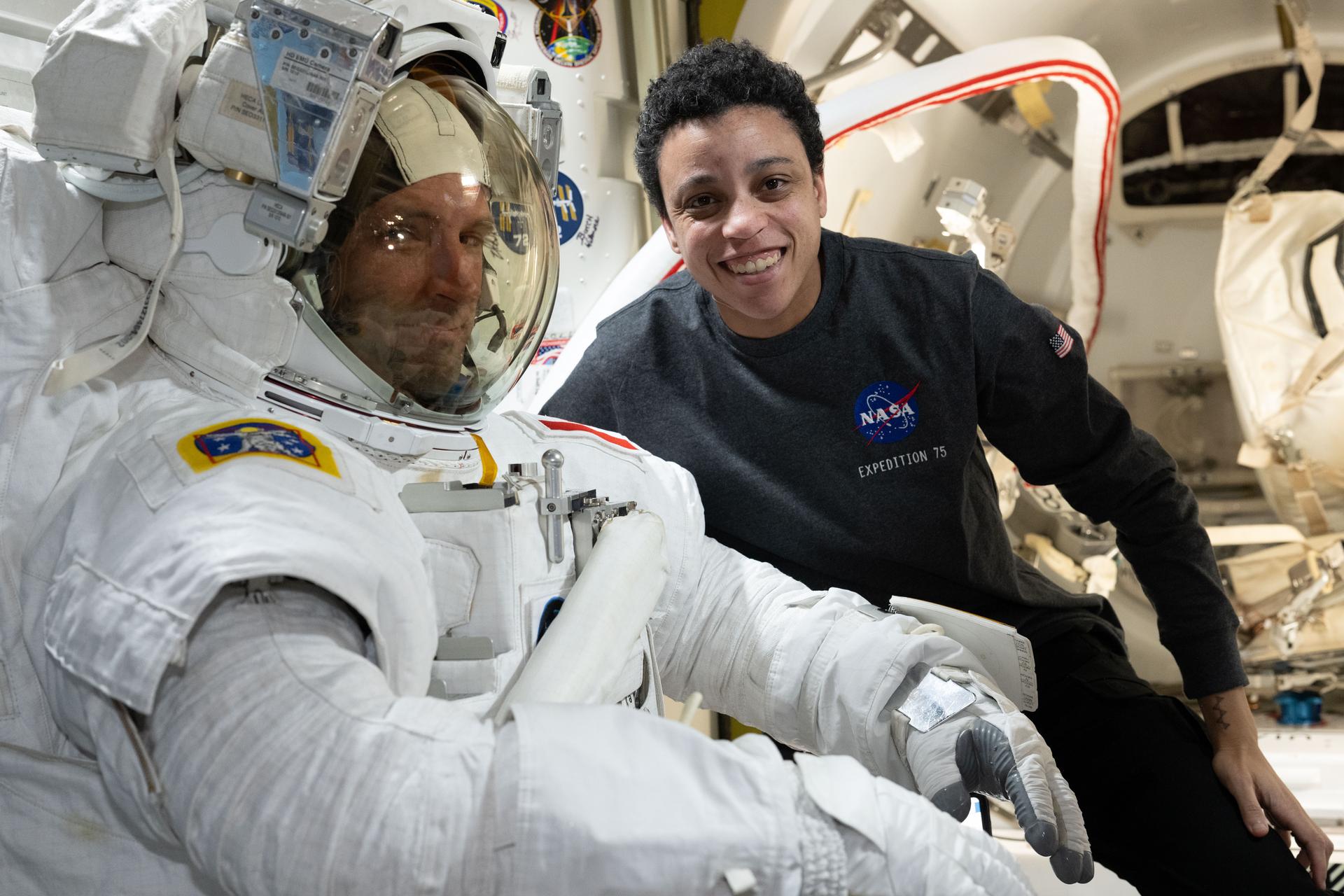
Expedition 75 flight engineers Joshua Kutryk of CSA (Canadian Space Agency) and Jessica Watkins of NASA pose together inside the International Space Station's Quest airlock. Watkins assisted Kutryk as he tried on a spacesuit ensuring a good fit, comfort, and systems functionality. Spacesuit fit checks also account for body changes such as spinal elongation that take place in microgravity.
Expedition 75 flight engineers Joshua Kutryk of CSA (Canadian Space Agency) and Jessica Watkins of NASA pose together inside the International Space Station’s Quest airlock during a spacesuit fit check.
NASA/Anil Menon

Space crops research wrapped up the week following the completion of the first of two power upgrade spacewalks at the International Space Station. The Expedition 75 crew members rounded out their research schedule with virtual reality and super intelligence studies.

The orbital outpost has a new roll-out solar array that is generating power after flight engineers Anil Menon of NASA and Joshua Kutryk of CSA (Canadian Space Agency) installed it during a spacewalk on Thursday. Menon and Kutryk spent seven hours and 11 minutes in the vacuum of space attaching the roll-out solar array to the port side truss structure then releasing its tension bolts allowing the solar array to unfurl, or roll out, on its own during a ten-minute process.

The pair will install one more roll-out solar array on Thursday, Nov. 5, to complete the yearslong process that began in June 2021 to augment the space station’s power generation system. Menon and Kutryk will install the eighth and final roll-out solar array on the starboard side of the truss structure increasing the station’s power generating capacity from 160 kilowatts to about 215 kilowatts.

Menon and Kutryk had a light duty day on Friday with ongoing research planned for their short schedule. Menon worked on a space botany investigation in the Kibo laboratory module exploring how microgravity affects cell division on green algae and cultured tobacco cells. Results may support the production of food crops on the Moon and Mars. Kutryk pedaled on the European Enhanced Exploration Exercise Device’s (E4D) exercise cycle in the Columbus laboratory module. The compact all-in-one E4D is being tested for its ability to keep crews fit during a long-term spaceflight.

NASA flight engineer Luke Delaney also studied space-based crops focusing on how to prevent plant diseases in microgravity. Delaney inoculated thale cress plant samples after they were exposed to a fungal pathogen then stowed the samples inside an artificial gravity-generating incubator. Results may improve crop disease resistance both on Earth and in space.

NASA flight engineer Jessica Watkins spent her shift servicing a variety of research hardware. She first removed and photographed components inside a device that powers experiments launched aboard spacecraft. Next, Watkins swapped moisture absorbers inside a set of portable science freezers that can be launched to the station and returned back to Earth housing frozen research samples for analysis.

Station commander Pyotr Dubrov of Roscosmos worked on a physics experiment swapping hardware inside a temperature-controlled chamber to explore manufacturing high-purity semiconductor crystals in microgravity. Flight engineer Sergey Teteryatnikov wore a virtual reality headset and responded to computerized visual stimuli to testing how his sense of balance and orientation is adapting to microgravity. Flight engineer Anna Kikina studied how super intelligence tools may increase operational and communications efficiency aboard a spacecraft.

Learn more about station activities by following the space station blog, @space_station on X, as well as the ISS Facebook and ISS Instagram accounts.

Get the latest from NASA delivered every week. Subscribe here.

Powered by WPeMatico

Get The Details…

Mark A. Garcia

Spacewalkers Install Roll-Out Solar Array for Power Generation

Spacewalkers Install Roll-Out Solar Array for Power Generation

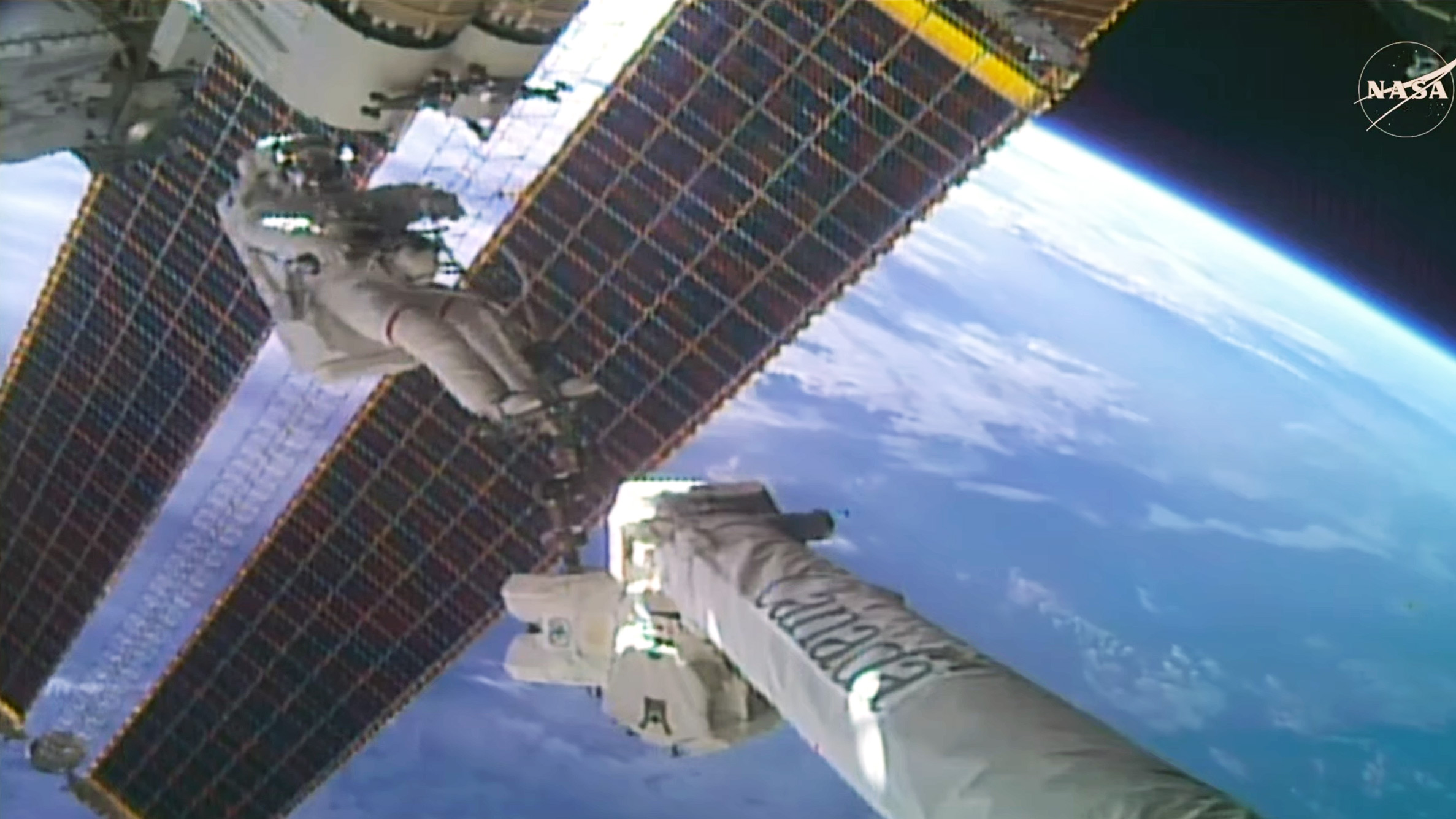
NASA astronaut Anil Menon rides the Canadarm2 robotic arm to begin the installation of a roll-out solar array on the International Space Station's port-side truss structure while orbiting 260 miles above Earth.
NASA astronaut Anil Menon rides the Canadarm2 robotic arm to begin the installation of a roll-out solar array on the International Space Station’s port-side truss structure while orbiting 260 miles above Earth.
NASA+

NASA astronaut Anil Menon and CSA (Canadian Space Agency) astronaut Joshua Kutryk concluded their spacewalk outside the International Space Station at 3:08 p.m. EDT.  

During the 7-hour, 11-minute spacewalk, Menon and Kutryk installed and deployed an International Space Station Roll-Out Solar Array (IROSA) on the station’s 2A electrical power channel. The array is the seventh IROSA installed on the station and will provide additional power to support critical operations, including a safe and controlled deorbit.

Menon and Kutryk also completed several get-ahead tasks to prepare for a planned Thursday, Nov. 5 spacewalk, when they will install the eighth and final IROSA on the 3B power channel. NASA will provide live coverage beginning at 6:45 a.m. Learn how to watch:

https://www.nasa.gov/live/

Following the Nov. 5 spacewalk, the roll-out solar arrays will be fully installed, completing the space station’s power system augmentation. Together, the eight arrays will increase available power by up to 30%, boosting the station’s power generation capacity from 160 kilowatts to approximately 215 kilowatts.

U.S. spacewalk 100 was Menon’s fourth and Kutryk’s first. It also was the 285th spacewalk in support of space station assembly, maintenance, and upgrades.

Learn more about station activities by following the space station blog, @space_station on X, as well as the ISS Facebook and ISS Instagram accounts.

Get the latest from NASA delivered every week. Subscribe here.

Powered by WPeMatico

Get The Details…

Mark A. Garcia

Astronauts Suit Up to Prepare for Power Upgrade Spacewalk

Astronauts Suit Up to Prepare for Power Upgrade Spacewalk

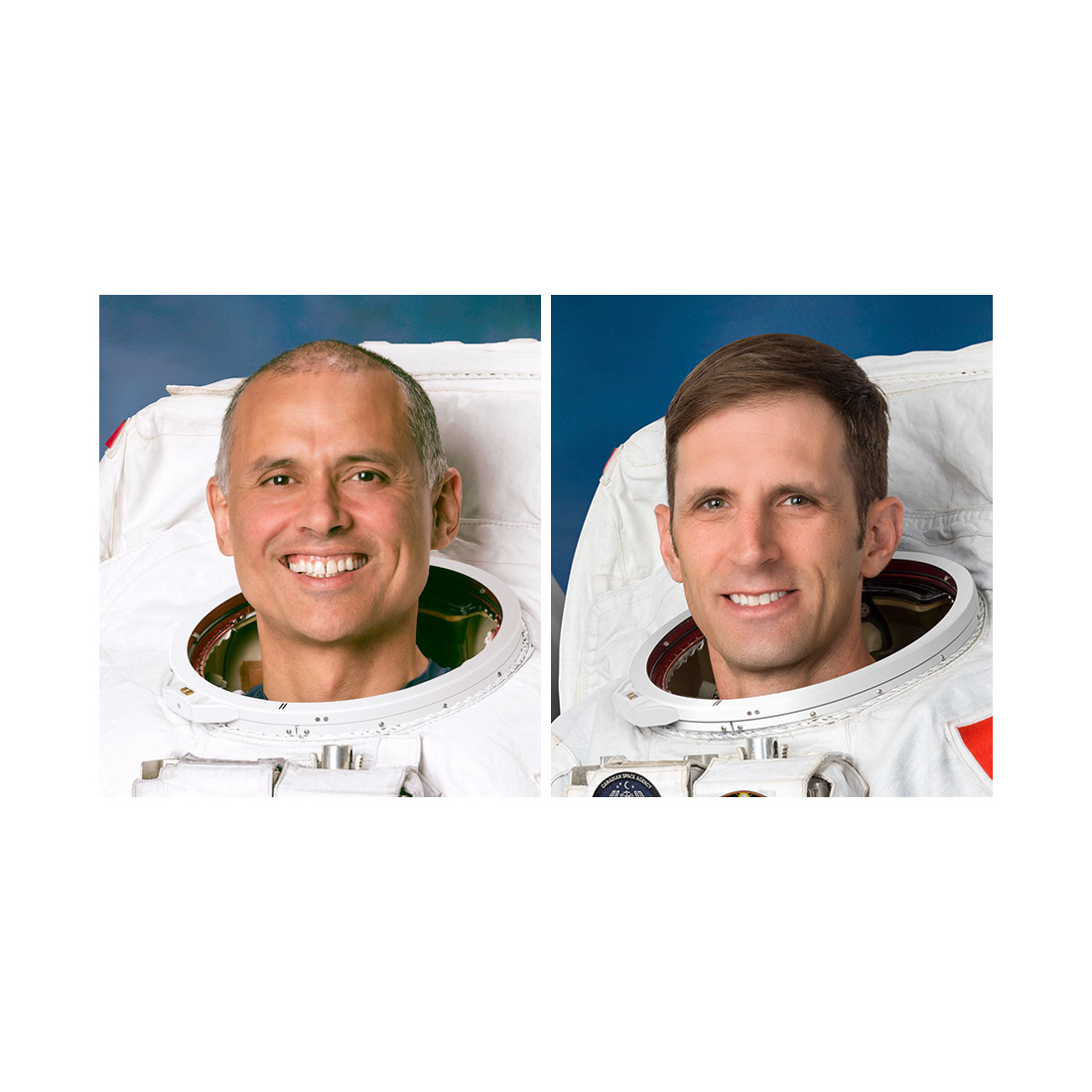
From left, Astronauts Anil Menon of NASA and Josha Kutryk of CSA (Canadian Space Agency) pose for pre-flght crew portraits in spacesuits at Johnson Space Center in Houston, Texas.
NASA

NASA is streaming live coverage as two astronauts prepare for a spacewalk outside the International Space Station. The spacewalk is scheduled to begin at approximately 8 a.m. EDT and last more than six and a half hours. Watch online at:  

https://www.nasa.gov/live

During U.S. spacewalk 100, NASA astronaut Anil Menon and CSA (Canadian Space Agency) astronaut Joshua Kutryk will exit the station’s Quest airlock to install and deploy an International Space Station Roll-Out Solar Array (IROSA) on the 2A electrical power channel. The solar array will be the seventh IROSA and will provide additional power to support critical station operations, including its safe and controlled deorbit. 

Menon will serve as spacewalk crew member 1 and will wear a suit with red stripes. Kutryk will serve as crew member 2 and will wear an unmarked suit.  

This will be Menon’s fourth spacewalk and Kutryk’s first. The excursion also marks the 285th spacewalk supporting space station assembly, maintenance, and upgrades.

Learn more about station activities by following the space station blog, @space_station on X, as well as the ISS Facebook and ISS Instagram accounts.

Get the latest from NASA delivered every week. Subscribe here.

Powered by WPeMatico

Get The Details…

Mark A. Garcia